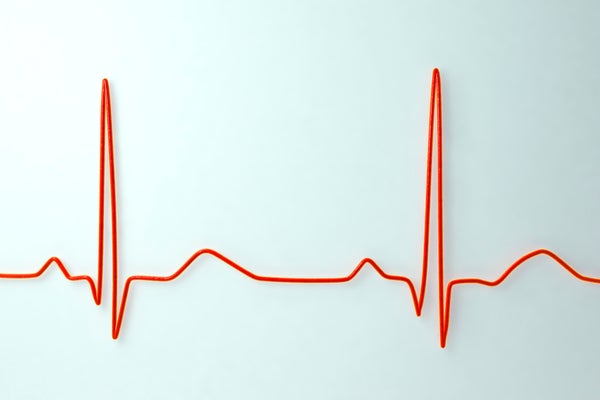
Heart Rate Variability (HRV): What It Is and How to Improve It
Researchers at Harvard University have gone as far as to say that measuring your Heart Rate Variability is “a visual insight into the most primitive part of your brain”
A few weeks ago, listener Megan wrote to me on Facebook and said: "Hey Brock, would you explain heart rate variability (HRV) in layman's terms? I've heard a lot about it, but don't quite understand the concept or its use." I thought that was a great suggestion because HRV is a technique that has been growing in popularity and acceptance in the sport and fitness world. So here you go, Megan: HRV 101.
Most athletes know that getting enough rest after exercise is essential to performance. Still many of us overtrain and feel guilty or lazy when we take a day off. But relentless training can break even the strongest athletes and rest is a necessity to allow your body to repair, rebuild, and strengthen.
On supporting science journalism
If you're enjoying this article, consider supporting our award-winning journalism by subscribing. By purchasing a subscription you are helping to ensure the future of impactful stories about the discoveries and ideas shaping our world today.
Given that it is so difficult for many of us to know when to train hard and when to back off, before we strap on a bluetooth heart rate monitor and fire up our HRV measuring smartphone app, let’s look at some non-HRV ways that we can measure our current state of recovery.
Great science journalism requires human expertise, time, effort and creativity. And it costs money. That’s why I and the journalists here at Scientific American hope you’ll join our community.
When you subscribe, you are supporting staff and freelance journalists who are passionate about telling science stories that are true, important and compelling. Our editors and reporters are often experts in their fields, which means they understand the nuances of big discoveries and can untangle the breakthroughs from the hype. With a subscription, you are also supporting rigorous fact-checking to ensure the words we publish are precise and accurate. And you’re supporting original illustrations, graphics and photos that bring you closer to an advanced laboratory, an ice sheet in Antarctica or a space mission in orbit. You’re helping us craft other types of high-quality journalism as well: Our newsletters are carefully written, edited and curated by staffers you have or will come to know and love. Our Science Quickly podcast is based on original reporting, collaboration with editors and scientists and exacting production.
Subscriptions keep this engine running so we can continue to deliver thoughtful, rigorous and independent science journalism to you. In an era of viral misinformation, this work is crucial. If you value what we do, I hope you’ll consider joining us as a subscriber
Thank you,
Jeanna Bryner, Editor in Chief, Scientific American