How Much of the World’s Protected Land Is Actually Protected?

Intense human pressure on areas set aside for preservation could be threatening biodiversity

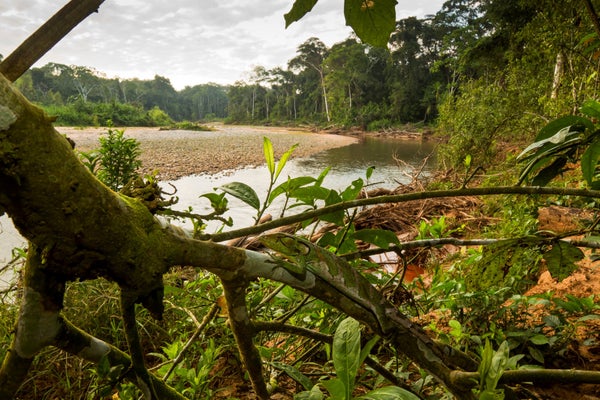
Some of these least impacted protected areas include Madidi National Park in Boliviawhere WCS has made considerable conservation investments and therefore has successfully staved off degradation.

Join Our Community of Science Lovers!

About one third of the world’s protected land faces intense pressure from human-related factors such as buildings, agriculture, roads and nighttime lighting, a new study from the Wildlife Conservation Society and the universities of Queensland in Australia and British Columbia in Canada shows. Intense human pressure is linked to the decline of biodiversity, the feature that protected areas are meant to preserve.

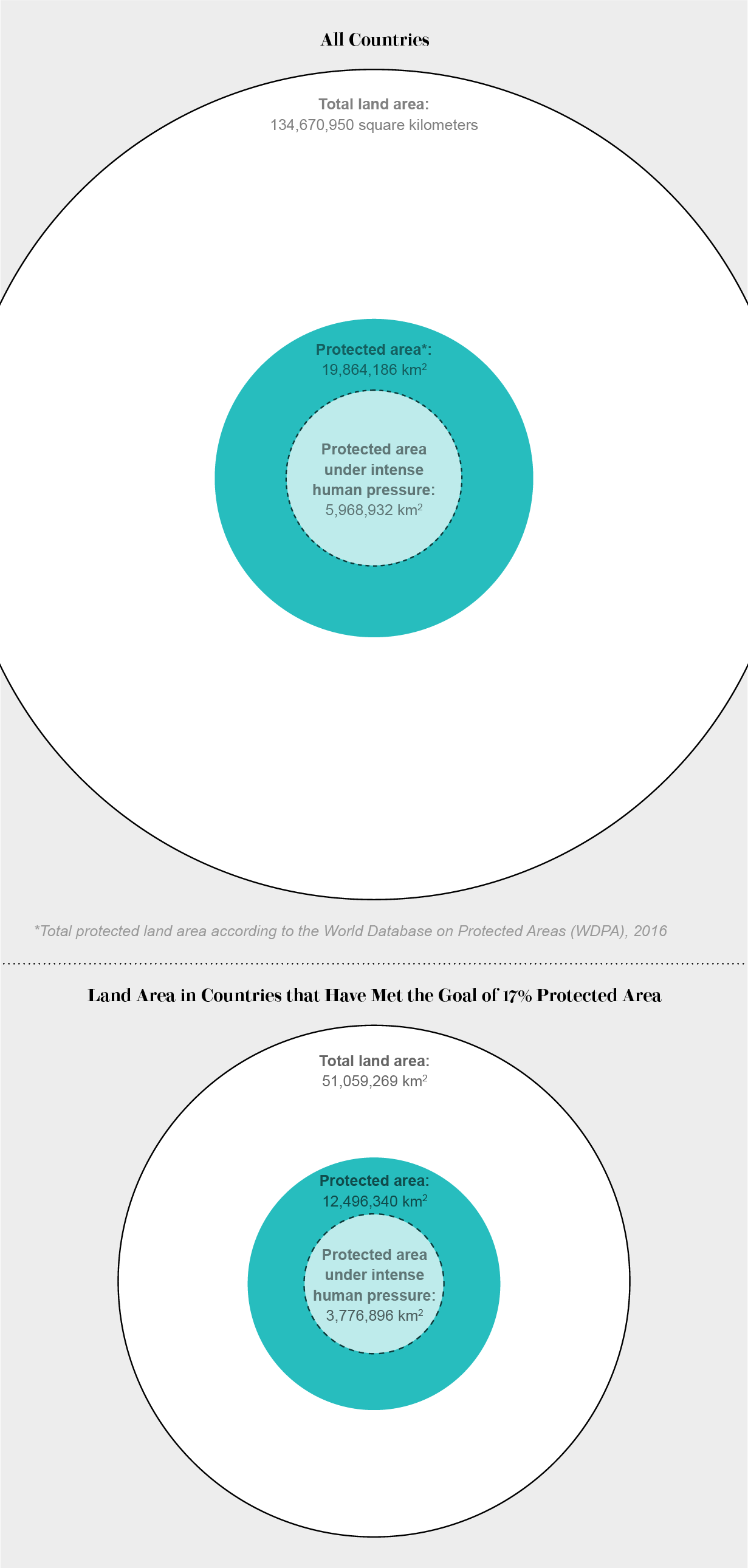
The 1993 Convention on Biological Diversity, signed by 168 countries, has mandated 17 percent of land be contained in “effectively and equitably managed, ecologically representative and well-connected” protected areas by 2020. Designated protected areas across participating countries currently account for about 14.7 percent of land globally. But when areas facing intense human pressure are subtracted, the protected area percentage drops to 10.3. Of the 111 countries that have individually met the 17 percent mandate, only 37 would still meet that threshold if areas under heavy pressure were removed.

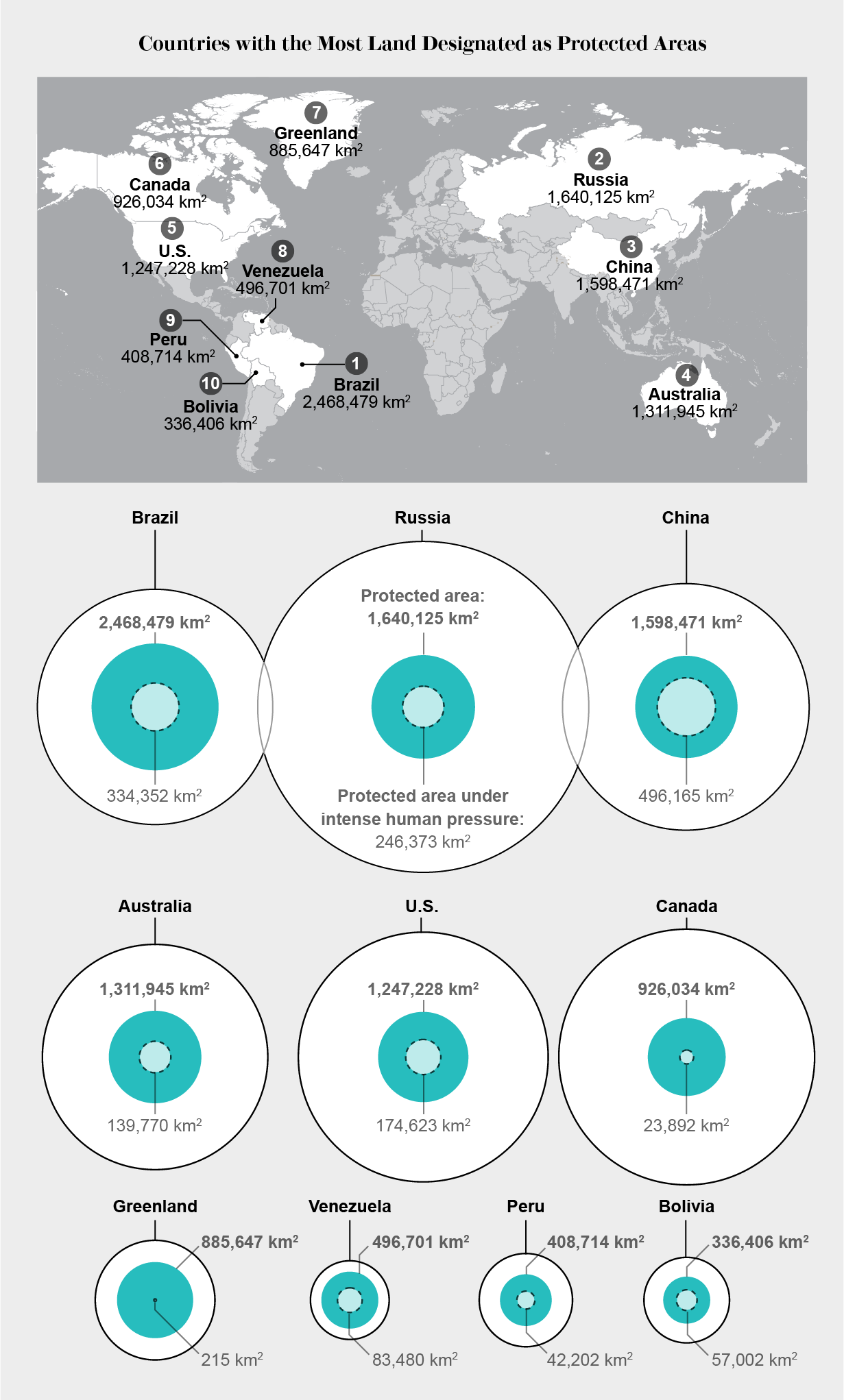
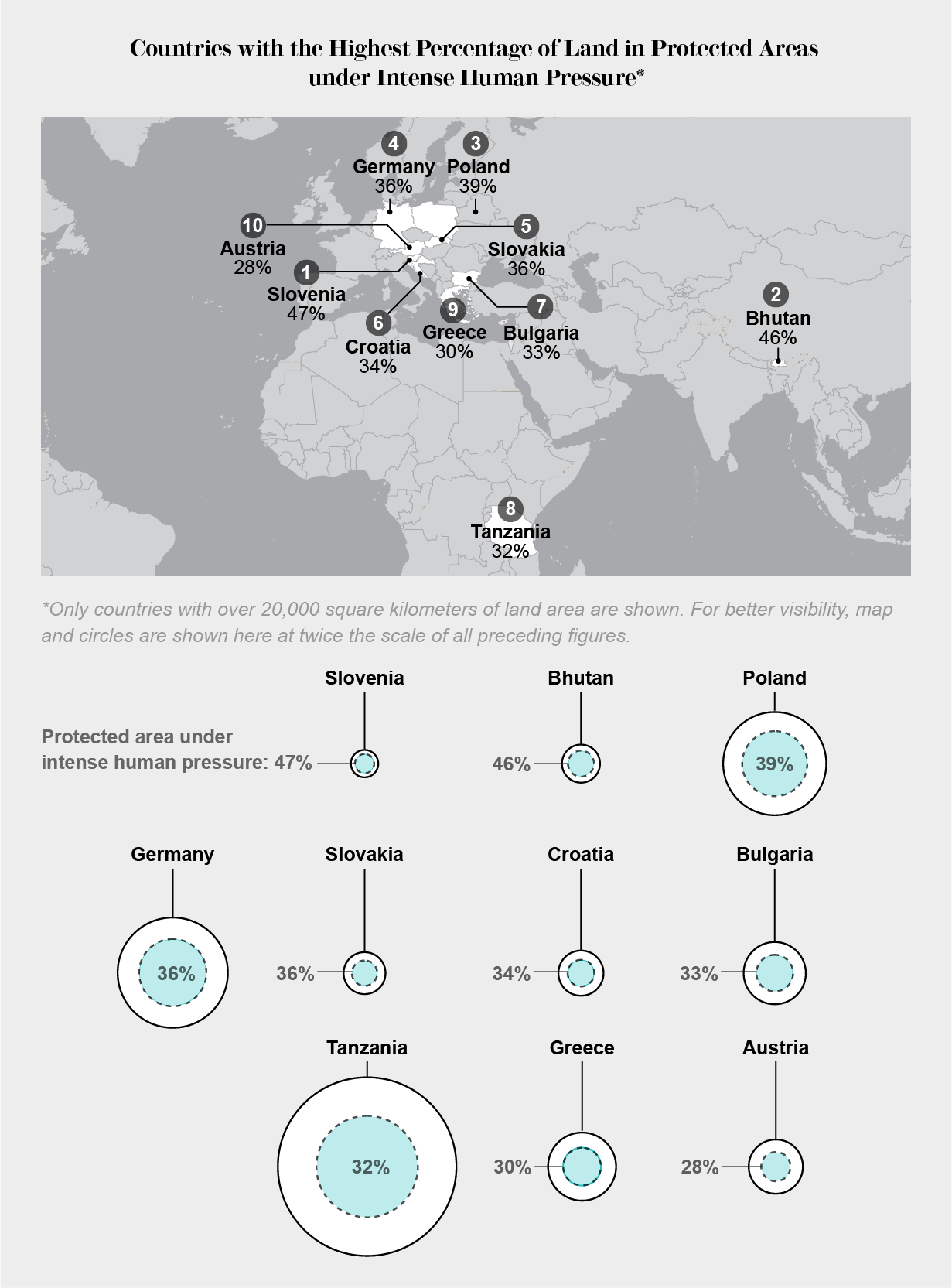
The study’s findings, published in the May 18 issue of Science, show, despite apparent global efforts, many protected areas may not be effectively guarding against biodiversity loss. The graphic below highlights some of the data associated with the study, including values for specific outlying countries.


On supporting science journalism

If you're enjoying this article, consider supporting our award-winning journalism by subscribing. By purchasing a subscription you are helping to ensure the future of impactful stories about the discoveries and ideas shaping our world today.
Source: “One Third of Global Protected Land Is under Intense Human Pressure,” by Kendall R. Jones et al., in Science, Vol. 360, No. 6390; May 18, 2018. Credit: Amanda Montañez

Amanda Montañez is senior graphics editor and been at Scientific American since 2015. She produces and art directs information graphics for the Scientific American website and print magazine. Montañez has a bachelor's degree in studio art from Smith College and a master's in biomedical communications from the University of Toronto. Before starting in journalism, she worked as a freelance medical illustrator. Follow her on Bluesky @unamandita.bsky.social

More by Amanda Montañez

It’s Time to Stand Up for Science

If you enjoyed this article, I’d like to ask for your support. Scientific American has served as an advocate for science and industry for 180 years, and right now may be the most critical moment in that two-century history.

I’ve been a Scientific American subscriber since I was 12 years old, and it helped shape the way I look at the world. SciAm always educates and delights me, and inspires a sense of awe for our vast, beautiful universe. I hope it does that for you, too.

If you subscribe to Scientific American, you help ensure that our coverage is centered on meaningful research and discovery; that we have the resources to report on the decisions that threaten labs across the U.S.; and that we support both budding and working scientists at a time when the value of science itself too often goes unrecognized.

In return, you get essential news, captivating podcasts, brilliant infographics, can't-miss newsletters, must-watch videos, challenging games, and the science world's best writing and reporting. You can even gift someone a subscription.

There has never been a more important time for us to stand up and show why science matters. I hope you’ll support us in that mission.

Thank you,

David M. Ewalt, Editor in Chief, Scientific American

Subscribe