
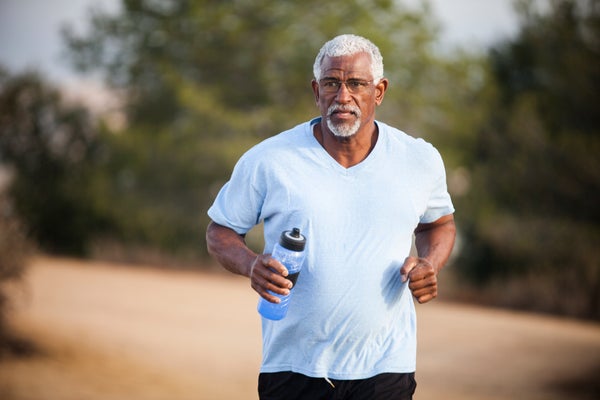

When I first started running semi-seriously, I diligently carried a water bottle on my belt, as instructed by all the running magazines and websites. Then, as my (ahem) thirst for the sport grew, I graduated to an embarrassing fanny-pack-style beverage bladder. But, oddly enough, by the time I achieved the level of having a shoe sponsorship and coaches, I wasn't carrying anything with me at all. A few sips at random water fountains or the on-course aid stations worked just fine.
There's a reason I tell that story. For many years, the rule-of-thumb for exercise hydration has been that if you sweat out more than two percent of your body mass, your performance will decline. That's based on military research meant to prepare U.S. soldiers for hot climate combat during the Second World War. In practical terms, the rule means that a man who weighs 80 kilograms (176 pounds) can only sweat out 1.75 litres (about 60 fluid ounces) of sweat before he will start to fall apart performance-wise.
On supporting science journalism
If you're enjoying this article, consider supporting our award-winning journalism by subscribing. By purchasing a subscription you are helping to ensure the future of impactful stories about the discoveries and ideas shaping our world today.
The problem is that depending on how hard you exercise, and also how hot it is where you're exercising, you could potentially drip that much onto the gym floor in about an hour. And even sipping from an electrolyte-laced water bottle may not stave off that two percent loss. Studies have shown that in more jiggly types of activities (like running), athletes only manage to replace about half of their fluid. If they attempt more than that, they run the risk of getting a severe side stitch and having to assume the doubled-over, hand on a hip stance that many of us know so well.
A French researcher took 643 runners and weighed them before and after a marathon. The researcher found that only the slowest folks in the race managed to keep their fluid losses below two percent. Many eyebrows raised in an "I told ya so" fashion.
Then another study found that the star Ethiopian runner, Haile Gebrselassie, often lost about 10 percent of his body weight during his record-setting marathons. That rule-of-thumb about sweating more than two percent of your body mass was officially retired. In the sports science field, anyway. The sports beverage industry, on the other hand, kept right on beating that drum.
In his 2012 article for the Globe and Mail, Alex Hutchinson quoted Dr. Trent Stellingwerff, a physiologist at the Canadian Sport Institute in Victoria, saying "Anyone who has worked in the field with athletes has probably realized years ago that a strict two-percent dehydration cut-off just doesn't work." Stellingwerff went on to say that he usually aims for a three to six percent dehydration, depending on the conditions (how hot or cold it is) and individual tolerance. It is quite clear that some people handle hot weather better than others and some people, like me, simply sweat more.
So, how did the two percent rule go so wrong? The problem with the studies that lead to that rule is that the researchers had deliberately put the subjects into a state of dehydration using saunas and diuretics before asking them to go exercise. I am sure you can imagine that there's a big difference between being forcibly dehydrated through extreme means and simply being thirsty after a hard workout. I wouldn't perform very well either if I was abused like that and then asked to run a fast kilometer.
»Continue reading “How to Stay Hydrated During Exercise” on QuickAndDirtyTips.com