New Issue: Orbital Catastrophe Ahead? Read Now

Is Carbonated Water Bad for You?

Nutrition Diva: Quick and Dirty Tips for Eating Well and Feeling Fabulous

Join Our Community of Science Lovers!

Scientific American presents Nutrition Diva by Quick & Dirty Tips. Scientific American and Quick & Dirty Tips are both Macmillan companies.

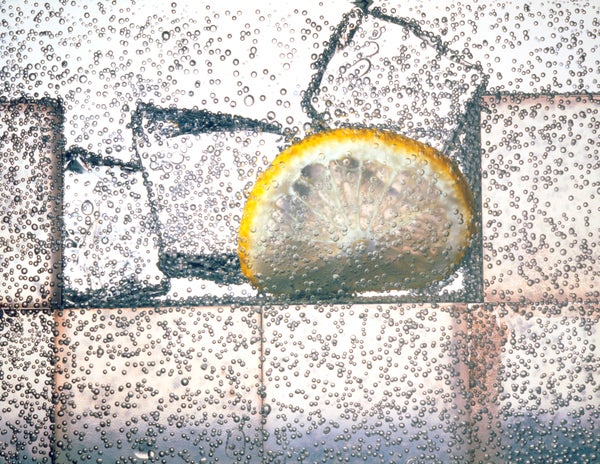
Although I don’t drink much soda (or, as they call it where I grew up, “pop”), I do enjoy drinking sparkling, or carbonated, water and often recommend it as a healthful alternative to soda.  But several of you have written with concerns that drinking carbonated water might be bad for you.

Is Carbonated Water Bad for You?
Sure enough, I did a quick Internet search and found several websites warning that drinking carbonated water will leech calcium from your bones, causing osteoporosis. Others claimed that carbonated beverages can harm the enamel on your teeth, irritate your stomach, or even cause cancer. Let’s sort fact from the fiction.


On supporting science journalism

If you're enjoying this article, consider supporting our award-winning journalism by subscribing. By purchasing a subscription you are helping to ensure the future of impactful stories about the discoveries and ideas shaping our world today.


Does Carbonated Water Leech Calcium from Your Bones?
Soda consumption—particularly cola consumption—has been linked to lower bone mineral density. However, it’s pretty clear that it has nothing to do with the carbonation itself.  Researchers had one group of women drink one liter of still water every day while another group drank a liter of carbonated water. After eight weeks, the researchers could detect no difference between the groups when it came to markers for bone turnover.

Continue reading on QuickAndDirtyTips.com

Subscribe to Support Independent Journalism

Great science journalism requires human expertise, time, effort and creativity. And it costs money. That’s why I and the journalists here at Scientific American hope you’ll join our community.

When you subscribe, you are supporting staff and freelance journalists who are passionate about telling science stories that are true, important and compelling. Our editors and reporters are often experts in their fields, which means they understand the nuances of big discoveries and can untangle the breakthroughs from the hype. With a subscription, you are also supporting rigorous fact-checking to ensure the words we publish are precise and accurate. And you’re supporting original illustrations, graphics and photos that bring you closer to an advanced laboratory, an ice sheet in Antarctica or a space mission in orbit. You’re helping us craft other types of high-quality journalism as well: Our newsletters are carefully written, edited and curated by staffers you have or will come to know and love. Our Science Quickly podcast is based on original reporting, collaboration with editors and scientists and exacting production.

Subscriptions keep this engine running so we can continue to deliver thoughtful, rigorous and independent science journalism to you. In an era of viral misinformation, this work is crucial. If you value what we do, I hope you’ll consider joining us as a subscriber

Thank you,

Jeanna Bryner, Editor in Chief, Scientific American

Subscribe