
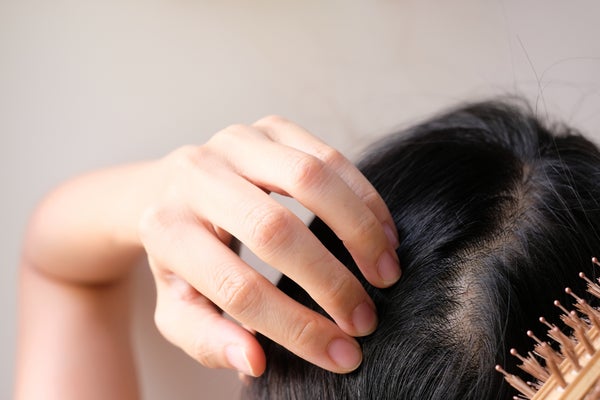

A small amount of hair collecting in the shower drain or hairbrush is not necessarily cause for concern. According to the Academy of Dermatology, it's perfectly normal to lose 100 or so hairs from your head every day.
Gradually thinning hair as you age is also normal, and largely hereditary. But hair loss—especially when it's sudden or at a young age—can also be a sign of certain medical conditions or nutrient deficiencies.
On supporting science journalism
If you're enjoying this article, consider supporting our award-winning journalism by subscribing. By purchasing a subscription you are helping to ensure the future of impactful stories about the discoveries and ideas shaping our world today.
In these cases, identifying and correcting the problem can often reverse your hair loss. But the sudden onset of thinning hair is not the time for self-diagnosis or treatment. Guessing wrong and treating a problem that doesn't exist not only won't help; it may actually make the problem worse!
What causes thinning hair?
Two of the most common non-hereditary causes of hair loss are low thyroid function and iron deficiency. Both are relatively common, especially in women. And although they are two completely different conditions, they share some of the same symptoms. In addition to hair loss, fatigue and cold hands and feet can be signs of both low thyroid and iron deficiency. These conditions are readily diagnosed with a simple blood test. They can be easily corrected, either with replacement thyroid hormones or iron supplements.
»Continue reading “Is Iron Deficiency Causing Your Hair Loss?” on QuickAndDirtyTips.com