
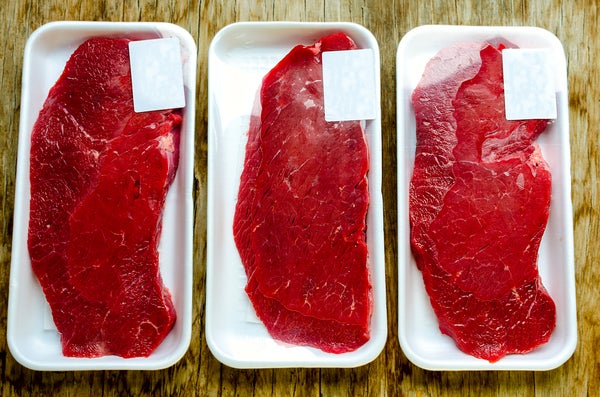

For the last two weeks, the nutrition world has been consumed by a rancorous debate, triggered by the publication of a highly controversial and hotly contested paper in the Annals of Internal Medicine.
An international team of researchers undertook what they've pitched as the largest and most rigorous analysis to date of the effects of red meat consumption on human health. According to their analysis, the evidence that current consumption is causing harm, or that reducing consumption would lower risks. is too weak and uncertain to justify the recommendation that people should eat less red meat.
On supporting science journalism
If you're enjoying this article, consider supporting our award-winning journalism by subscribing. By purchasing a subscription you are helping to ensure the future of impactful stories about the discoveries and ideas shaping our world today.
This, as you might imagine, provoked a massive counterprotest from the experts and institutions that have been counseling us to eat less red meat. As they have been telling any media outlet that will listen, the evidence linking red meat consumption to harm is overwhelming and unambiguous. To suggest otherwise is not just an attack on public health, but also on the public’s trust in nutrition science and research.
At its heart, this argument is really about methodology—how we gather data, how we analyze it, and how that gets translated into recommendations.
Nutrition research is messy
Nutrition research is notoriously challenging to conduct and interpret. It can take a really long time—often decades—for our food choices to translate into health outcomes. The amount of calcium you get in your teens, for example, directly affects your risk of osteoporosis ... but not for another 70 years. A change in diet may raise or lower your risk of colon cancer, but it might take 15 years for that to be revealed. And then there’s the fact that we don’t all respond the same way to the same diets due to genetic and epigenetic factors.
In order to detect any signal in all that noise, you have to study lots of people over a long period of time. As a result, most human dietary studies involve free-living subjects and rely on people’s ability to recall (and their willingness to report) precisely what and how much they ate over the last 24 hours or 30 days or 12 months. It’s not a perfect way to collect data.
There are also a ridiculous number of variables. We eat 3 or 4 times a day. We may eat dozens of different foods over the course of a typical week and hundreds of different foods over the course of a typical year. We eat those foods prepared in dozens of different ways and in thousands of different combinations. Other variables include sleep, stress, activity levels, exposure to environmental pathogens—all of which generally change over time. How do we capture or control for all of that?
And then, when it comes time to map all of that information onto our health outcomes, which of the thousands of different markers, measures, signs, symptoms, and states of health are we monitoring? And how do we compare the results of one study with another that chose a slightly different set of things to measure?
»Continue reading “Is Red Meat Killing Us or Making Us Stronger?” on QuickAndDirtyTips.com