
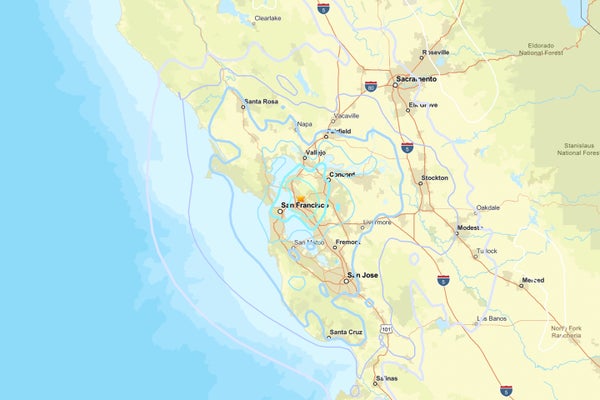
Sleeping residents of California’s San Francisco Bay Area were rattled awake by a magnitude 4.3 earthquake in the early morning hours of September 22.
The earthquake struck 1.25 miles east-southeast of Berkeley, Calif., with shaking felt as far away as Salinas, Calif., about 100 miles to the south, and Chico, Calif., about 150 miles to the north. The temblor does not pose any tsunami threat, according to the National Tsunami Warning Center.
The epicenter of the earthquake was about 4.7 miles deep, according to a preliminary report from the U.S. Geological Survey. The agency’s analysis is continuing, but experts have tentatively linked the event with 10 other smaller quakes, mostly too weak for people to notice, that have rattled the region within the past month.
On supporting science journalism
If you're enjoying this article, consider supporting our award-winning journalism by subscribing. By purchasing a subscription you are helping to ensure the future of impactful stories about the discoveries and ideas shaping our world today.
Amanda Montañez
The earthquake occurred near the Hayward fault line, which runs from the north side of San Francisco Bay to southeast of San Jose. The largest known earthquake on record in the area of this fault was a magnitude 6.8 event in 1868.
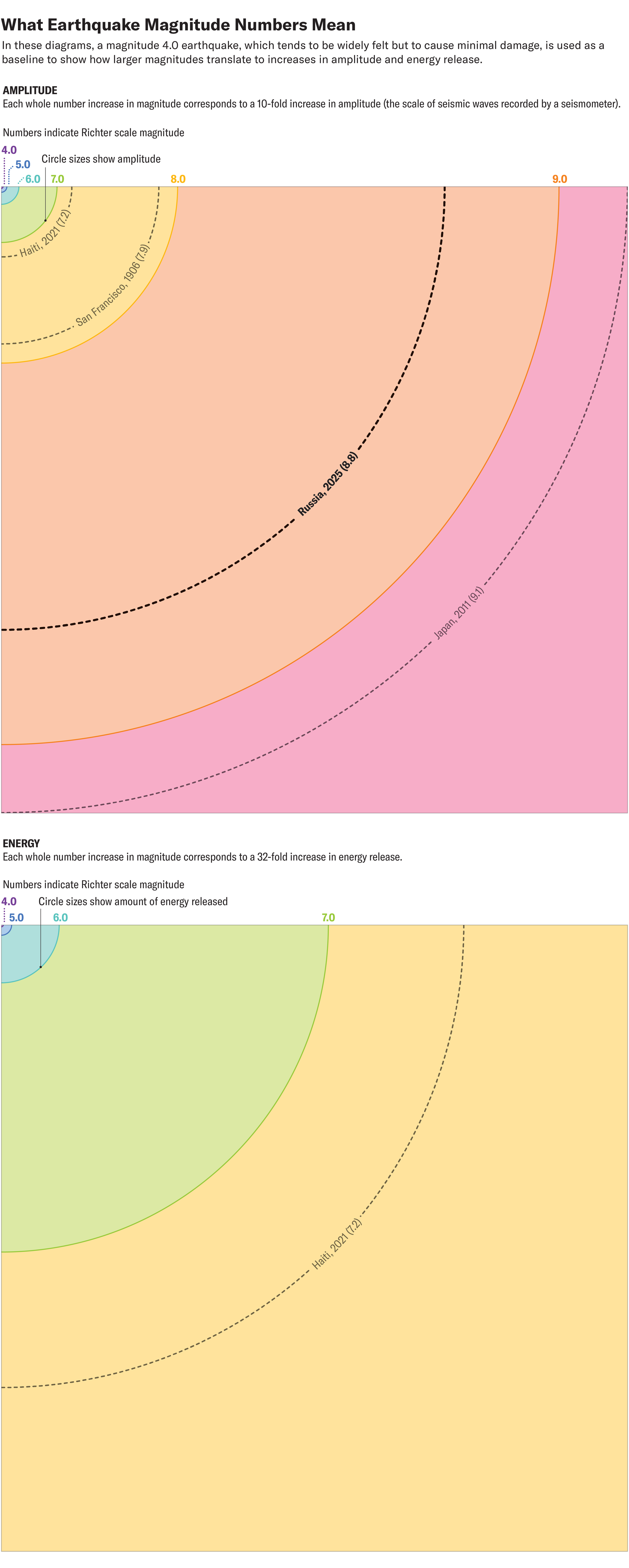
The earthquake scale is logarithmic, not linear, so the historical quake released more than 5,600 times more energy than this morning’s event. By comparison, San Francisco’s deadly 1906 earthquake, which occurred along the San Andreas fault, was at least a magnitude 7.7 event.
Because of its history, the Hayward fault has been carefully watched by scientists, who worry that the now densely populated region could see much more serious damage the next time a very strong earthquake strikes.
So far, nearly 26,000 people have reported feeling Monday’s quake through USGS’s “Did You Feel It?” reporting tool, which gathers on-the-ground data about the intensity and effects of earthquakes. If you are in the Bay Area—whether you felt the temblor or not—you can fill out the agency’s form to contribute to observations.