
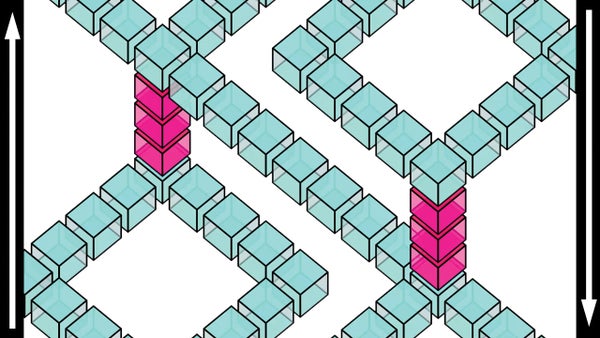
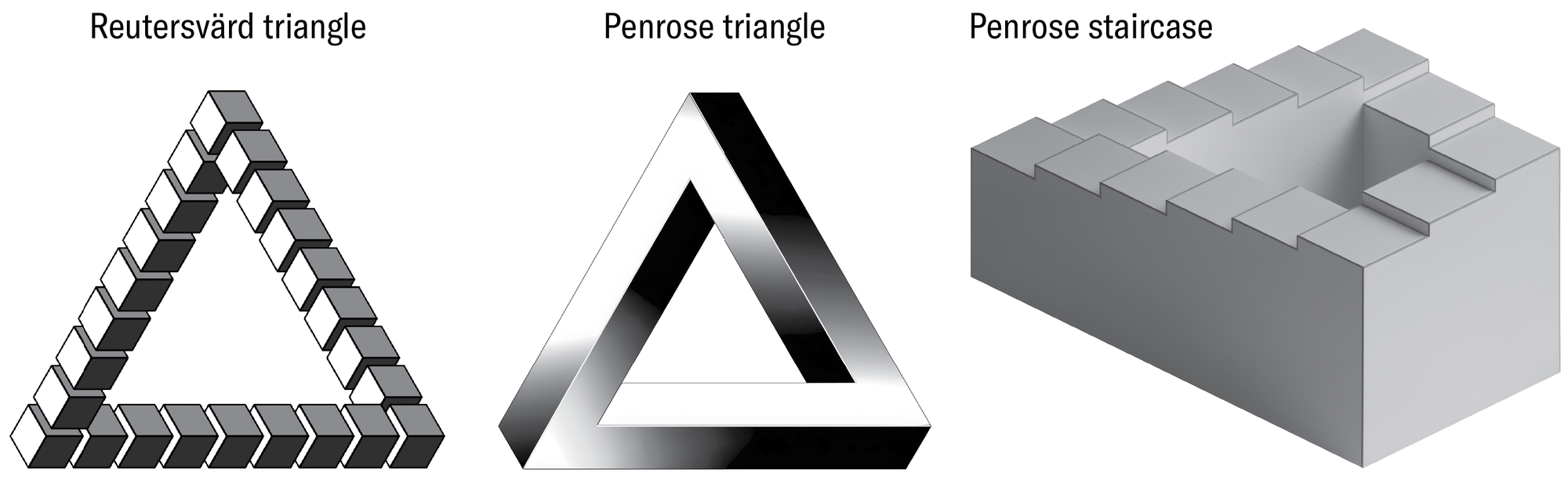
An impossible object is something that looks realistic when drawn but can’t exist in real life. Dutch artist M. C. Escher is famous for depicting, for instance, staircases and waterfalls that are impossible to build in three dimensions. Many of Escher’s works are based on constructions by British mathematicians Roger and Lionel Penrose, such as the Penrose triangle and Penrose stairs, which they published in the 1950s.
Robert Ghrist
Now mathematicians Robert Ghrist of the University of Pennsylvania and Zoe Cooperband of the U.S. Naval Research Laboratory have created a mathematical classification system for visual paradoxes. These objects, they explain, are locally but not globally consistent. A ladybug walking along a Penrose staircase, for example, will feel like it has climbed a full set of stairs, yet it will have returned to the same height it was at when it started. “The essence of a paradox is: you walk around a loop, and something has changed,” Ghrist says. “It’s a mismatch between where you are and where you thought you were.”
On supporting science journalism
If you're enjoying this article, consider supporting our award-winning journalism by subscribing. By purchasing a subscription you are helping to ensure the future of impactful stories about the discoveries and ideas shaping our world today.
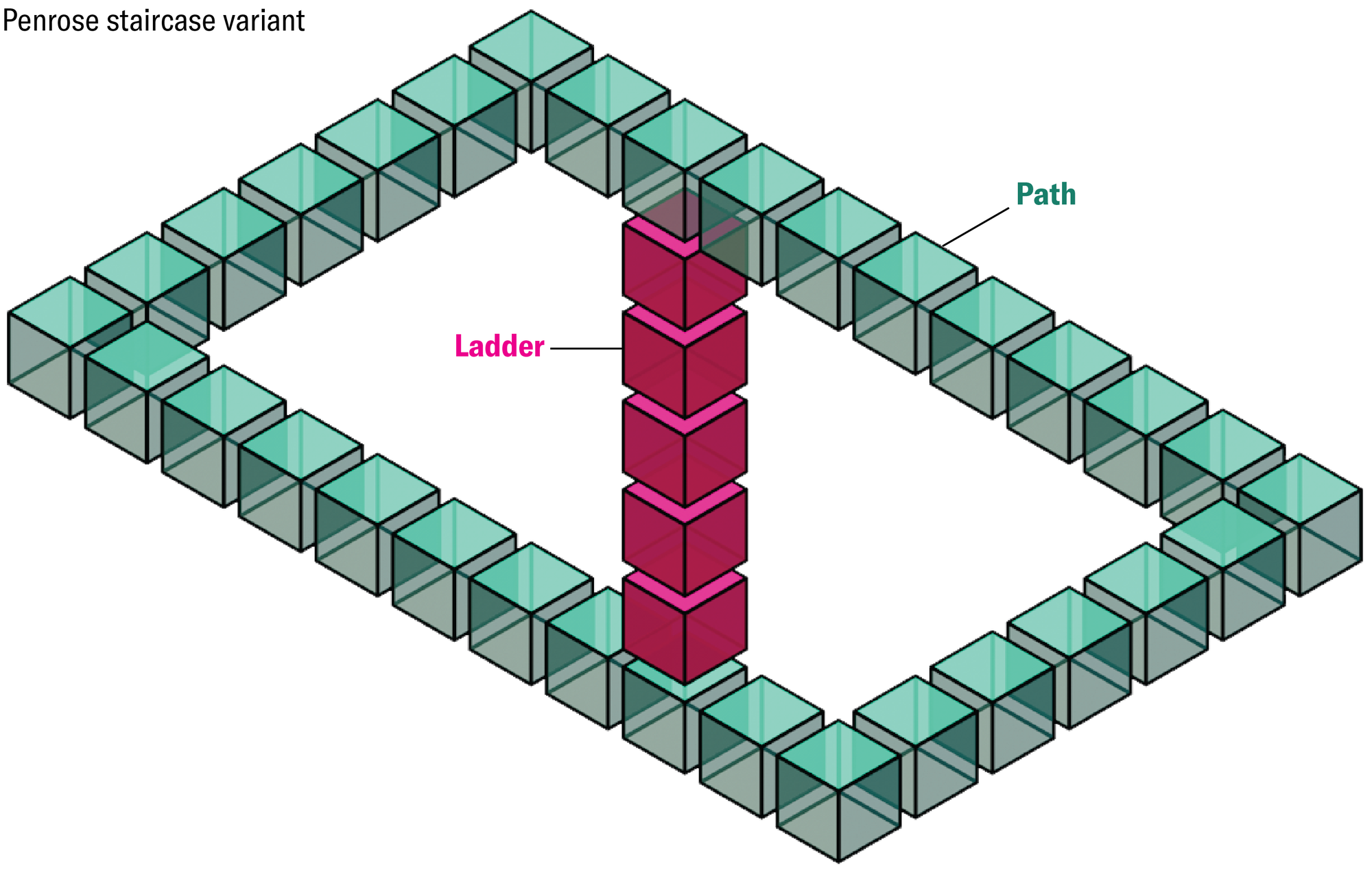
Ghrist and Cooperband used their framework to invent an impossible object that breaks reality in novel ways. It starts with a variant of the Penrose staircase. A bug walking around the blue path in the graphic, for instance, will feel like it is traveling a level course, but if it takes the ladder connecting two opposite sides, it will feel as if it has climbed to a new height. Both courses are locally consistent but globally inconsistent.
Robert Ghrist
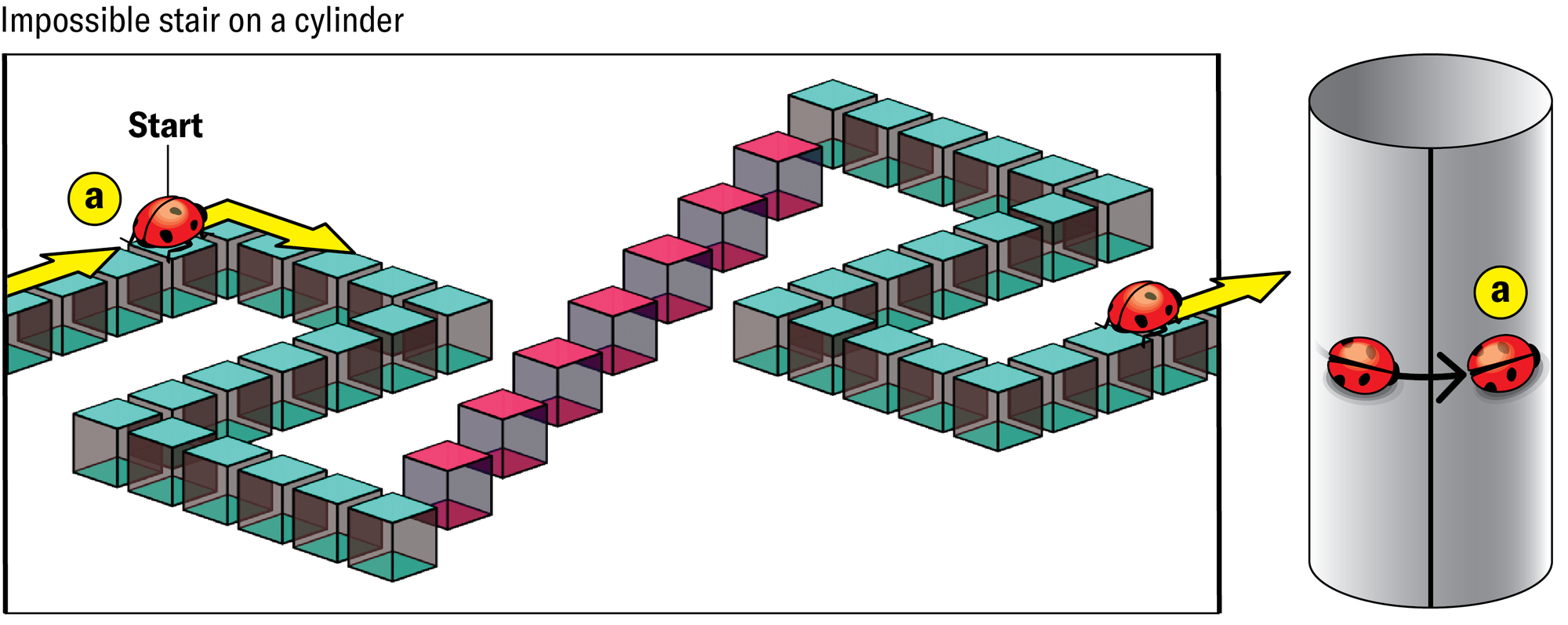
The researchers then imagined rearranging this rectangular path into a line and pasting it onto a cylinder so that the left-hand side connected to the right-hand side. In that case, a bug that walked to the right from its starting point would find itself exactly back where it started.
Robert Ghrist
The scientists further imagined winding the path like a Möbius strip—a form one can make by twisting a strip of paper and attaching the two ends. A bug that traveled to the right from its starting point would find that after it completed the loop, what it once considered right side up had changed.
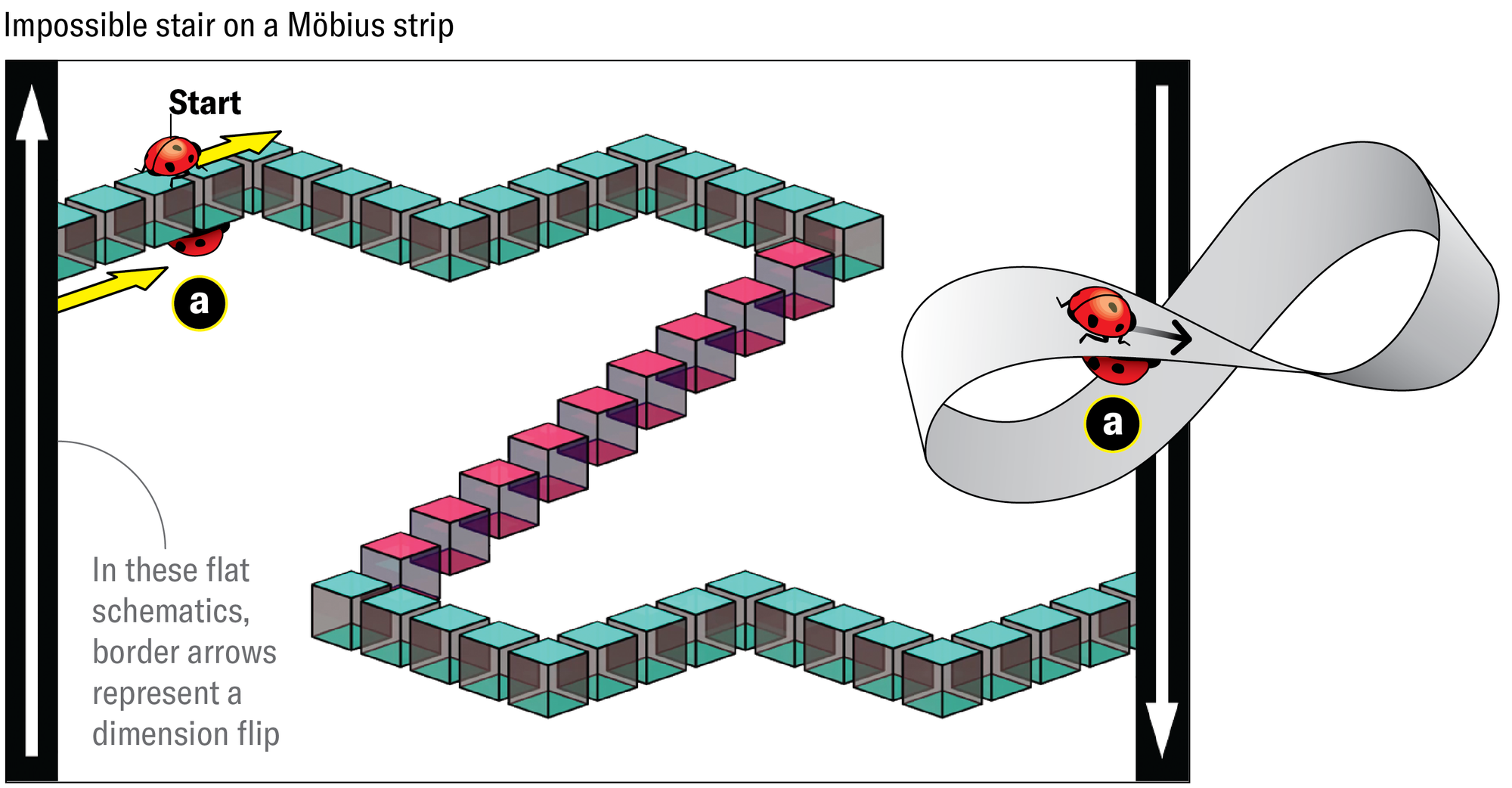
Robert Ghrist
This path forms the basis of the new impossible shape, which is a continuous multilevel staircase modeled on a shape called a Klein bottle, invented by German mathematician Felix Klein in 1882.
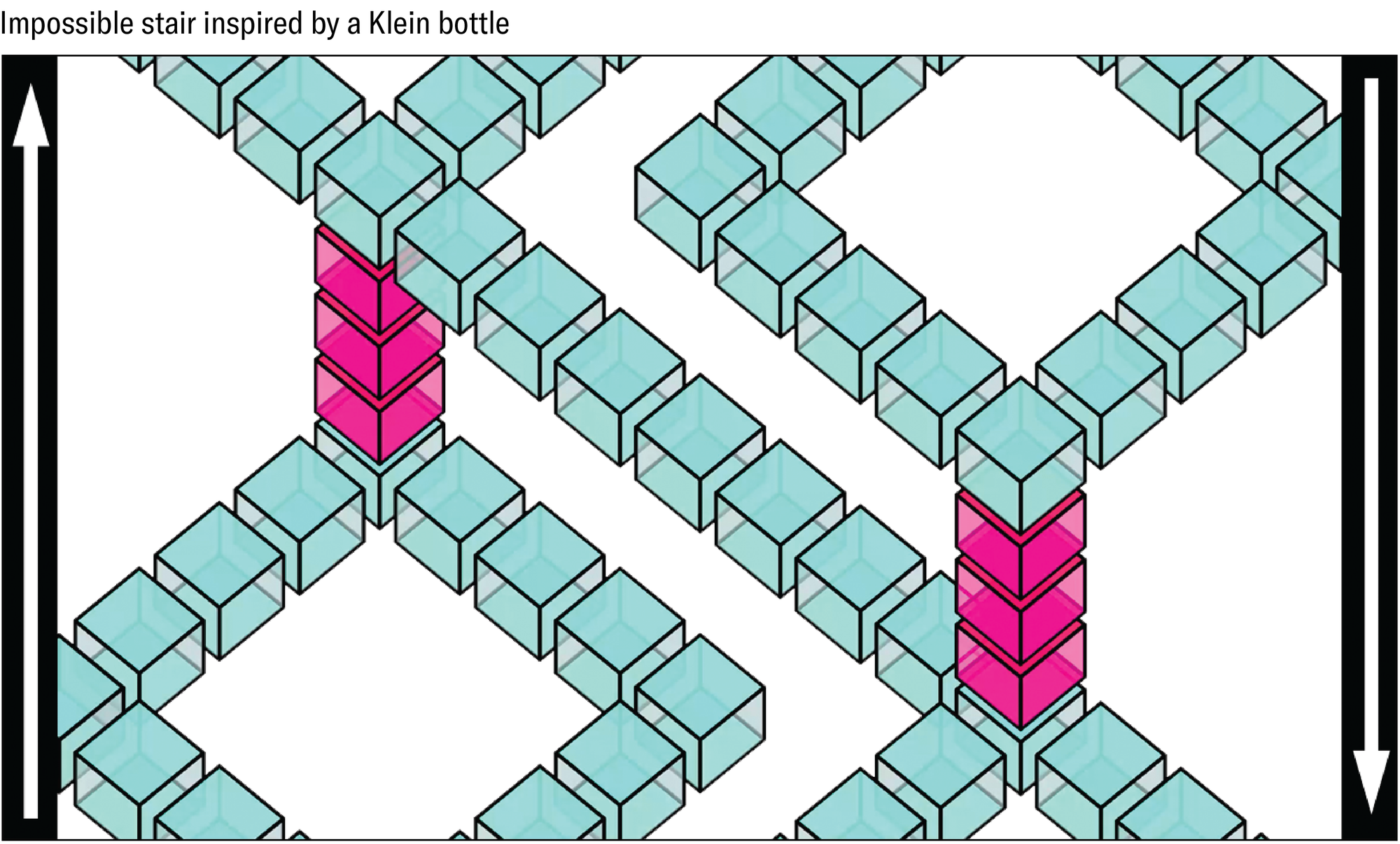
Robert Ghrist
In the impossible Klein ladder, a bug’s orientation flips when it crosses a vertical edge, just as it does in the Möbius strip. A ladybug can make a horizontal loop from its starting point by moving up a ladder, across a pathway, up another ladder and across a vertical edge. When the bug has finished the loop, it is upside down relative to the way it started (a).
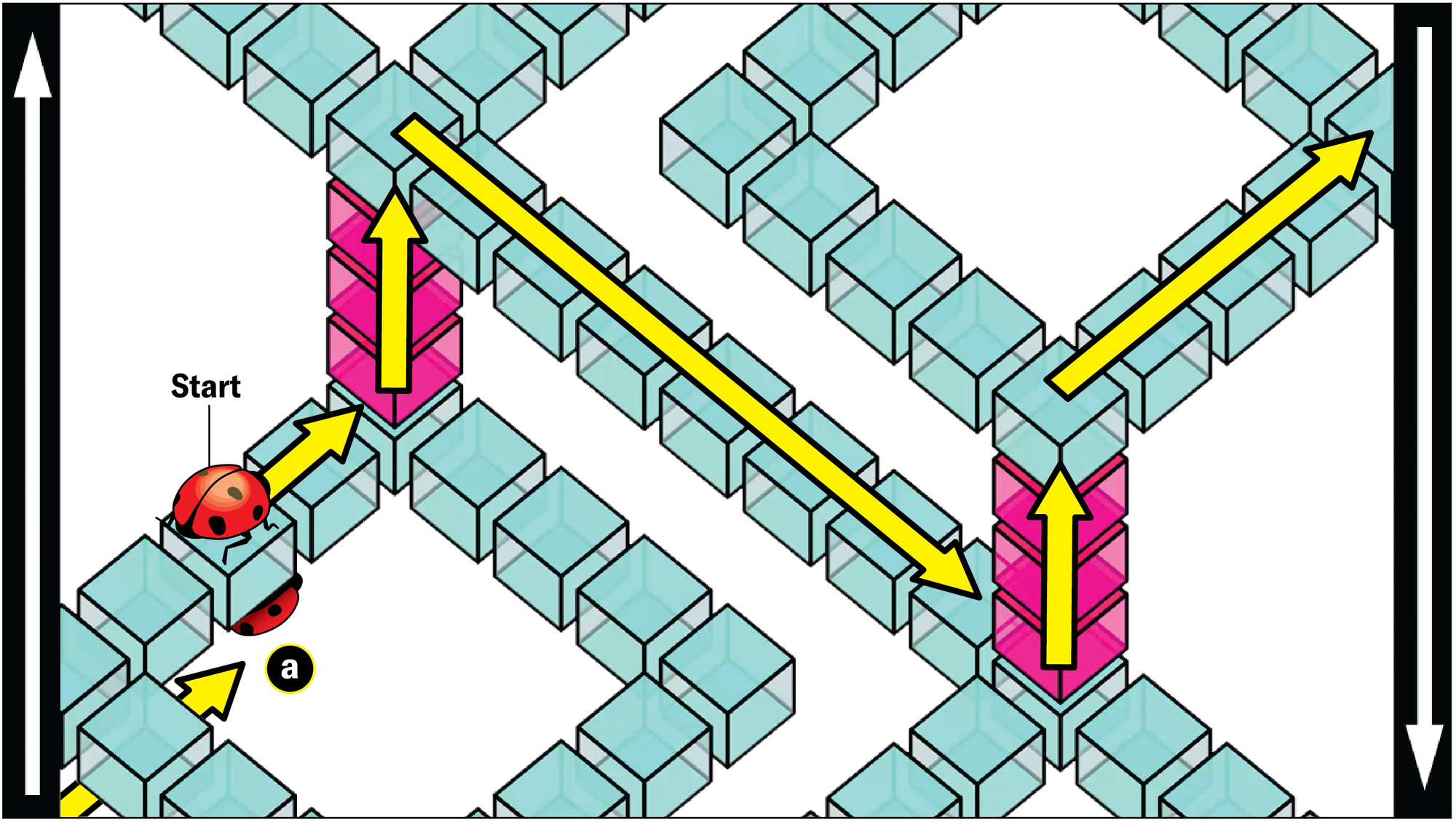
Robert Ghrist
When the ladybug makes a vertical loop and crosses a horizontal edge, however, its orientation stays the same, just as on the cylinder. To make this kind of loop, the bug will start again at the same spot, move up one ladder, then head left to cross over the horizontal edge, completing the loop without having made any flips (b).
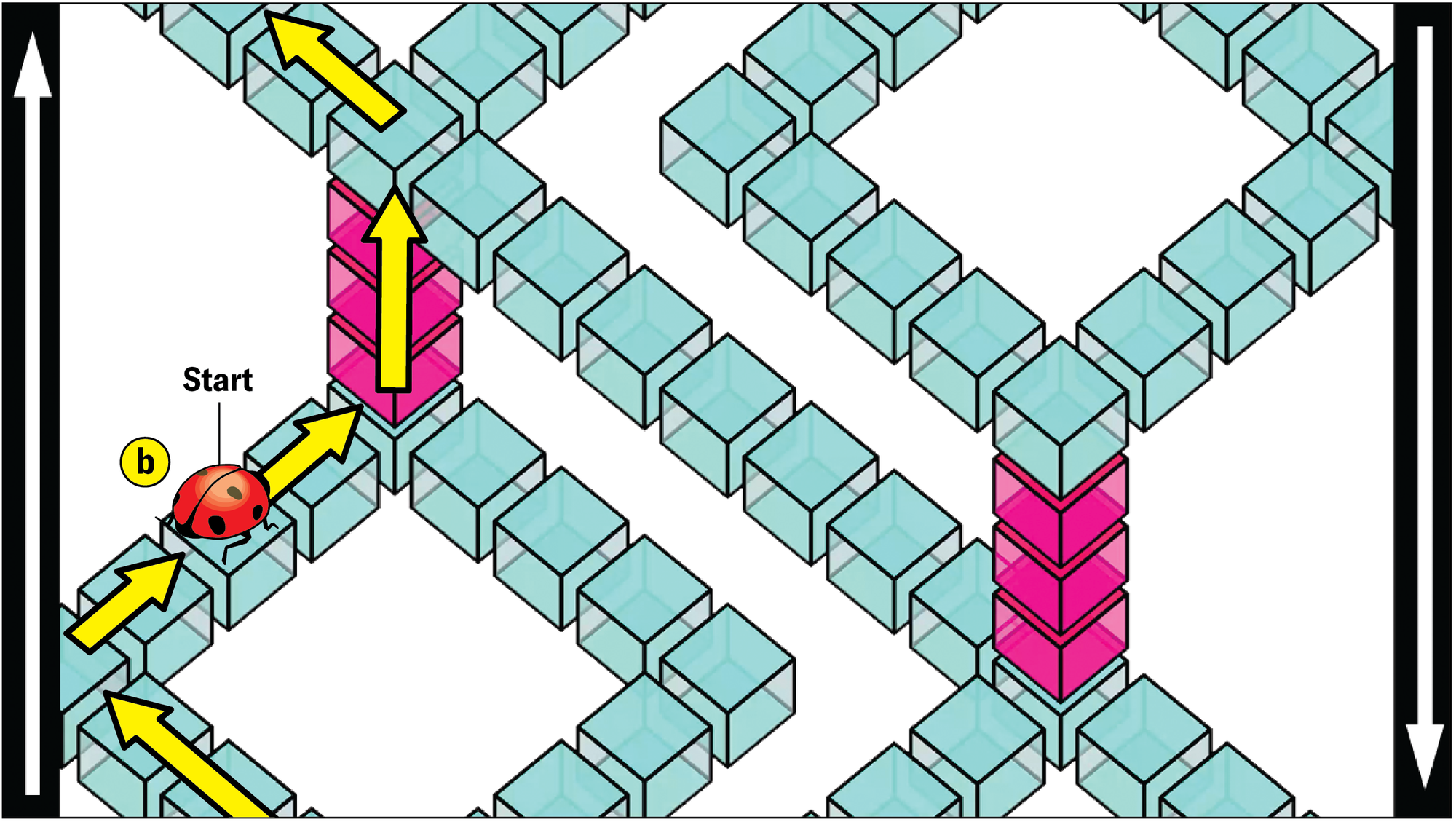
Robert Ghrist
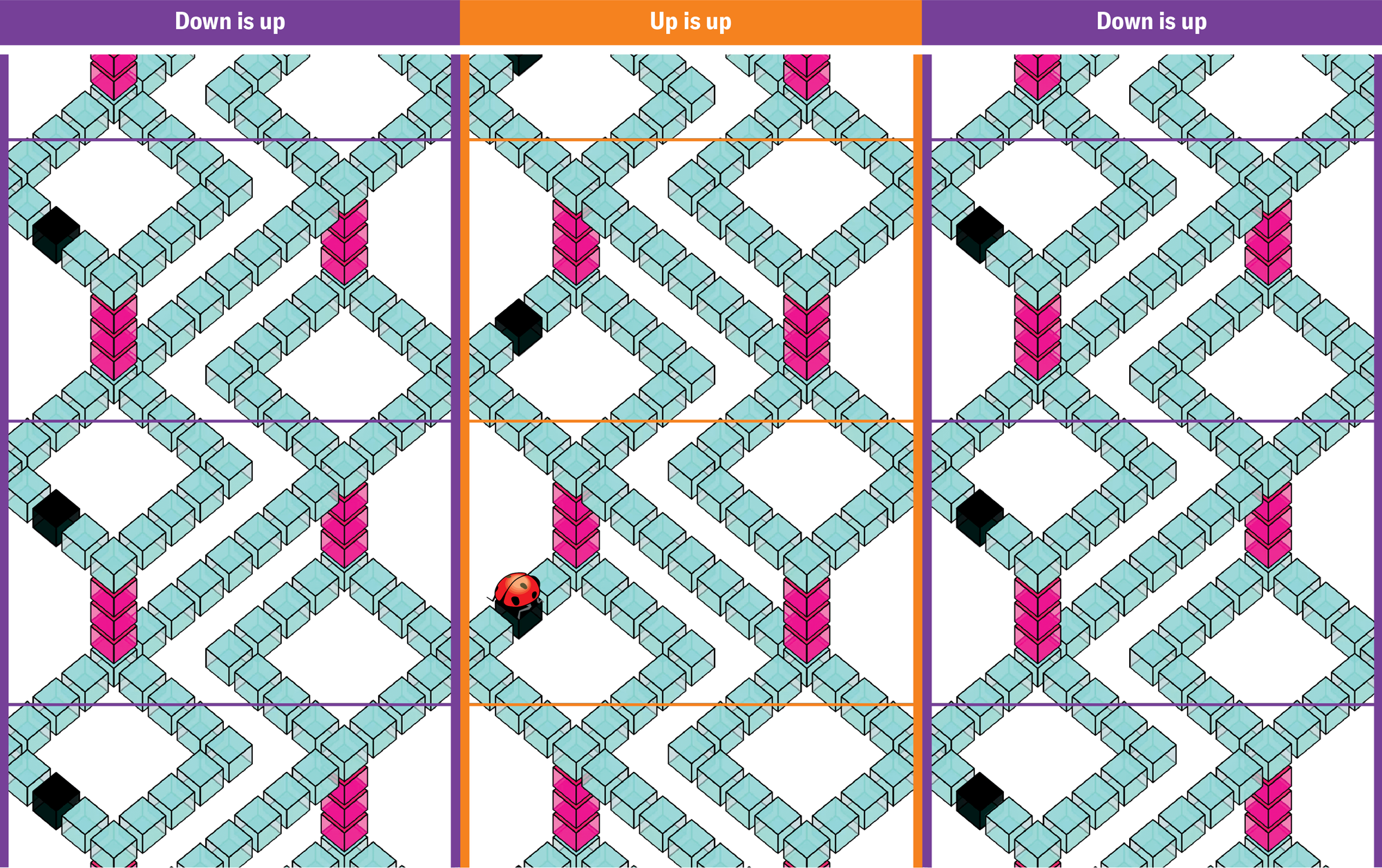
The grid below represents the “unwrapped” perceptual space that our ladybug experiences; flips are factored into the tiling by reflections. If the ladybug is in the center column, it’s not flipped. If it moves horizontally into the leftmost or rightmost column, it has reflected and become flipped—the meaning of “up” becomes reversed. The black cubes all mark the “same” starting point with an unknowable absolute height and orientation.
Robert Ghrist
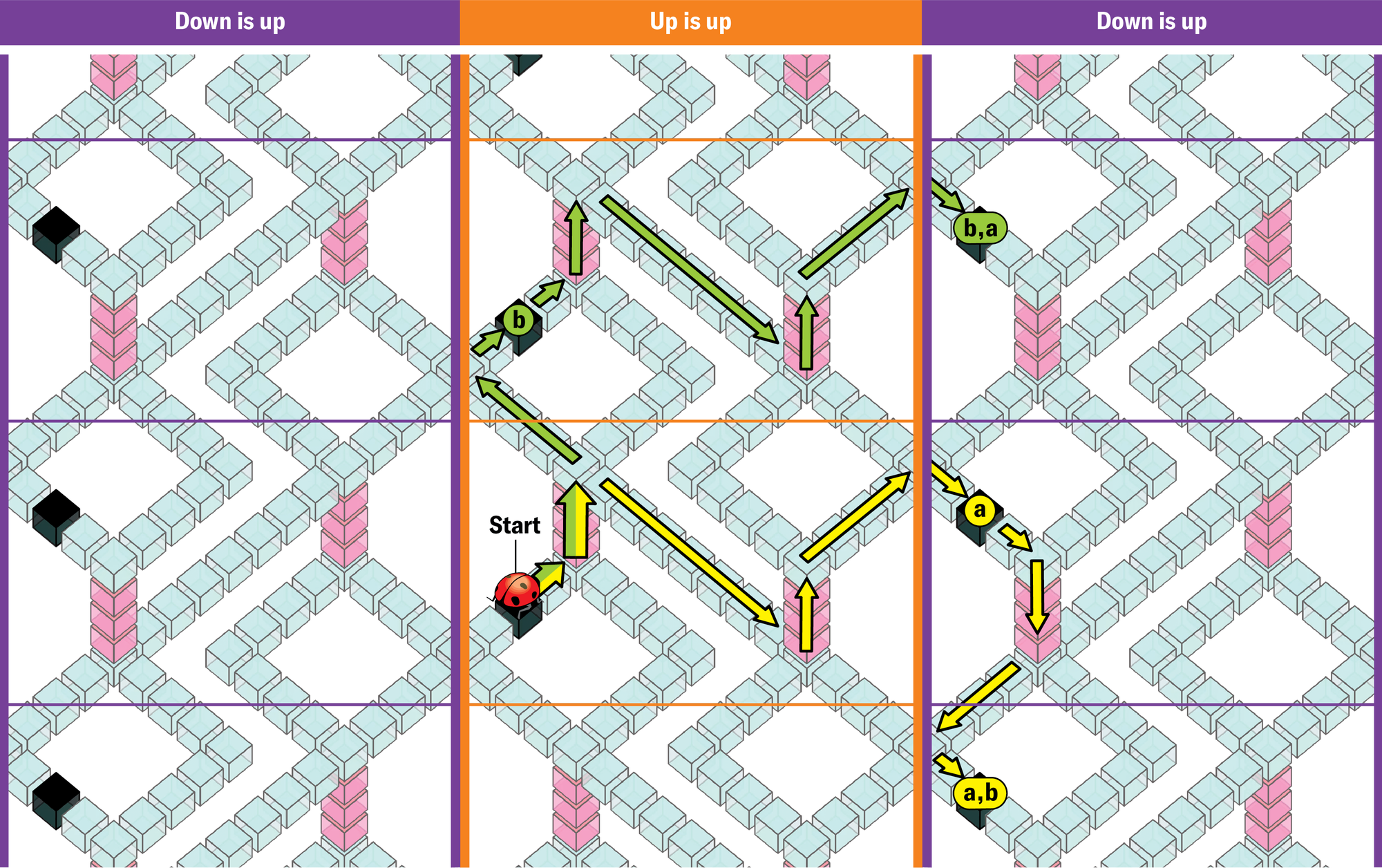
Consider a ladybug that makes both a horizontal and a vertical loop in this space. The order of those loops is important. In scenario 1 (yellow), the ladybug does a horizontal (reflecting) loop first (a), then a vertical loop (b). The result: it climbs up two ladders, then its orientation flips and it climbs “up” a third from its perspective. But from the outside it seems it has really climbed down. In scenario 2 (green), the ladybug does a vertical loop first (b), then a horizontal (reflecting) loop (a). The result: it climbs up three ladders to get back to what it perceives to be the same spot it started in.
Robert Ghrist
This new shape is the first impossible object for which such ordering produces different outcomes—a property called nonabelian. “We deal with nonabelian things all the time in math,” Ghrist says, “but it’s never been seen in a visual paradox before.”