
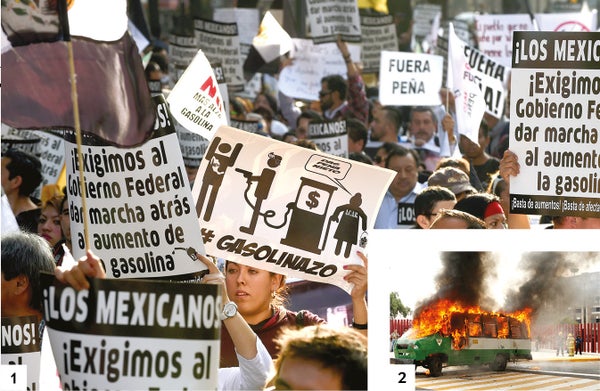
Mexico kicked off 2017 with a 20 percent spike in gasoline prices, driven in part by the phasing out of subsidies. Some consumers set fires at gas stations—a response that highlights the backlash countries can face as they stop subsidizing carbon-based fuels and start encouraging climate-friendly alternatives. Now the Mexican government and stock market are experimenting with a gentler tool for discouraging carbon emissions: cap-and-trade. Mexico, which in 2012 passed the developing world's first climate law, is well placed to set an example for other developing economies looking to shrink their carbon footprints.
In cap-and-trade programs, regulators issue permits allowing companies to pollute a certain amount. In most systems, the cap gets lower over time, giving businesses a choice: slash emissions further or buy permits on the market from another company.
More than 80 Mexican companies are signed up to simulate permit trading. Using software developed by an organization within the Mexican Stock Exchange—MÉXICO2—companies are familiarizing themselves with the everyday logistics of carbon trading, says MÉXICO2 research analyst Andrés Prieto. By late 2018 the federal government will require Mexico's biggest emitters to participate.
On supporting science journalism
If you're enjoying this article, consider supporting our award-winning journalism by subscribing. By purchasing a subscription you are helping to ensure the future of impactful stories about the discoveries and ideas shaping our world today.
The nation has a cooperation agreement with California, which already trades carbon permits with several Canadian provinces. For now Mexico is learning from its North American neighbors' experience and may eventually join that market. “The very big lesson we learned in California, in comparison with Europe, is that it is not enough to have certainty about the emissions quantity,” Prieto says. Polluters also want a forecast for permit prices. In Europe's market, price volatility discouraged companies from making long-term investments in reducing their environmental footprint, despite a steadily lowering carbon cap. Mexico may also require a minimum price for carbon emission permits, as California does, so companies can better predict their future financial positions.
Mexico has no shortage of polluting industries—so progress in cutting emissions is within reach if the country can build up the capacity to regulate them, says economist Juan-Carlos Altamirano of the World Resources Institute in Washington, D.C.