
On supporting science journalism
If you're enjoying this article, consider supporting our award-winning journalism by subscribing. By purchasing a subscription you are helping to ensure the future of impactful stories about the discoveries and ideas shaping our world today.
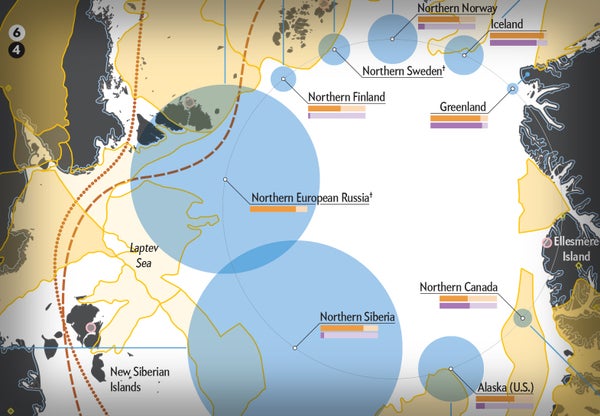
As the Arctic thaws, it becomes much more accessible—and desirable. An exhaustive 2008 U.S. Geological Survey study determined that 13 percent (90 billion barrels) of the world's undiscovered oil and 30 percent (1,670 trillion cubic feet, or 47 trillion cubic meters) of its undiscovered natural gas lie waiting (map). About half the Arctic Ocean is less than 500 meters deep, readily reachable by drilling rigs where sea ice has retreated. Countries, notably Russia, are building numerous airports, seaports and other infrastructure. And they are expanding military installations to protect assets and sustain increasingly busy shipping lanes.

Credit: Katie Peek (graphics); Mark Fischetti (text); Sources: U.S. Geological Survey (oil and gas data); Greg Fiske, Woods Hole Research Center, with data from spacequest.com (shipping data); The Indigenous World 2019, edited by David N. Berger et al. International Work Group For Indigenous Affairs, 2019 (Sami and Inuit populations); Statistics Finland; Statistics Sweden; Statistics Norway; Statistics Iceland; Statistics Greenland; Statistics Canada; U.S. Census Bureau; Russian Federal State Statistics Service; Arctic Portal (Northwest and Northeast Passages); International Institute for Strategic Studies (military installations); Heritage Foundation (military installations); GeoNames Gazetteer (populated places, airports); World Port Index (ports)