Normal Body Temperature Is Surprisingly Less Than 98.6

Healthy body temps are surprisingly lower

Join Our Community of Science Lovers!


On supporting science journalism

If you're enjoying this article, consider supporting our award-winning journalism by subscribing. By purchasing a subscription you are helping to ensure the future of impactful stories about the discoveries and ideas shaping our world today.


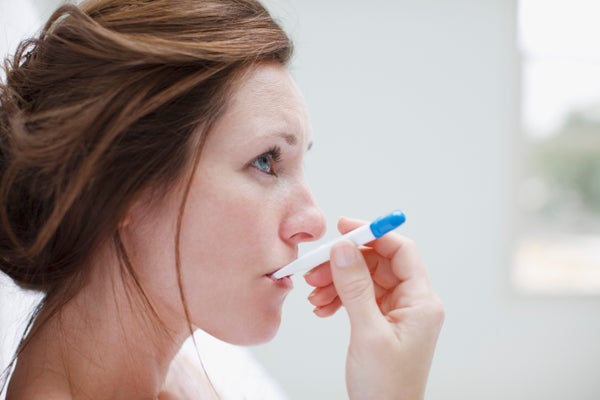
Normal body temperature is 98.6 degrees Fahrenheit, right? Not so. There is no baseline for humans, and even if there was, it would be closer to 97.7 °F. Temperature also varies across the day, peaking in late afternoon and bottoming out in early morning. It is slightly higher for women than for men as well. For two decades research has debunked the benchmark, set way back in 1868, yet it persists. One important ramification, says Jonathan S. Hausmann, a rheumatologist at Boston Children's Hospital, who led the latest study, is to redefine fever. Most doctors use 100.4 °F or higher, but if “normal” is lower, then the fever threshold should be, too. It also should vary with the daily pattern and be tailored to each individual, Hausmann says: “A child at 99.0 °F at 4 A.M. may be highly abnormal but at 4 P.M. could be within normal limits.”

Credit: Nadieh Bremer; Sources: “Normal Oral, Rectal, Tympanic and Axillary Body Temperature in Adult Men and Women: A Systematic Literature Review,” by Märtha Sundlevander et al., in Scandinavian Journal of Caring Sciences, Vol. 16, No. 2; June 2002; “A Critical Appraisal of 98.6 °F, the Upper Limit of the Normal Body Temperature, and Other Legacies of Carl Reinhold August Wunderlich,” by Philip A. Mackowiak et al., in JAMA, Vol. 268, No. 12; September 23–30, 1992; “Using Smartphone Crowdsourcing to Redefine Normal and Febrile Temperatures in Adults: Results from the Feverprints Study,” by Jonathan S. Hausmann et al., in Journal of General Internal Medicine. Published online August 13, 2018

Mark Fischetti was a senior editor at Scientific American for nearly 20 years and covered sustainability issues, including climate, environment, energy, and more. He assigned and edited feature articles and news by journalists and scientists and also wrote in those formats. He was founding managing editor of two spin-off magazines: Scientific American Mind and Scientific American Earth 3.0. His 2001 article “Drowning New Orleans” predicted the widespread disaster that a storm like Hurricane Katrina would impose on the city. Fischetti has written as a freelancer for the New York Times, Sports Illustrated, Smithsonian and many other outlets. He co-authored the book Weaving the Web with Tim Berners-Lee, inventor of the World Wide Web, which tells the real story of how the Web was created. He also co-authored The New Killer Diseases with microbiologist Elinor Levy. Fischetti has a physics degree and has twice served as Attaway Fellow in Civic Culture at Centenary College of Louisiana, which awarded him an honorary doctorate. In 2021 he received the American Geophysical Union’s Robert C. Cowen Award for Sustained Achievement in Science Journalism. He has appeared on NBC’s Meet the Press, CNN, the History Channel, NPR News and many radio stations.

More by Mark Fischetti
Scientific American Magazine Vol 319 Issue 6This article was published with the title “Goodbye, 98.6” in Scientific American Magazine Vol. 319 No. 6 (), p. 96
doi:10.1038/scientificamerican1218-96

It’s Time to Stand Up for Science

If you enjoyed this article, I’d like to ask for your support. Scientific American has served as an advocate for science and industry for 180 years, and right now may be the most critical moment in that two-century history.

I’ve been a Scientific American subscriber since I was 12 years old, and it helped shape the way I look at the world. SciAm always educates and delights me, and inspires a sense of awe for our vast, beautiful universe. I hope it does that for you, too.

If you subscribe to Scientific American, you help ensure that our coverage is centered on meaningful research and discovery; that we have the resources to report on the decisions that threaten labs across the U.S.; and that we support both budding and working scientists at a time when the value of science itself too often goes unrecognized.

In return, you get essential news, captivating podcasts, brilliant infographics, can't-miss newsletters, must-watch videos, challenging games, and the science world's best writing and reporting. You can even gift someone a subscription.

There has never been a more important time for us to stand up and show why science matters. I hope you’ll support us in that mission.

Thank you,

David M. Ewalt, Editor in Chief, Scientific American

Subscribe