Edited by Dava Sobel
Schrödinger’s Cat Laments
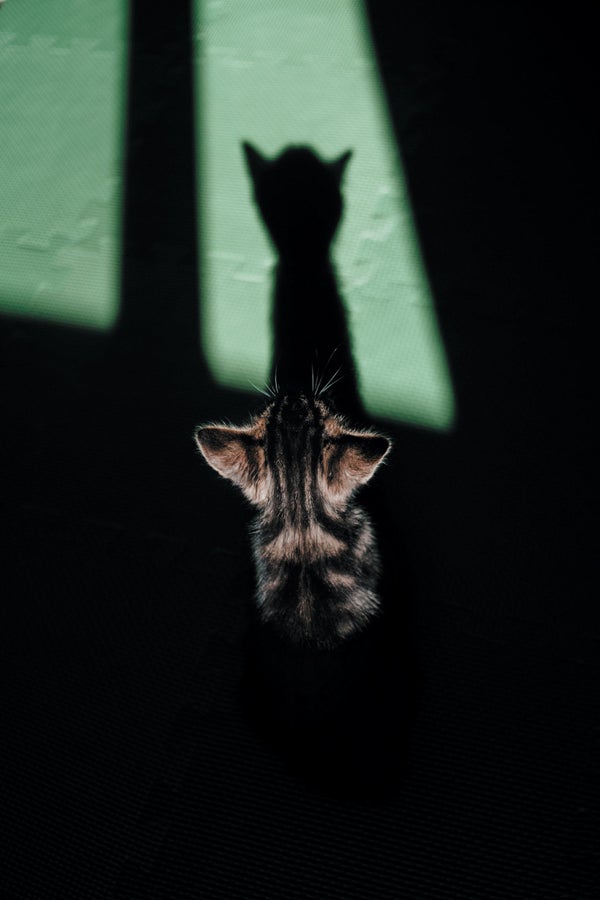
Look at me in this box all alone.
Who’s to care if I don’t feel at home?
There’s just this device,
Which isn’t so nice,
To see that I live or get blown....*
On supporting science journalism
If you're enjoying this article, consider supporting our award-winning journalism by subscribing. By purchasing a subscription you are helping to ensure the future of impactful stories about the discoveries and ideas shaping our world today.
Schrödinger’s Cat Complains
Erwin’s cat caterwauls to her mate:
Verschränkung’s† controlling my fate.
Alive and quite dead,
I exist in his head,
A mere plaything of his mental state.
Schrödinger’s Cat Reconsiders
So, okay, I’ll exist in his head,
Both alive and impossibly dead.
I’ll welcome this feat
From my sweet catbird seat
For as long as he keeps me well fed.
Schrödinger’s Cat Explains
Though I’m only a thought in his mind,
It is taught I’m a curious kind.
Not here and not there,
I pop up everywhere
Demonstrating one cat’s double bind.
*In a 1950 letter to Erwin Schrödinger, Albert Einstein wrote of the cat “alive and blown to bits.” Einstein’s original suggestion to Schrödinger in 1935 mentioned gunpowder, not a Geiger counter and poison.
†Verschränkung—“entanglement.” Schrödinger coined this term while developing the thought experiment.
Subscribe to Support Independent Journalism
Great science journalism requires human expertise, time, effort and creativity. And it costs money. That’s why I and the journalists here at Scientific American hope you’ll join our community.
When you subscribe, you are supporting staff and freelance journalists who are passionate about telling science stories that are true, important and compelling. Our editors and reporters are often experts in their fields, which means they understand the nuances of big discoveries and can untangle the breakthroughs from the hype. With a subscription, you are also supporting rigorous fact-checking to ensure the words we publish are precise and accurate. And you’re supporting original illustrations, graphics and photos that bring you closer to an advanced laboratory, an ice sheet in Antarctica or a space mission in orbit. You’re helping us craft other types of high-quality journalism as well: Our newsletters are carefully written, edited and curated by staffers you have or will come to know and love. Our Science Quickly podcast is based on original reporting, collaboration with editors and scientists and exacting production.
Subscriptions keep this engine running so we can continue to deliver thoughtful, rigorous and independent science journalism to you. In an era of viral misinformation, this work is crucial. If you value what we do, I hope you’ll consider joining us as a subscriber