
You probably know the GIF as the perfect vehicle for sharing memes and reactions. We believe the format can go further, that it has real power to capture science and explain research in short, digestible loops.
So kick off your week right with this GIF-able science. Enjoy and loop on.
This Ancient Shark Really Sucked
On supporting science journalism
If you're enjoying this article, consider supporting our award-winning journalism by subscribing. By purchasing a subscription you are helping to ensure the future of impactful stories about the discoveries and ideas shaping our world today.
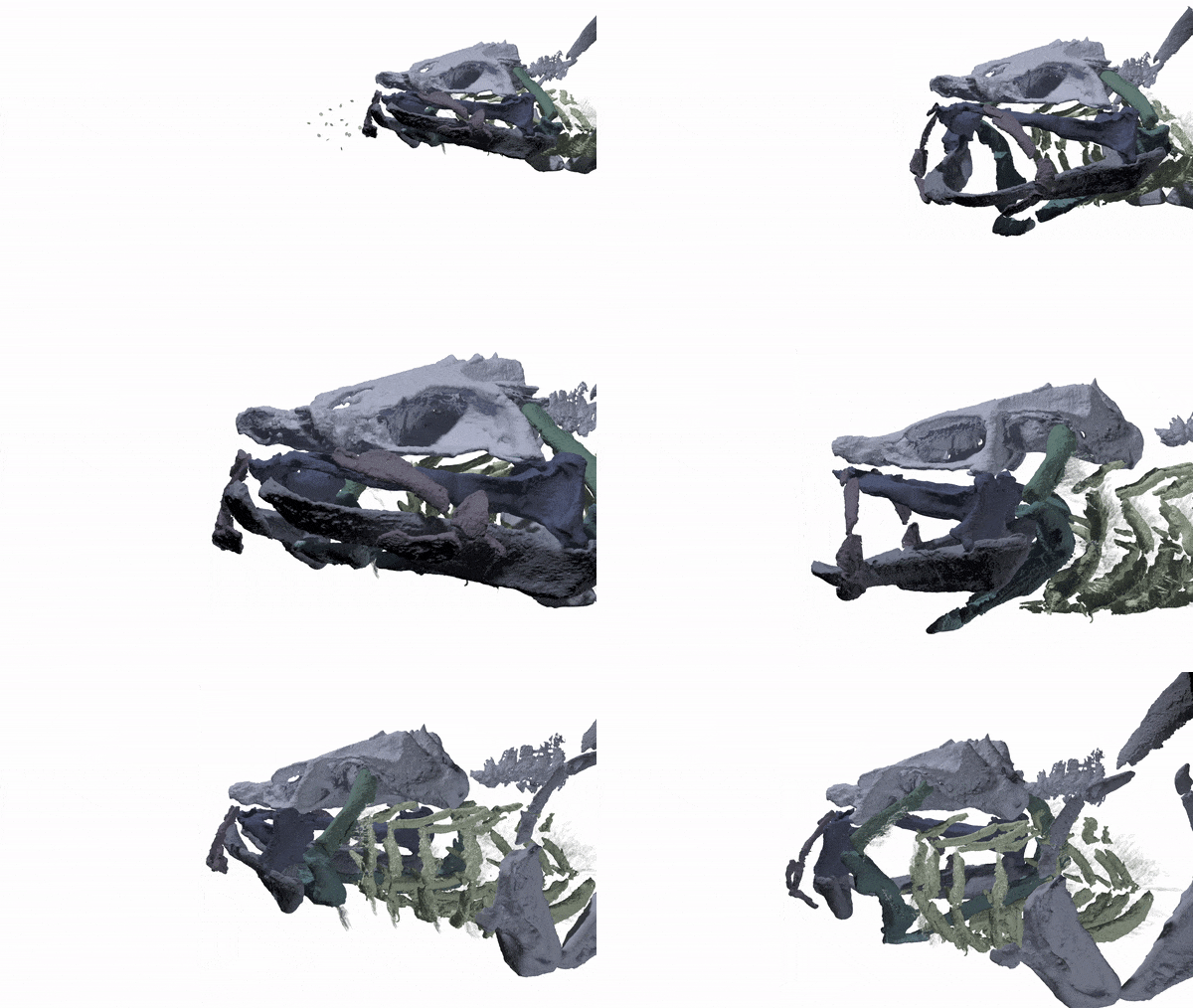
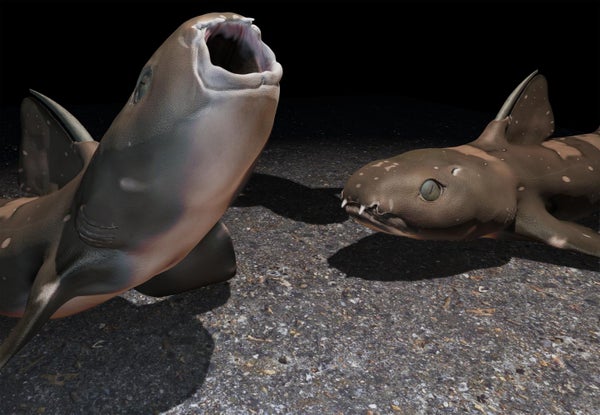
Evolutionary science is full of contests that carry strange bragging rights. Here is a question behind one of them: Was the first ocean-going suction feeder a bony fish or a shark? Now a group of researchers believe they have a new champion in the ancient shark Tristychius arcuatus. The GIF above shows the virtually reanimated animal feeding as it might have 335 million years ago—50 million years earlier than bony fish fossils showing the same apparent inhalation abilities. Modern nurse sharks lunch in much the same way.
The team built the reconstructed digital model from a CT scan of a rock a Tristychius fossil was preserved in. Doing so showed the shark had the ability to purse its lips and to expand its cheeks to slurp up small fish and other marine life from hard-to-reach places.
Breaking: Tardigrades, Still Weirdly Adorable
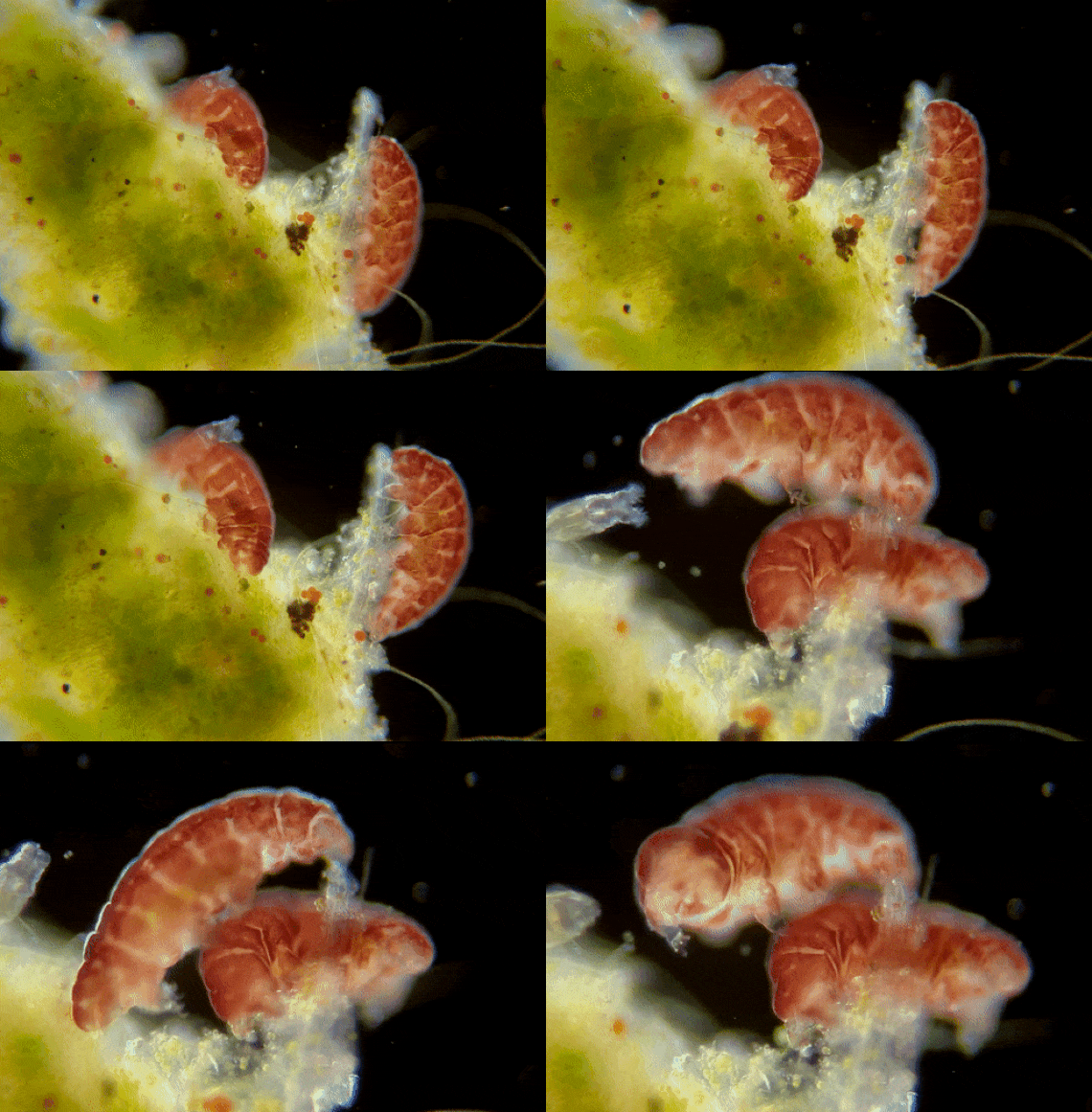
Credit: My Microscopic World
Whether you know them as water bears, moss piglets or tardigrades, you’ve likely seen these microscopic critters before. Widely known for their unusual hardiness in the face of extreme cold, heat and radiation, they have been called “invincible” or “immortal.” But while they can survive harsh environments in a hibernation like “tun” state, tardigrades are actually fragile creatures that can be hurt or killed easily—even by single-celled organisms. Nevertheless, they are incredible animals, so here are a few tardigrade fun facts to accompany this beautiful imagery by My Microscopic World:
Tardigrades are not closely related to anything else on earth; they belong to their very own phylum, Tardigrada.
They are encased in a skin like covering called a cuticle, which they must periodically shed and regrow.
Some species have two “eyes,” each made of a single light-sensitive cell.
Tardigrades are born with the same number of cells they will always have; their cells simply grow as they do.
Despite being made of only thousands of cells, tardigrades have a brain.
Bird Population Takes a Dive
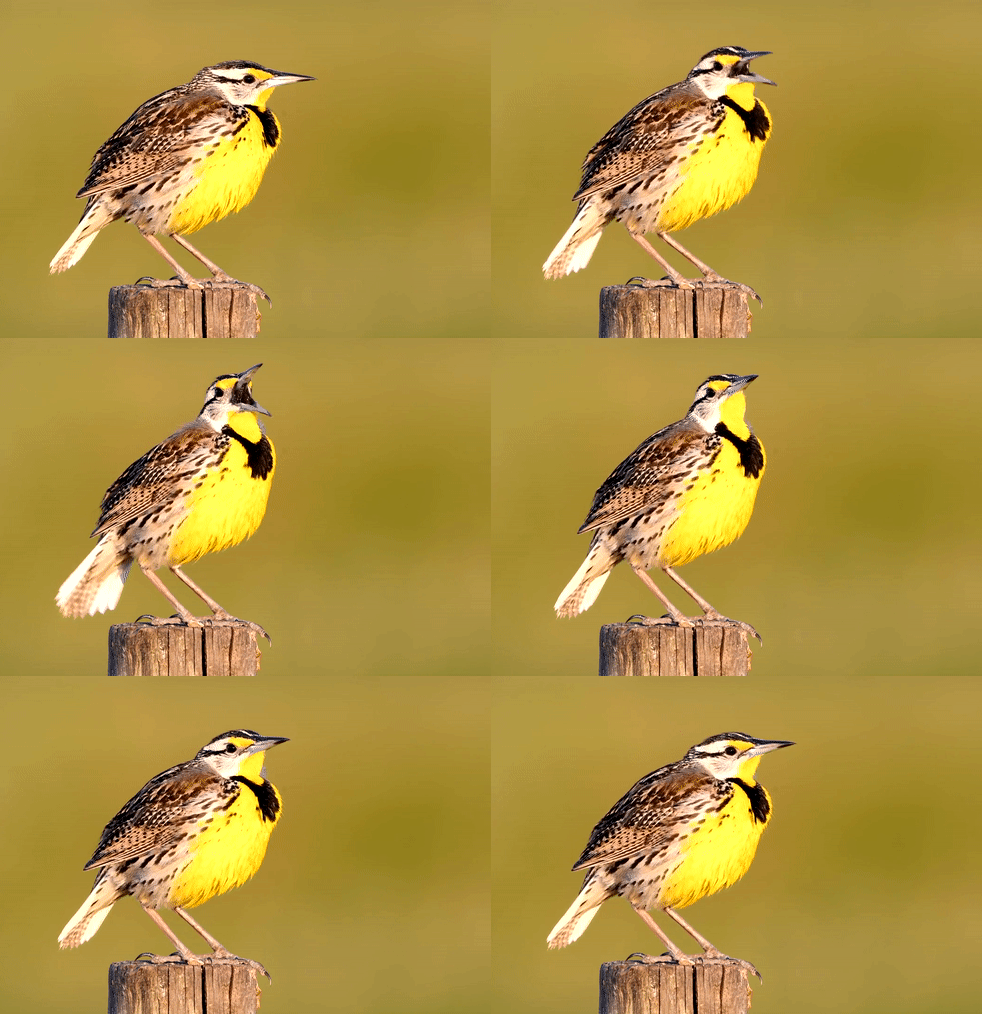
Credit: Cornell Lab of Ornithology
A new study presents a harrowing statistic: since 1970, North America has lost three billion birds, nearly 30 percent of the population. Even common and beloved types, such as species of sparrows, finches, swallows and meadowlarks have taken a massive hit. Humans are to blame. We have degraded and erased bird habitats while introducing other threats, including domestic cats and collision hazards (that is, windows, cars and cell towers).
These findings are heartbreaking, but the situation is not without hope. The study shows that some birds have made rapid turnarounds as a direct result of conservation efforts. Populations of waterfowl (a category that includes ducks, geese and swans) have increased by 56 percent, following concerted efforts among hunters and conservationists, as well as government funding to protect and restore wetlands. Similar campaigns have also helped hawks, eagles and ospreys.
Dorian in Exquisite Detail

Credit: Dakota Smith
Hurricane Dorian was devastating. It was the strongest storm in history to make landfall in the Bahamas, and its human and financial toll is still being calculated. What is known is what Dorian looked like as it barreled along its path.
In our modern era, there are always eyes in the sky to point at any large storm. All it takes to turn those satellite images into a beautiful view of a terrible storm is a weather geek. What you see above is Dorian, captured in images from the GOES-16 satellite that were compiled and edited together by Dakota Smith, a visiting researcher at the National Center for Atmospheric Research. The full video, which shows 12 days in Dorian’s short but deadly life, can be seen here.
Slap Bots
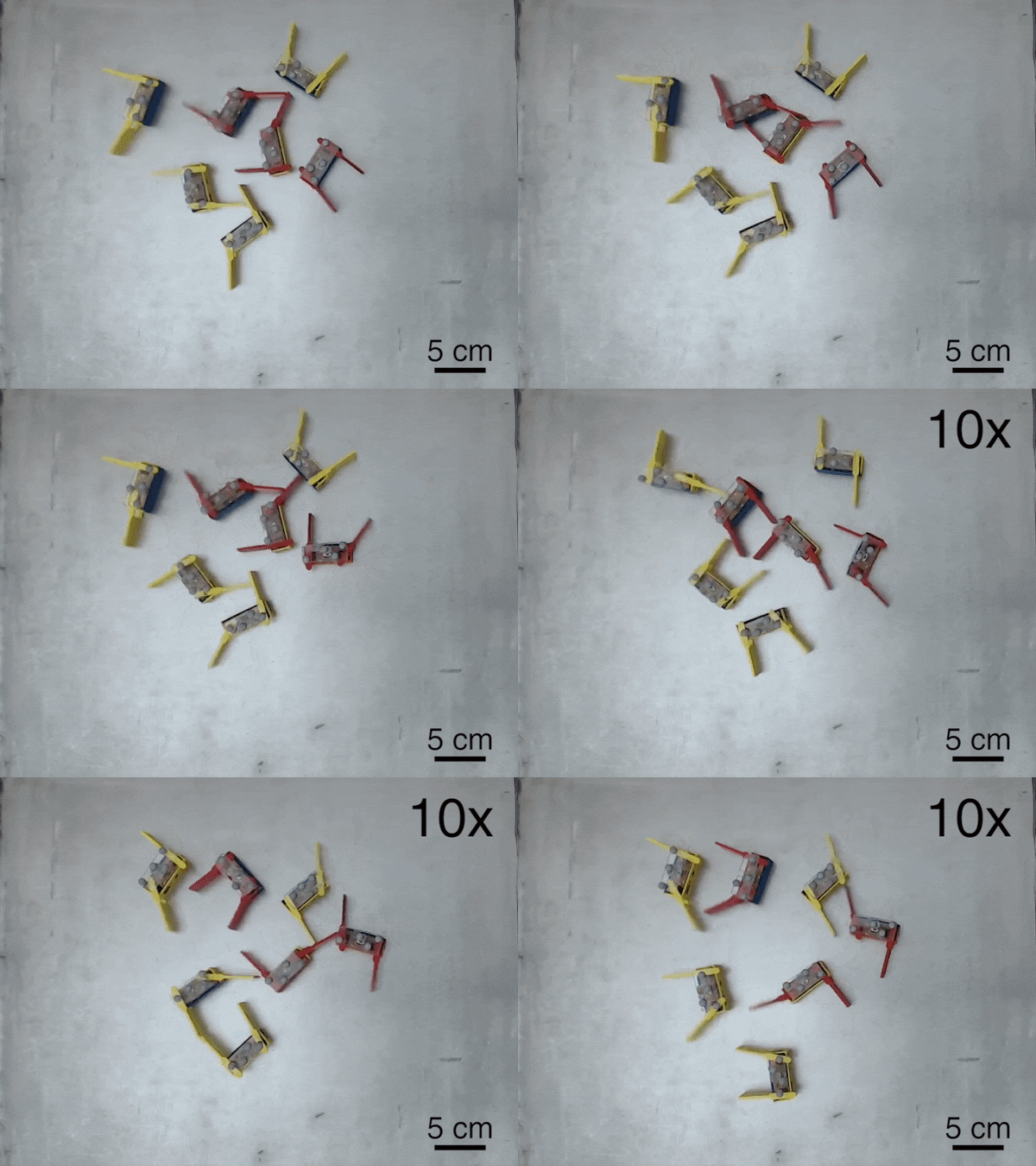
PSA: Small autonomous robots are slapping one another now. That is all.