
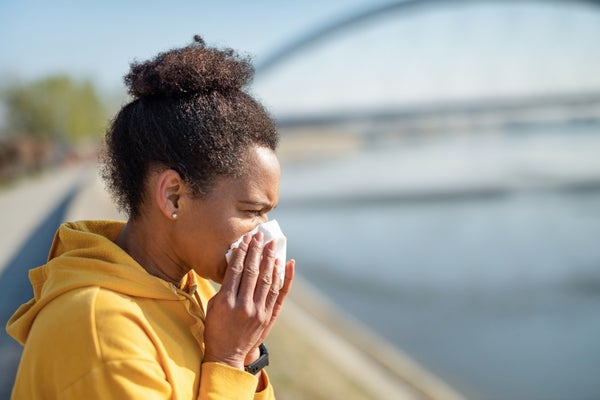

I'm currently getting over a cold. In fact, as I write this I have a warm drink and a box of tissues right beside my laptop. It isn’t a bad cold (or even a man cold), it’s just enough to annoy me, interrupt my sleep, and cause me to miss a few workouts. It's my off-season (I'm not training for any events or races), so it isn't a big deal. But when it happens in the spring or mid-summer, I am not so cavalier about missing training sessions. In fact, I can get downright ornery.
It doesn’t seem to matter how many times I get sick during the race season or how many times the athletes I coach fall prey to the seasonal flu; I still do a lot of hand-wringing over whether or not I should exercise while sick. Should I be jumping on my bike or doing a heavy lifting session?
On supporting science journalism
If you're enjoying this article, consider supporting our award-winning journalism by subscribing. By purchasing a subscription you are helping to ensure the future of impactful stories about the discoveries and ideas shaping our world today.
Well, don’t worry. This wouldn’t be Get-Fit Guy's Quick and Dirty Tips if I didn’t have a few guidelines for you to follow. But before I get to those, let’s talk about the immune system.
What is the immune system?
Your immune system is comprised of six components that do their best to protect you from foreign invaders.
Lymph nodes and lymphatic system, which recognize and fight invading pathogens
Respiratory system, which creates mucus, coughs and sneezes to trap and remove contaminants
Skin, a relatively thin but very effective barrier against invading pathogens
White blood cells, which attack pathogens in your blood and other tissues of your body
Your spleen, a major organ that helps protect you from bacterial infections
Your stomach, which contains acid that kills harmful bacteria and also contains good bacteria that help to fight pathogens and absorb nutrients. (Antibodies secreted by your intestinal cells also help to fight off foreign invaders.)
What does immune health mean?
Every day we come in contact with thousands of different viruses and bacteria. We touch things like a seat on a bus or a cart at the grocery store and then we touch our face. The bugs can then get access to our bodies through our mucosal surfaces (eyes, nose, mouth, or a break in our skin).
The majority of the time the invading foe will be thwarted by our mighty white blood cells, which capture and kill the bugs before they can replicate and enter our bloodstream.
As gross as it sounds, we actually swallow a surprisingly high number of bacteria and pathogens every single day, but most of them die in our saliva or in the acid and healthy bacterial environment of the stomach. Unfortunately, some bugs are stronger than others or have mutated in ways to evade our immune response, and then we are susceptible until our immune system adapts and finds a way to kill the new version of the invader.
Continue reading “Should You Exercise While Sick?” on QuickAndDirtyTips.com