
Editor’s Note (2/5/24): On April 8, 2024, a total solar eclipse will be visible from parts of the U.S., Mexico and Canada. This will be the last opportunity to see the phenomenon in the contiguous U.S. and Canada until 2044.
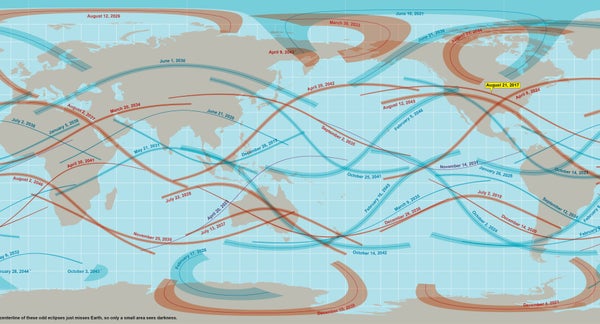
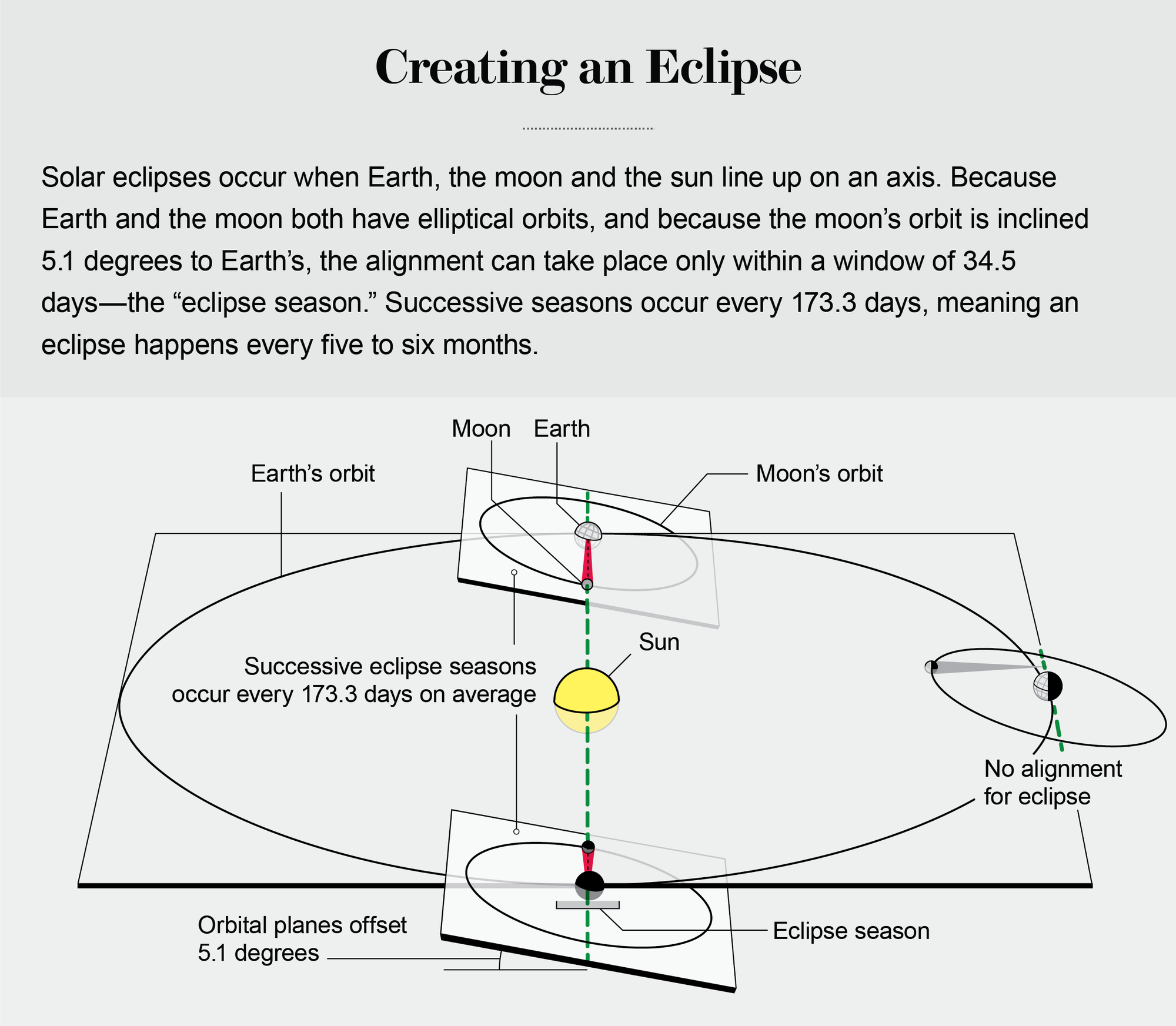
Excitement about the August 21, 2017, eclipse is as hot as a star, but solar eclipses happen at least twice a year, when the orbits of the moon and Earth align with the sun. What is unusual this time is that the moon will totally block the sun, instead of doing so partially, and that the strip of darkness cast on Earth will fall on millions of people rather than plankton out at sea or polar bears or penguins at the poles. Forty-six solar eclipses of various types will occur over the next 30 years. Grab a friend and go.

Credit: Jen Christiansen
On supporting science journalism
If you're enjoying this article, consider supporting our award-winning journalism by subscribing. By purchasing a subscription you are helping to ensure the future of impactful stories about the discoveries and ideas shaping our world today.

Credit: Jan Willem Tulp; Source: Eclipse Predictions by Fred Espenak, NASA GSFC Emeritus; consultation by Michael Zeiler
Eclipses to the Year 3000
Creatures on Earth will witness 2,354 solar eclipses between 2017 and 3000. They will occur at regular intervals of slightly less than six months, which means that each year, eclipse season shifts on the calendar. Eclipses also occur in cycles; each successive eclipse in a cycle casts a similar shadow band on Earth. During a total eclipse, complete darkness at any given spot lasts less than seven minutes, so if you want to see one, plan ahead.
Credit: Jen Christiansen
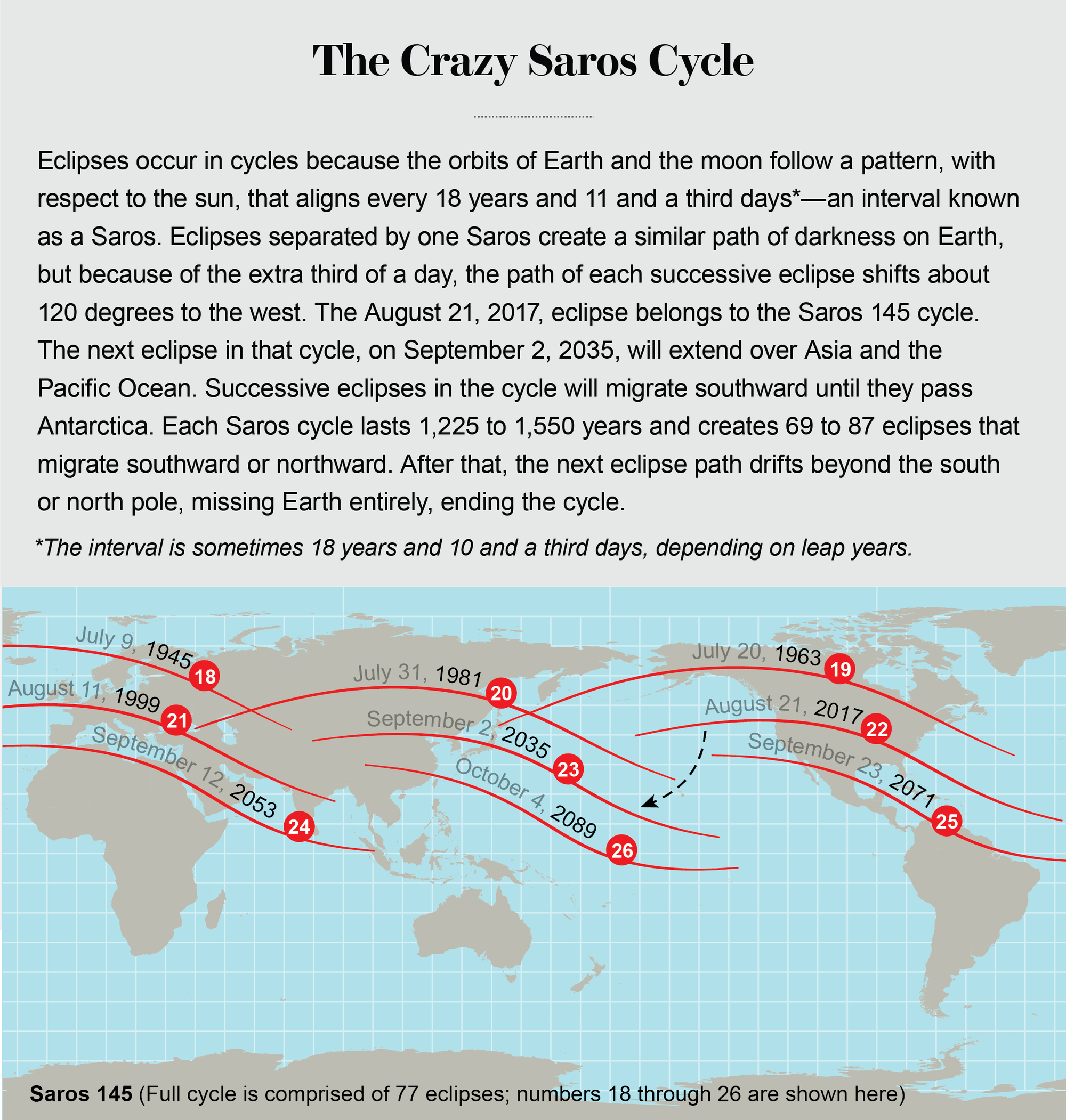
Credit: Jan Willem Tulp; Source: Eclipse Predictions by Fred Espenak, NASA GSFC Emeritus; consultation by Michael Zeiler

Credit: Jan Willem Tulp; Source: Eclipse Predictions by Fred Espenak, NASA GSFC Emeritus; consultation by Michael Zeiler