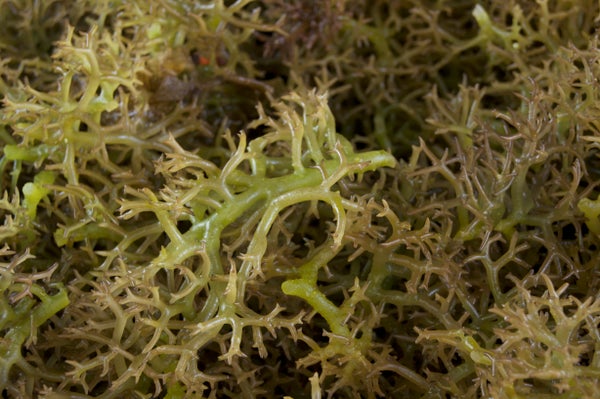
Carrageenan has been used in traditional food preparation for hundreds of years and is an ingredient in many organic and vegan foods. But now critics are calling for a ban. Is carrageenan safe? Nutrition Diva sorts through the evidence
Carrageenan has been the subject of a lot of controversy and several of you have asked me to comment. For those who may not be up to speed on the topic, let me start with a quick overview.
What Is Carrageenan? Carrageenan is an extract from a red seaweed commonly known as Irish Moss. This edible seaweed is native to the British Isles, where it's been used in traditional cooking for hundreds of years. It's also widely used in the food industry, mostly as a thickener and gelling agent. You'll find it in ice cream, cottage cheese, non-dairy milks, jelly, pudding, and infant formula. Unlike gelatin, which is made from animal products, carageenan is appropriate for vegans.
Who would have thought that this ancient, natural, plant-based ingredient would become center of a swirling controversy? But it certainly has. Some scientists have presented evidence that carrageenan is highly inflammatory and toxic to the digestive tract, and claim that it may be reponsible for colitis, IBS, rheumatoid arthritis, and even colon cancer. Equally respected scientists have detailed the reasons that this evidence is flawed and misleading, concluding that there is no valid reason to ban its use.
On supporting science journalism
If you're enjoying this article, consider supporting our award-winning journalism by subscribing. By purchasing a subscription you are helping to ensure the future of impactful stories about the discoveries and ideas shaping our world today.
Great science journalism requires human expertise, time, effort and creativity. And it costs money. That’s why I and the journalists here at Scientific American hope you’ll join our community.
When you subscribe, you are supporting staff and freelance journalists who are passionate about telling science stories that are true, important and compelling. Our editors and reporters are often experts in their fields, which means they understand the nuances of big discoveries and can untangle the breakthroughs from the hype. With a subscription, you are also supporting rigorous fact-checking to ensure the words we publish are precise and accurate. And you’re supporting original illustrations, graphics and photos that bring you closer to an advanced laboratory, an ice sheet in Antarctica or a space mission in orbit. You’re helping us craft other types of high-quality journalism as well: Our newsletters are carefully written, edited and curated by staffers you have or will come to know and love. Our Science Quickly podcast is based on original reporting, collaboration with editors and scientists and exacting production.
Subscriptions keep this engine running so we can continue to deliver thoughtful, rigorous and independent science journalism to you. In an era of viral misinformation, this work is crucial. If you value what we do, I hope you’ll consider joining us as a subscriber
Thank you,
Jeanna Bryner, Editor in Chief, Scientific American