
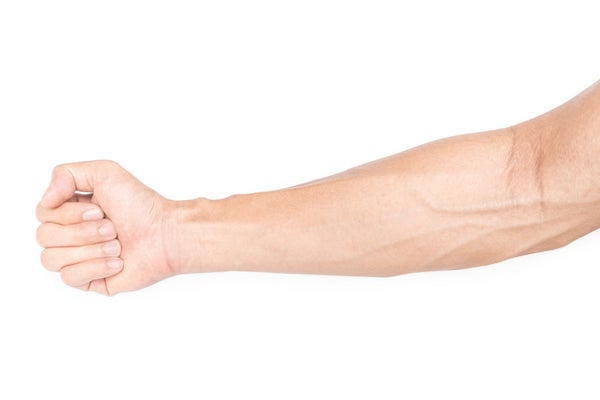

I received an email from a listener named Trish a few weeks ago all about the importance of forearm strength. Trish said, “I read somewhere that having weak forearms can limit your ability to build other muscles. That seems extreme. Is it true? And other than not being able to build bigger biceps, why should we worry about our forearm strength? Thanks.”
Great questions. I will tackle them in the order they were asked and then give you some exercises that you can do to strengthen those puny wrists.
On supporting science journalism
If you're enjoying this article, consider supporting our award-winning journalism by subscribing. By purchasing a subscription you are helping to ensure the future of impactful stories about the discoveries and ideas shaping our world today.
Weak Forearms
Let’s start here. Your forearms are indeed used in many exercises you might do at the gym. Exercises like pull-ups, rows, farmer carries, kettlebell swings, deadlifts and bicep curls all involve a certain amount of forearm strength. If you lack forearm strength, your ability to build strength in other parts of your body is indeed compromised.
This is essentially due to the fact that stronger forearms lead to a stronger grip with more muscles generating more squeezing force during your workouts and everyday life.
When you have weak or underdeveloped forearms or wrists, those muscles may be the first group to tire out when you're doing something like pull-ups or rows. That means you'll never seriously tax the actual pulling muscles during the workout because your forearms give out too quickly.
We call that the weakest link in the kinetic chain.
»Continue reading “The Importance of Forearm Strength and How to Build It” on QuickAndDirtyTips.com