
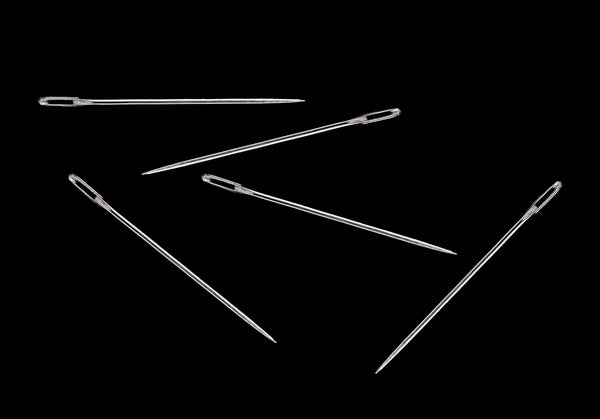
It is rare to read about “spectacular progress” or a “once-in-a-century” result in mathematics. That’s for good reason: if a problem has not had a solution for many years, then completely new approaches and ideas are usually needed to tackle it. This is also the case with the innocent-looking “Kakeya conjecture,” which relates to the question of how to rotate a needle in such a way that it takes up as little space as possible.
Experts have been racking their brains over the associated problems since 1917. But in a preprint paper posted in February, mathematician Hong Wang of New York University and her colleague Joshua Zahl of the University of British Columbia finally proved the three-dimensional version of the Kakeya conjecture. “It stands as one of the top mathematical achievements of the 21st century,” said mathematician Eyal Lubetzky of N.Y.U. in a recent press release.
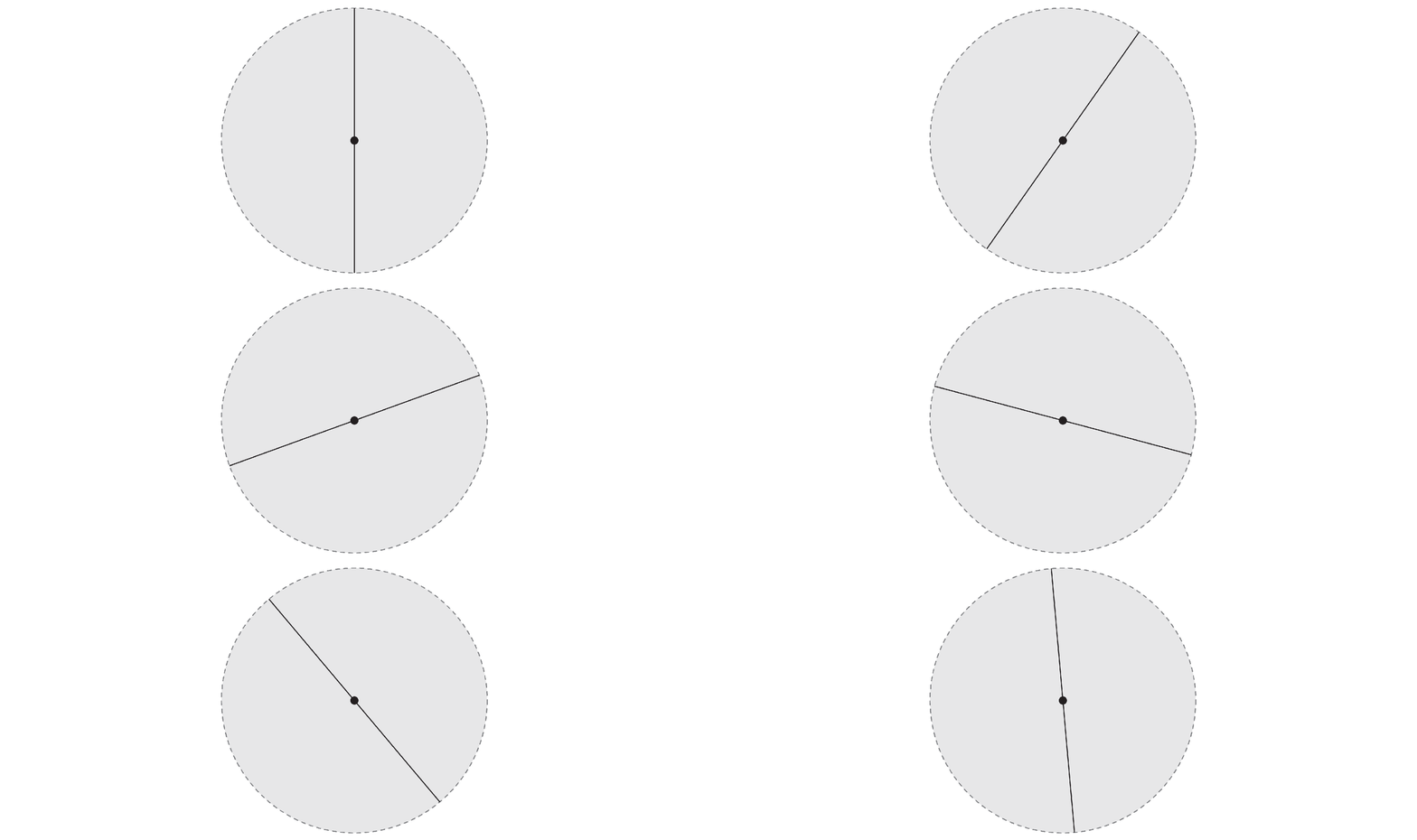
Suppose there is an infinitely narrow needle on a table. Now you want to rotate it 360 degrees so that the tip of the needle points once in each direction of the plane. To do this, you can hold the needle in the middle and rotate it. As it rotates, the needle then covers the surface of a circle.
On supporting science journalism
If you're enjoying this article, consider supporting our award-winning journalism by subscribing. By purchasing a subscription you are helping to ensure the future of impactful stories about the discoveries and ideas shaping our world today.
Amanda Montañez
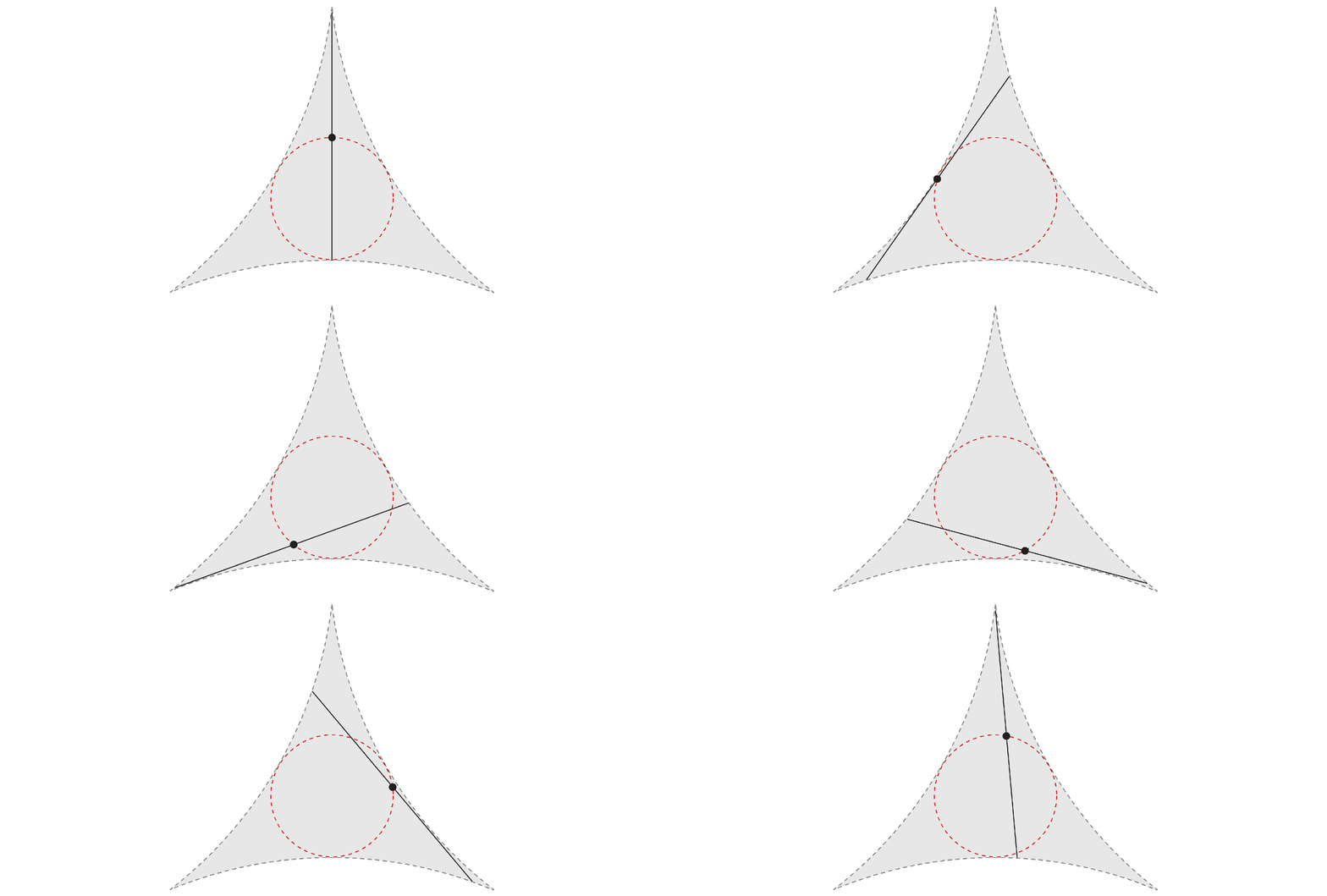
But if you are clever, the needle can make its 360-degree journey while taking less space. In 1917 mathematician Sōichi Kakeya wanted to investigate the smallest area required to rotate the needle. For example, by rotating not only the outer end of the needle but also its center, you can obtain an area that corresponds to a triangle with curved sides.
Amanda Montañez
Years later, mathematician Abram Besicovitch made an unexpected discovery. If you keep moving the needle back and forth like a complex parallel parking maneuver, the surface that the infinitely narrow needle covers can actually have a total area of zero.
The Dimension of an Area of Zero?
From there, experts began to wonder what dimension this “Kakeya surface” has. Usually surfaces in a plane, such as a rectangle or a circle, are two-dimensional. But there are exceptions: fractals, for example, can also have fractional dimensions, meaning they can be 1.5-dimensional, for instance.
Because the Kakeya surfaces can look very jagged, the question of dimensionality is an obvious one. In fact, it has implications for many other areas of mathematics, including harmonic analysis, which breaks down complicated mathematical curves into sums of simpler functions, and geometric measure theory.
In fact, in 1971 mathematician Roy Davies was able to prove that the Kakeya surface is always two-dimensional, even if its area vanishes. But in mathematics, people are interested in general results. The experts wanted to solve the problem in n dimensions—does a needle that is rotated along all n spatial directions always cover an n-dimensional volume? This hypothesis is now known as the Kakeya conjecture.
The three-dimensional case proved to be an extremely hard nut to crack. Over the decades, experts have been able to rule out the possibility that a rotating needle covers a volume with less than 2.5 spatial dimensions, but that was as far as they got.
Wang and Zahl were not discouraged, however, and worked their way forward step by step. Through painstaking effort, they gradually managed to eliminate all cases in which the covered volume would have a dimension of less than three.
In this way, they were finally able to prove the Kakeya conjecture in three spatial dimensions, showing that the volume covered by the needle is always three-dimensional. In the recent press release, mathematician Guido de Philippis of N.Y.U. commented, “I am expecting that their ideas will lead to a series of exciting breakthroughs in the coming years.”
This article originally appeared in Spektrum der Wissenschaft and was reproduced with permission.