MathSeptember 16, 2026
AI steals mathematicians’ record for most complicated curve
A search for the most complex elliptic curves has taken mathematicians years. Claude beat the record in days
Manon Bischoff is a theoretical physicist and an editor at Spektrum der Wissenschaft, the German-language sister publication of Scientific American.
AI steals mathematicians’ record for most complicated curve
A search for the most complex elliptic curves has taken mathematicians years. Claude beat the record in days
How pizza can solve this unusual math puzzle
Moser’s circle problem can be used to divide a pizza into one, two, four, eight, 16 or 31 slices. It’s a perfect example of how the numbers in a sequence aren’t as clear-cut as they may first appear
Which million-dollar math problem could AI solve next?
After an OpenAI model presented a possible solution to the Navier-Stokes problem, mathematicians are speculating about which major unsolved question could be resolved next
There are just five perfect shapes in math—here’s why
The five Platonic solids are the epitome of perfection—at least in mathematics. Topology explains why there are only five of them

Geometry reveals the tricks behind gerrymandering
Some voting districts are tilted intentionally toward one party or another—a factor in the midterms. Geometry plays a critical role in gerrymandering
Mathematician discovers how to fold the smallest origami doughnut
How many times do you have to fold a piece of paper to make a doughnut? After decades, a mathematician has determined the most efficient technique
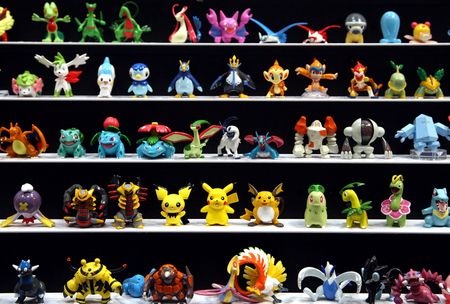
These math tricks can make rare Pokémon appear out of nowhere
A technique that manipulates the video game's random number generator makes rare Pokemón appear, showing how it's not so random after all
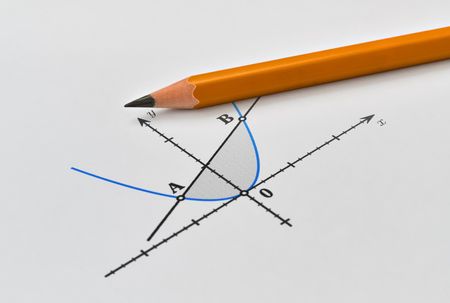
Why parabolas are crucial to cryptography
Cryptographers use points along a curve to build tough codes
Can AI make mathematics more human?
Mathematician Yang-Hui He explains why artificial intelligence is fundamentally transforming mathematical work—and why that’s a good thing
Wormholes could be the key to time travel
Wormholes are one way that physicists have imagined traveling into the past. But if something gets there, is it physically possible to change anything?
Does physics allow time travel?
Physicists, mathematicians and philosophers have been exploring the possibility of going forward to the future or back to the past
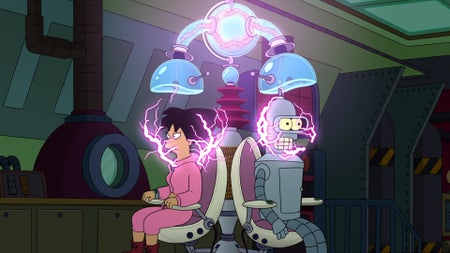
How a Futurama writer’s plot problem led to a totally new math proof
In an episode of the cartoon, a machine lets characters swap bodies, but they can’t switch back with the same person. Math helps all the characters return to their original bodies

How math helped the Allies win World War II
During World War II, statistics helped the Allies estimate the number of enemy tanks, which proved essential in the decisive move against Nazi Germany
The math behind the universe’s symmetry
Here’s how Emmy Noether’s theorem uses the Lagrangian to provide a formula for calculating the quantity of symmetries in a system—like the orbit of planets
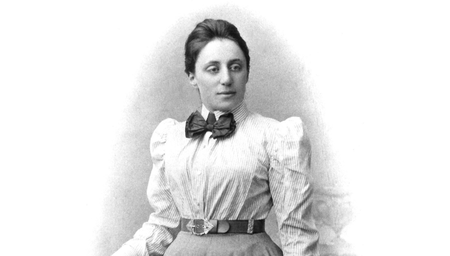
How underappreciated mathematician Emmy Noether helped prove physics' most fundamental theories
Noether's work helped prove the conservation of energy in physics, a key foundation for Einstein's theory of relativity
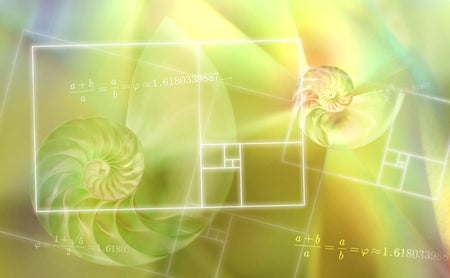
Why some irrational numbers are more irrational than others
The quest to approximate irrational numbers with fractions reveals hidden patterns, surprising hierarchies and enduring mathematical mysteries
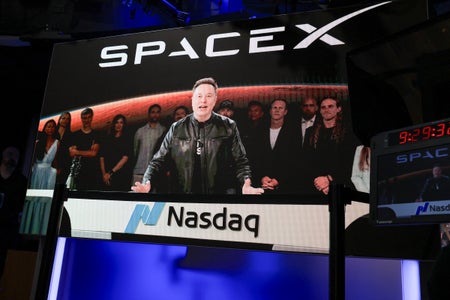
Our brains underestimate Elon Musk’s wealth
Why the human brain can't fathom what it means to be a trillionaire
Math predicts humans could go extinct in about 17,000 years
Some mathematicians have predicted when humanity’s downfall might occur—though the circumstances are unspecified

World Cup camera coverage poses a moving math puzzle
Mathematicians have considered how to watch every corner of a space—but soccer adds moving players, blocked views and constant action

How math’s ‘hairy ball theorem’ could explain bad hair days
An idea from topology explains why you can never get rid of your cowlicks—and, oddly enough, it’s critical in nuclear fusion
How elevators, pizza and card shuffles reveal the surprising math of everyday life
From slow elevators to perfectly split pizza, math quietly explains the quirks of everyday life
How Gödel numbers let you do math with math itself
By encoding mathematical statements into numbers, mathematician Kurt Gödel used ordinary arithmetic to check whether a statement can be proved
Why some mathematical theorems will always be unprovable
A statement can be true or false. But as Kurt Gödel demonstrated, there will always be mathematical assumptions that can neither be proven nor disproven
How mathematicians use Minecraft to calculate pi
A battle between “slimes” and “zoglins” could be the best way to calculate pi—at least for fans of this megahit game