
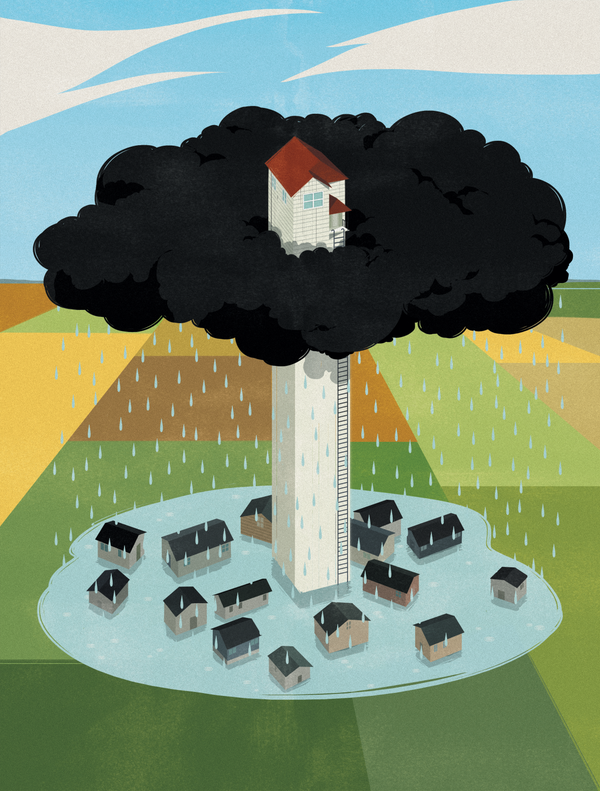
High economic inequality negatively impacts nearly every aspect of human well-being—as well as the health of the biosphere. Contrary to intuition, it affects the wealthy and the middle classes, not just the poor. Here several leading researchers discuss these wide-ranging effects. Economist Joseph E. Stiglitz explains the origins of U.S. inequality and suggests measures to alleviate it. Political scientist Virginia Eubanks describes how digital systems often hurt, rather than help, the most vulnerable members of society. Neuroscientist Robert M. Sapolsky details the mechanisms by which inequality damages mental and physical health. And economist James K. Boyce describes how imbalances in economic and political power injure the environment—and how communities are coming together to combat such harm.
The American Economy Is Rigged
Economic inequality is higher in the U.S. than in virtually all other advanced countries.
On supporting science journalism
If you're enjoying this article, consider supporting our award-winning journalism by subscribing. By purchasing a subscription you are helping to ensure the future of impactful stories about the discoveries and ideas shaping our world today.
The American political system, coupled with high initial inequality, gave the moneyed enough political influence to change laws to benefit themselves, further exacerbating inequality.
Breaking this feedback loop by curbing the power of money in politics is essential to reducing inequality and restoring hope.
Algorithms Designed to Fight Poverty Can Actually Make It Worse
Politicians and program administrators are increasingly using algorithms to determine whether poor people are eligible for government services.
But without addressing the bigger problems of systemic bias and broken policy, automation only entrenches inequality.
How Economic Inequality Inflicts Real Biological Harm
Inequality leads to poor health and early death—but not just because of reduced access to health care and nutrition.
A wider gap between rich and poor increases wear and tear on body parts through chronic stress, recent research shows.
Such psychosocial stress hits the body in three ways: ongoing inflammation, destruction of key chromosomal elements and impairment of brain areas.
How Economic Inequality Harms the Environment
People who are poorer suffer greater harm from environmental degradation than others do.
A greater gap in a given place between those with and without economic and political power drives greater environmental damage there.
A new environmentalism is helping to protect marginalized people who face harm from individuals who benefit from environmental degradation.
How the Trust Trap Perpetuates Inequality
Corruption, distrust and inequality reinforce one another in a destructive loop.
The Harm That Data Do
Paying attention to how algorithmic systems impact vulnerable people worldwide is key to a just and equitable future.