
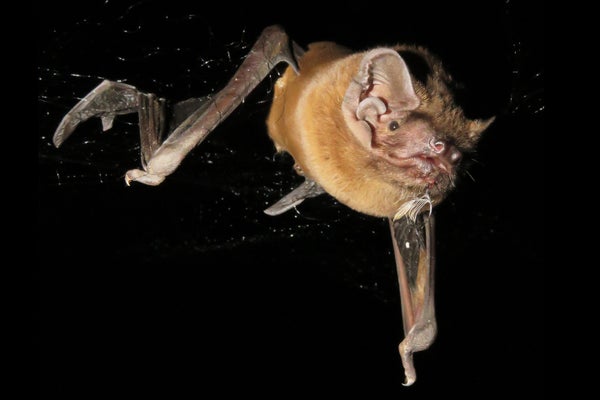
For the nearly three-year-old female bat soaring into the Spanish sky in March 2023, it was just another night of striving to feed itself. But the bat’s overnight exploits were about to become the stuff that scientists’ dreams are made of.
The greater noctule bat (Nyctalus lasiopterus) wore a high-tech tag recording its behavior. From that recording, researchers reconstructed a dramatic, and scientifically valuable, exploit: the bat pursued, killed and proceeded to eat a migrating European robin (Erithacus rubecula) in midair while echolocating to navigate.
“There was this crazy noise and movement and a lot of echolocation, and I thought, ‘I’ve never heard this before on any recording,’” says Laura Stidsholt, a biologist at Aarhus University in Denmark and co-author of a paper about the observation, recently published in Science. “It was quite magical.”
On supporting science journalism
If you're enjoying this article, consider supporting our award-winning journalism by subscribing. By purchasing a subscription you are helping to ensure the future of impactful stories about the discoveries and ideas shaping our world today.
Elena Tena
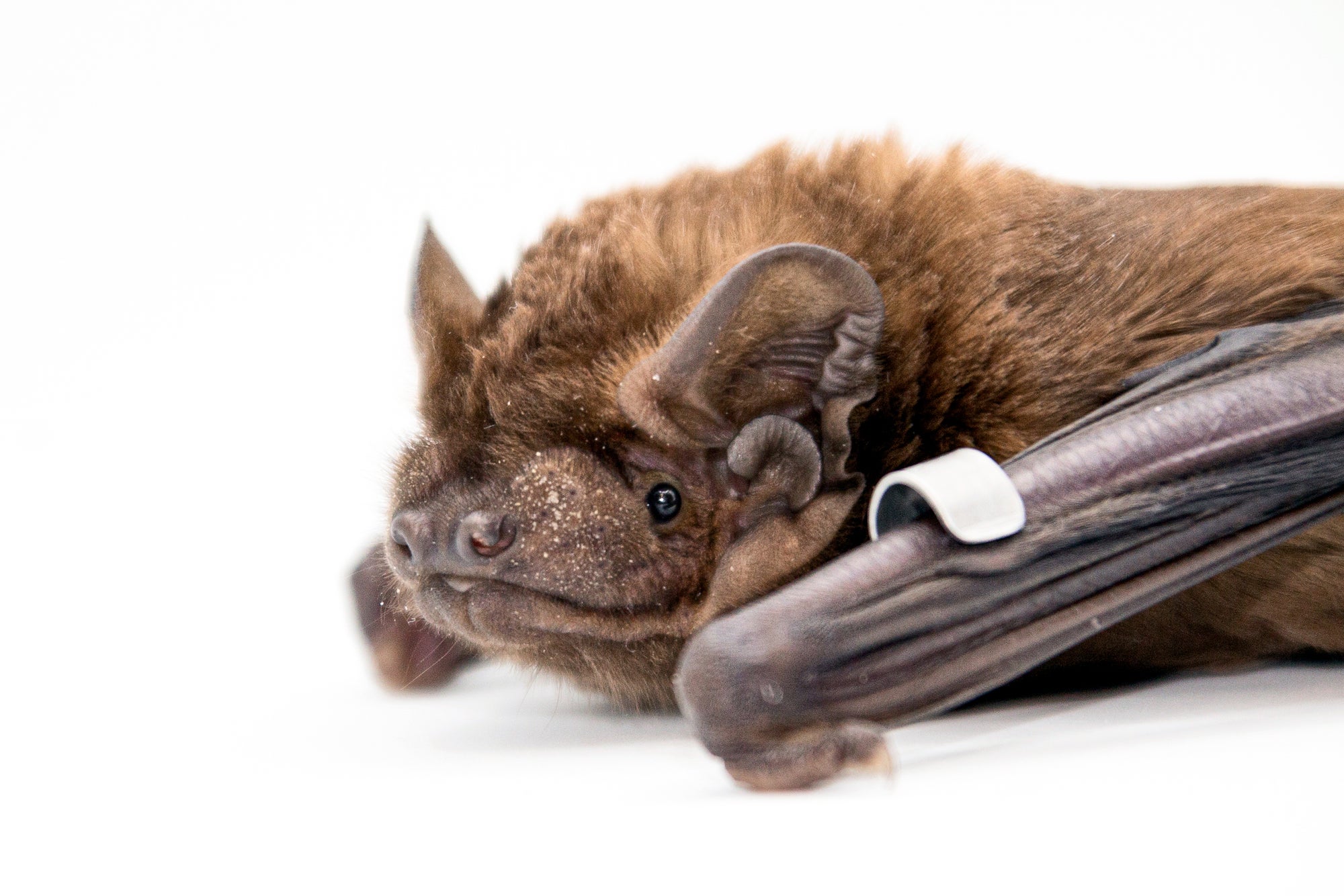
Greater noctules are among the largest and most endangered bats in Europe. Their usual fare is substantial insects such as beetles and moths. But in previous work, scientists analyzing the DNA in bat poop had been surprised to find evidence of greater noctules feasting on songbirds, too, during spring and fall migrations, when the birds are active at night rather than during the day.
The bats are typically difficult to study. But scientists at Doñana Biological Station, an outpost of the Spanish National Research Council, microchipped local individuals and outfitted 14 of them with cutting-edge recording tags that captured altitude, movement and sound over two spring seasons, gathering incredible reports of the furry mammals’ adventures. “It’s like flying with the greater noctule bat,” says Elena Tena, a conservation biologist at Doñana Biological Station and co-author on the study.
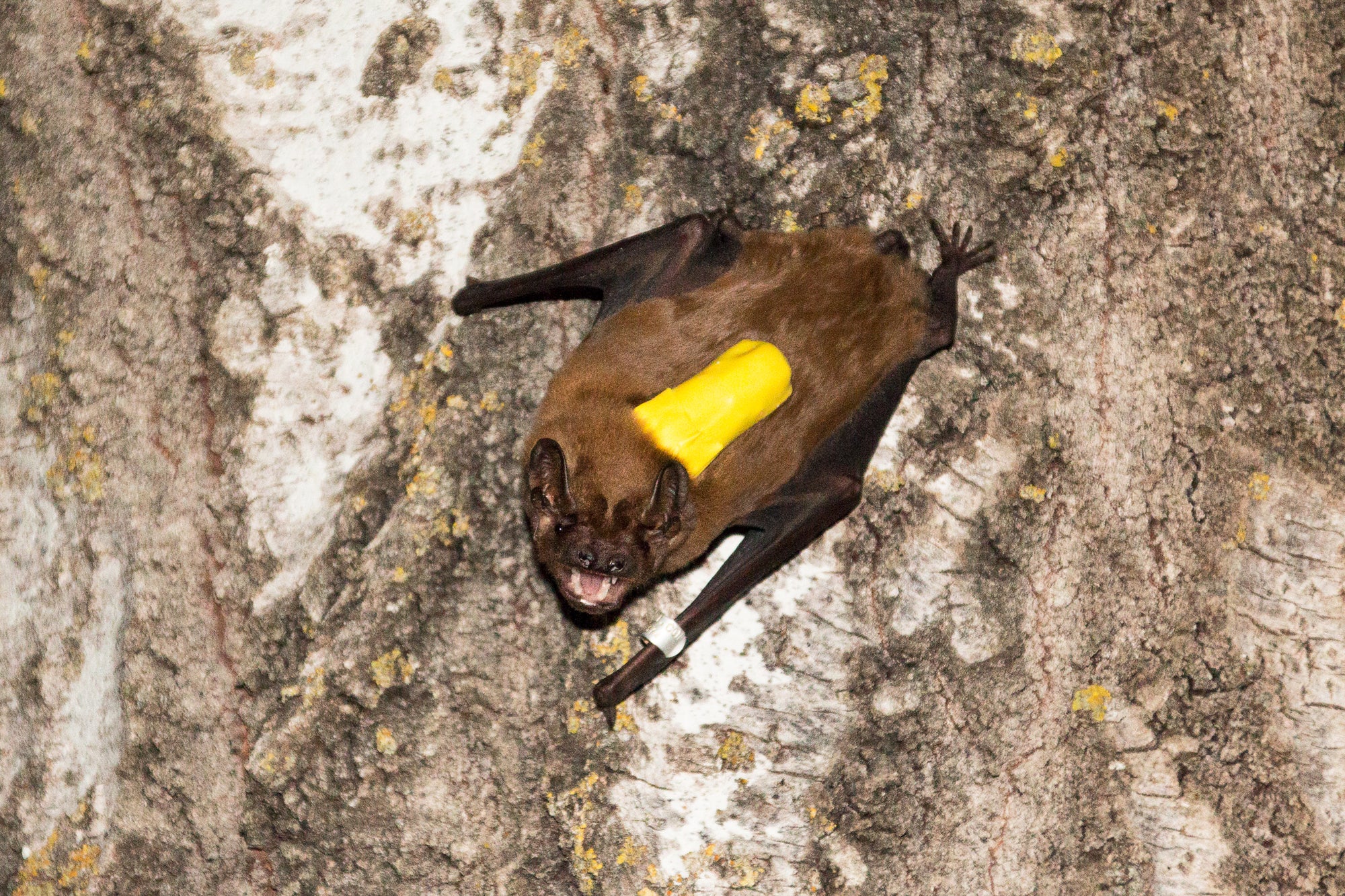
A great noctule bat equipped with a small device recording sound, altitude and movement.
Elena Tena
The researchers reconstructed quite a flight from that startling recording: The female bat soared to an altitude of three quarters of a mile, searching for prey. Then it apparently locked in on a migrating songbird, made contact and dove steeply, emitting echolocation calls amid the sounds of an ongoing tussle between the two animals. As the bat approached the ground, the bird let out a string of panicked cheeps before ominously falling silent.
And then—for an incredible 23 minutes—the bat’s echolocation squeaks were punctuated by chewing and crunching even as the bat kept flying. “They’re basically screaming with their mouths full,” Stidsholt says, noting that proportional to the bat’s body size, the species’ calls are among the loudest noises known to scientists.
The researchers compared the bird’s distress calls with existing songbird recordings gathered by other scientists whose work requires catching the birds in nearly invisible “mist nets.” The cries from the unlucky bird on the bat’s recording matched those of the European robin.
The researchers also gathered torn-off bird wings found on the ground in known greater noctule hunting areas. DNA testing confirmed the presence of saliva from these bats on the wings—supporting scientific hypotheses that the animals bite off and discard the wings after killing a songbird as they do with insects, most likely to reduce the weight they carry while snacking.

Elena Tena
This aspect of the finding is particularly interesting to University of Wyoming bat biologist Riley Bernard, who was not involved in the study. Although the bats eat primarily insects, “they have this behavioral plasticity to be able to tap into resources when they’re available,” she says. Bernard admits to some envy of the European researchers, noting that North America’s bats are all much smaller than the greater noctule—too small to carry the tags used in this experiment.
Danilo Russo, an ecologist at the University of Naples Federico II in Italy who was also not involved in the study, would love to fit a small bat with this type of technology. “Now we have this amazing means of penetrating the darkness and their hidden world,” he says. “I think it would be a complete game changer, just like in this case.”