
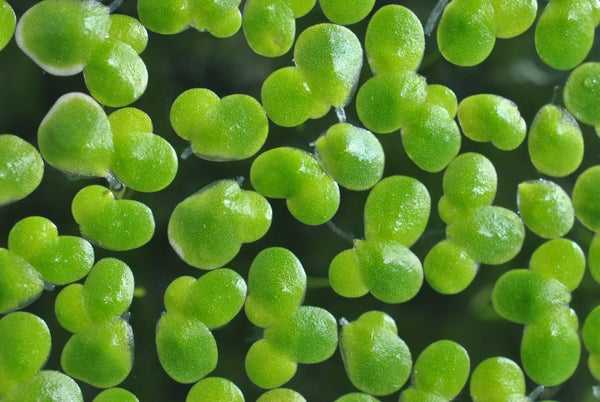
Scientists have figured out how to coax copious amounts of oil from duckweed, one of nature’s fastest-growing aquatic plants. Converting such plant oil into biodiesel for transportation and heating could be a big part of a more sustainable future.
For a new study in the Plant Biotechnology Journal, researchers genetically engineered duckweed plants to produce seven times more oil per acre than soybeans—currently the most commonly used biodiesel-producing plant. Study lead author John Shanklin, a biochemist at the U.S. Department of Energy’s Brookhaven National Laboratory, says further research could double the engineered duckweed’s oil output in the next few years. Shanklin and his colleagues conducted the study with researchers at New York’s Cold Spring Harbor Laboratory.
Unlike fossil fuels, which form underground over hundreds of millions of years, biofuels can be replenished faster than they are used. Fuels made from new and used vegetable oils, animal fat and algae can have a lower carbon footprint than fossil fuels do, depending on how they are sourced—but there has been a recent backlash against them. This is partly because so many crops now go into energy production rather than food; biofuels take up more than 100 million acres of the world’s agricultural land.
On supporting science journalism
If you're enjoying this article, consider supporting our award-winning journalism by subscribing. By purchasing a subscription you are helping to ensure the future of impactful stories about the discoveries and ideas shaping our world today.
Duckweed, common on every continent but Antarctica, is among the world’s most productive plants per acre, and the researchers suggest it could be a game-changing renewable energy source for three key reasons. First, it grows readily in water, so it wouldn’t compete with food crops for prime agricultural land. Second, duckweed can thrive in agricultural pollution from, say, pig and poultry farms—potentially cleaning up some of the nitrogen and phosphorus such farms release into the water.
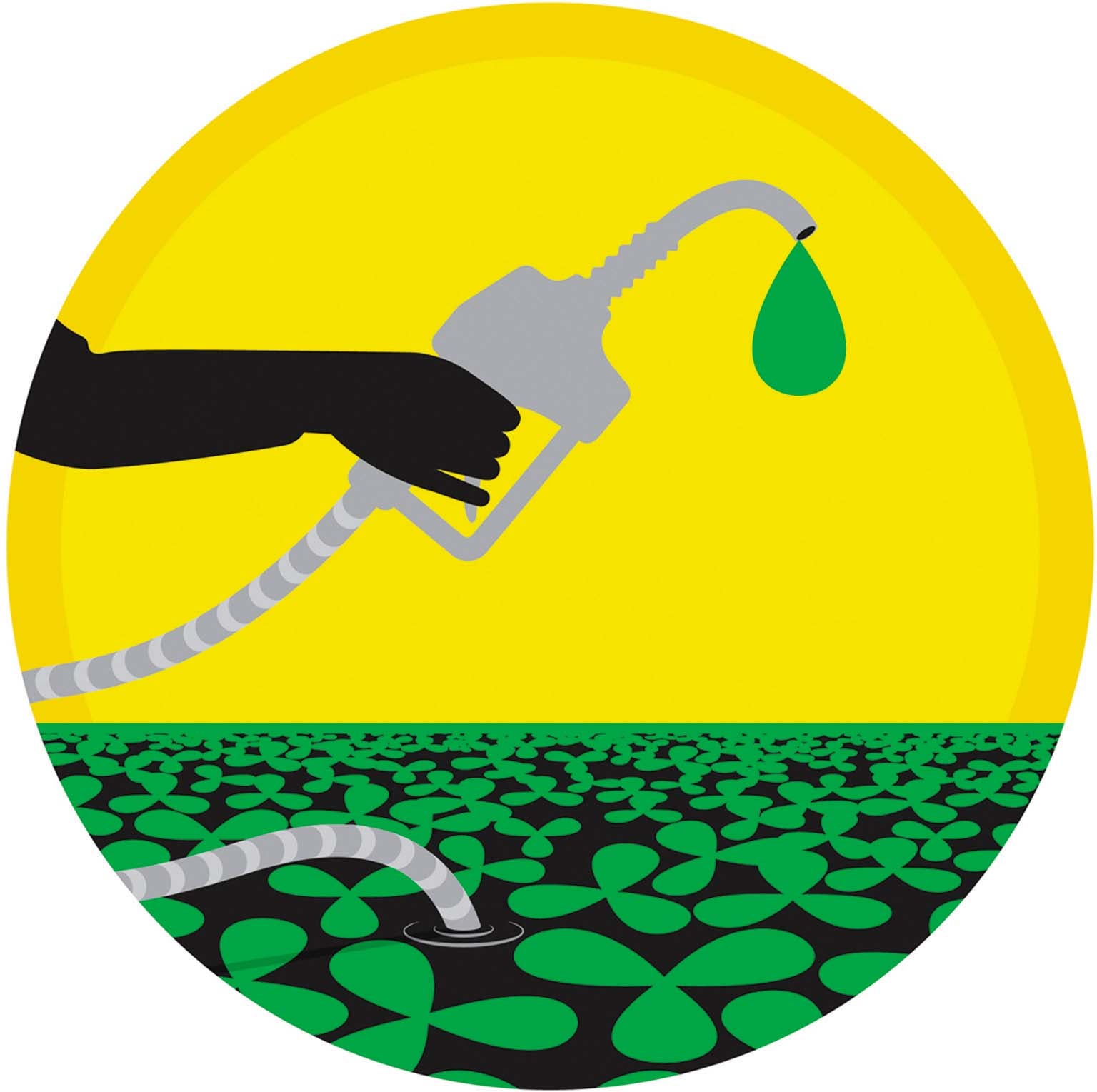
Credit: Thomas Fuchs
Third, Shanklin and his team found a way to sidestep a major biotechnological hurdle: According to Rebecca Roston, a biochemist at the University of Nebraska–Lincoln, who was not involved in the study, engineered green plants typically expend a lot of energy on oil production and thus stop growing. For the new study, Shanklin says, the researchers added an oil-producing gene that would be inactive at first, “turning it on like a light switch” by introducing a particular molecule only when the plant had finished growing.
This process “worked fabulously well,” Roston says. “If it replicates in other species—and there’s no reason to think that it would not—this can solve one of our biggest issues, which is how can we make more oil in more plants without negatively affecting growth.”
To scale production up to industrial levels, scientists will need to design and produce large-scale vessels for growing engineered plants and extracting oil—a challenge, Shanklin says, because duckweed is a nonmainstream crop without much existing infrastructure.