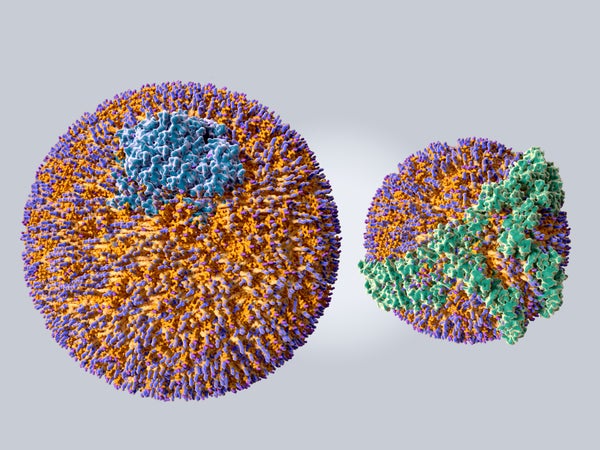
Too much cholesterol can be bad for your heart. But could it be good for your brain? Nutrition Diva dives into the new research on the potential benefits of cholesterol
We spend most of our adult lives monitoring our cholesterol levels, making sure that they don’t get too high. If they get above a certain number, our doctors are likely to want to put us on cholesterol-lowering drugs called statins. These drugs have a long track record of reducing deaths from heart disease.
Statin use also appears to reduce the risk of dementia later in life—although it’s not clear how much of this is due to its cholesterol-lowering effects. Statins also reduce inflammation in the body, for example, which might protect the brain.
On supporting science journalism
If you're enjoying this article, consider supporting our award-winning journalism by subscribing. By purchasing a subscription you are helping to ensure the future of impactful stories about the discoveries and ideas shaping our world today.
In fact, some recent studies suggest that, while high cholesterol levels at 50 maybe be bad news, high cholesterol levels at 80 may be just what the doctor ordered. Specifically, researchers have observed that elderly people with high LDL cholesterol levels are less likely to have dementia than those with low cholesterol levels.
Great science journalism requires human expertise, time, effort and creativity. And it costs money. That’s why I and the journalists here at Scientific American hope you’ll join our community.
When you subscribe, you are supporting staff and freelance journalists who are passionate about telling science stories that are true, important and compelling. Our editors and reporters are often experts in their fields, which means they understand the nuances of big discoveries and can untangle the breakthroughs from the hype. With a subscription, you are also supporting rigorous fact-checking to ensure the words we publish are precise and accurate. And you’re supporting original illustrations, graphics and photos that bring you closer to an advanced laboratory, an ice sheet in Antarctica or a space mission in orbit. You’re helping us craft other types of high-quality journalism as well: Our newsletters are carefully written, edited and curated by staffers you have or will come to know and love. Our Science Quickly podcast is based on original reporting, collaboration with editors and scientists and exacting production.
Subscriptions keep this engine running so we can continue to deliver thoughtful, rigorous and independent science journalism to you. In an era of viral misinformation, this work is crucial. If you value what we do, I hope you’ll consider joining us as a subscriber
Thank you,
Jeanna Bryner, Editor in Chief, Scientific American