Video: Highlights from a Sickle Cell Disease Event

Scientific American hosted an event at Morehouse School of Medicine to highlight medical advances in treating sickle cell disease and how far we still have to go

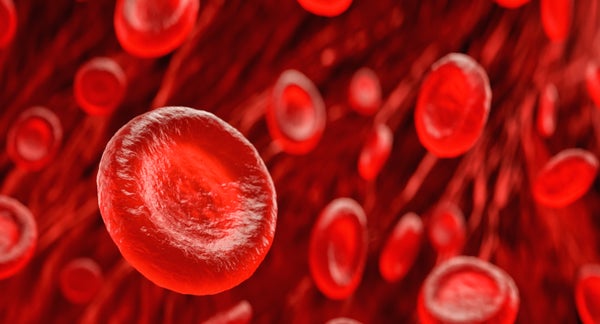
Digital illustration, healthy red blood cells flowing inside a vein

Pixelimage/Getty Images

Join Our Community of Science Lovers!

This article is part of “Innovations In: Sickle Cell Disease,” an editorially independent special report that was produced with financial support from Vertex Pharmaceuticals.

Here is a highlight reel from an incredible event put on by Scientific American and supported by Vertex Pharmaceuticals and the Springer Nature Black Employees Network in September at Morehouse School of Medicine in Atlanta, Georgia. The day was filled with powerful and hopeful voices who explained the awareness and hardships related to the disease, the nitty-gritty science of its causes and manifestations, and advances in treatment and care, as well as real impacts in patients’ and their families’ lives.

Hear from the researchers, students and those living with sickle cell disease on how to create a brighter future through science, community and inspiring stories.


On supporting science journalism

If you're enjoying this article, consider supporting our award-winning journalism by subscribing. By purchasing a subscription you are helping to ensure the future of impactful stories about the discoveries and ideas shaping our world today.


For more on sickle cell disease, check out our special report:

Jeanna Bryner is executive editor of Scientific American. Previously she was editor in chief of Live Science and, prior to that, an editor at Scholastic's Science World magazine. Bryner has an English degree from Salisbury University, a master’s degree in biogeochemistry and environmental sciences from the University of Maryland and a graduate science journalism degree from New York University. She has worked as a biologist in Florida, where she monitored wetlands and did field surveys for endangered species, including the gorgeous Florida Scrub Jay. She also received an ocean sciences journalism fellowship from the Woods Hole Oceanographic Institution. She is a firm believer that science is for everyone and that just about everything can be viewed through the lens of science.

More by Jeanna Bryner

It’s Time to Stand Up for Science

If you enjoyed this article, I’d like to ask for your support. Scientific American has served as an advocate for science and industry for 180 years, and right now may be the most critical moment in that two-century history.

I’ve been a Scientific American subscriber since I was 12 years old, and it helped shape the way I look at the world. SciAm always educates and delights me, and inspires a sense of awe for our vast, beautiful universe. I hope it does that for you, too.

If you subscribe to Scientific American, you help ensure that our coverage is centered on meaningful research and discovery; that we have the resources to report on the decisions that threaten labs across the U.S.; and that we support both budding and working scientists at a time when the value of science itself too often goes unrecognized.

In return, you get essential news, captivating podcasts, brilliant infographics, can't-miss newsletters, must-watch videos, challenging games, and the science world's best writing and reporting. You can even gift someone a subscription.

There has never been a more important time for us to stand up and show why science matters. I hope you’ll support us in that mission.

Thank you,

David M. Ewalt, Editor in Chief, Scientific American

Subscribe