
Every great bottle of wine begins with a humble fungal infection. Historically, winemakers relied on naturally occurring yeasts to convert grape sugars into alcohol; modern vintners typically buy one of just a few laboratory-grown strains. Now, to set their products apart, some of the best winemakers are revisiting nature's lesser-used microbial engineers. Not all these strains can withstand industrial production processes and retain their efficacy—but a natural additive offers a possible solution, new research suggests.
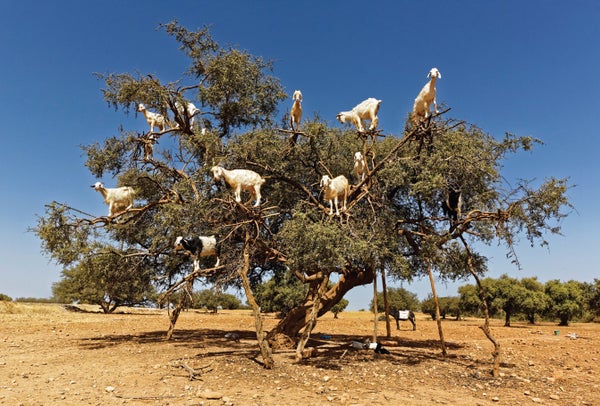
Industrial growers produce yeast in the presence of oxygen, which can damage cell walls and other important proteins during a process called oxidation. This can make it harder for yeasts—which are dehydrated for shipping—to perform when winemakers revive them. Biochemist Emilia Matallana of the University of Valencia in Spain and her colleagues have been exploring practical ways to fend off such oxidation for years. After showing that pure antioxidants worked, they began searching for a more affordable natural source. They found it in argan, an olivelike fruit used for food and cosmetics. The trees it grows on are famously frequented by domesticated goats.
Matallana and her team treated three varieties of wine yeast (Saccharomyces cerevisiae) with argan oil, dehydrated them and later rehydrated them. The oil protected important proteins in the yeasts from oxidation and boosted wine fermentation, the researchers reported in a study published online in June in Innovative Food Science & Emerging Technologies.
On supporting science journalism
If you're enjoying this article, consider supporting our award-winning journalism by subscribing. By purchasing a subscription you are helping to ensure the future of impactful stories about the discoveries and ideas shaping our world today.
Microbiologists are now interested in studying how and why each yeast strain responded to the argan oil as it did, says enologist Ramón González of the Institute of Grapevine and Wine Sciences in Logroño, Spain, who was not involved in the work. The oil may one day enable vintners to use a wider range of specialized yeasts, putting more varied wines on the menu. As for how the oil affected the wine's taste, Matallana says it was “nothing weird.”