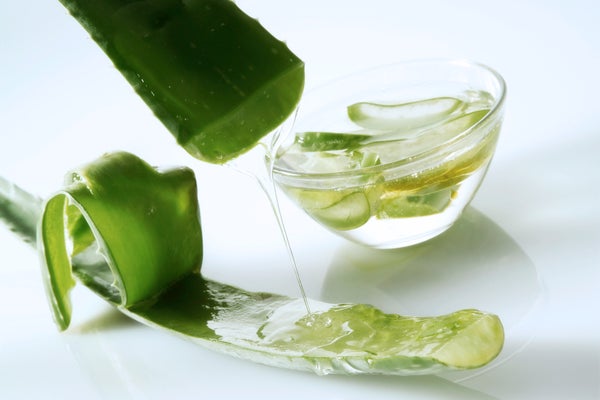
Carrie asks: “Is it true that aloe vera juice helps with intestinal health? And if so, what should I look for in a quality juice?”
What Is Aloe Good For?
On supporting science journalism
If you're enjoying this article, consider supporting our award-winning journalism by subscribing. By purchasing a subscription you are helping to ensure the future of impactful stories about the discoveries and ideas shaping our world today.
The juice of the aloe vera plant has been used throughout the ages, in particular as a skin soother. The viscous gel that oozes out of the leaves of this succulent plant can moisturize your skin and cool minor burns or irritation. And, by the way, natural aloe gel is colorless. Those bottles of bright green aloe vera gel you sometimes see owe their technicolor hue to artificial colorants!
Studies confirm that aloe vera juice has antiseptic, anti-inflammatory, and analgesic properties when applied topically. Applying to a burn or sunburn can alleviate pain and help the skin heal more quickly. Some people keep an aloe plant handy in the kitchen, a sort of living first aid kit.
But many people also advocate drinking the juice of the aloe vera plant, saying that it can relieve heartburn, alleviate IBS, lower your blood sugar, and a broad range of other claims.
Great science journalism requires human expertise, time, effort and creativity. And it costs money. That’s why I and the journalists here at Scientific American hope you’ll join our community.
When you subscribe, you are supporting staff and freelance journalists who are passionate about telling science stories that are true, important and compelling. Our editors and reporters are often experts in their fields, which means they understand the nuances of big discoveries and can untangle the breakthroughs from the hype. With a subscription, you are also supporting rigorous fact-checking to ensure the words we publish are precise and accurate. And you’re supporting original illustrations, graphics and photos that bring you closer to an advanced laboratory, an ice sheet in Antarctica or a space mission in orbit. You’re helping us craft other types of high-quality journalism as well: Our newsletters are carefully written, edited and curated by staffers you have or will come to know and love. Our Science Quickly podcast is based on original reporting, collaboration with editors and scientists and exacting production.
Subscriptions keep this engine running so we can continue to deliver thoughtful, rigorous and independent science journalism to you. In an era of viral misinformation, this work is crucial. If you value what we do, I hope you’ll consider joining us as a subscriber
Thank you,
Jeanna Bryner, Editor in Chief, Scientific American