
When the Western Roman Empire fell in the fifth century C.E., Europe was plunged into chaos as barbarian Germanic forces advanced south—or so the story goes. But a new study shows that some communities on the continent actually coalesced, becoming more cosmopolitan and diverse.
“Traditionally, the whole story ... was seen as a clash of civilizations between Germanic hordes in the north and the Roman Empire in the south,” says Joachim Burger, an anthropologist and a population geneticist at Johannes Gutenberg University Mainz in Germany. But Burger and his colleagues have shown otherwise: in a new study published today in Nature, they found that “it’s actually more a story of peaceful integration,” he says.
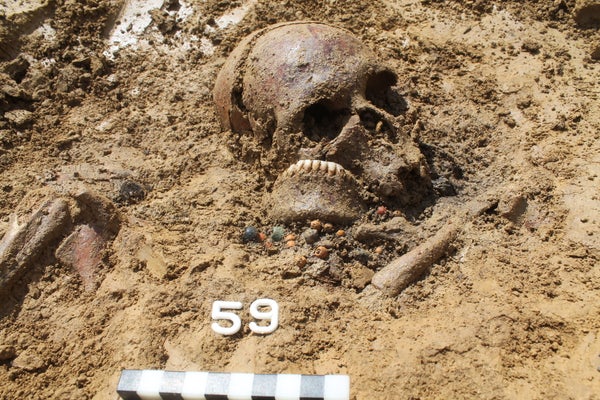
The researchers analyzed human remains at various grave sites in Germany and determined that two genetically distinct groups of people—a settlement of ancient Roman soldiers and a neighboring group of people of northern European descent—intermarried and developed a shared culture, including a common burial method, after the fall of Rome in C.E. 476.
On supporting science journalism
If you're enjoying this article, consider supporting our award-winning journalism by subscribing. By purchasing a subscription you are helping to ensure the future of impactful stories about the discoveries and ideas shaping our world today.
The researchers analyzed 258 ancient genomes collected from grave sites on the Roman Empire’s border in what is now southern Germany that dated to between C.E. 400 and 660. They compared these with a reference set of other ancient and modern genomes and revealed that former Roman soldiers, who carried with them a mix of DNA from Italy, southeastern Europe and the Balkans, traveled to villages on the empire’s frontier where people with DNA from areas such as what are now northern Germany, Denmark and the Netherlands lived. The oldest genomes from the burial sites suggest that these two groups didn’t mix much before the fall of Rome. But after that time, they did, with intermixed families being buried together.
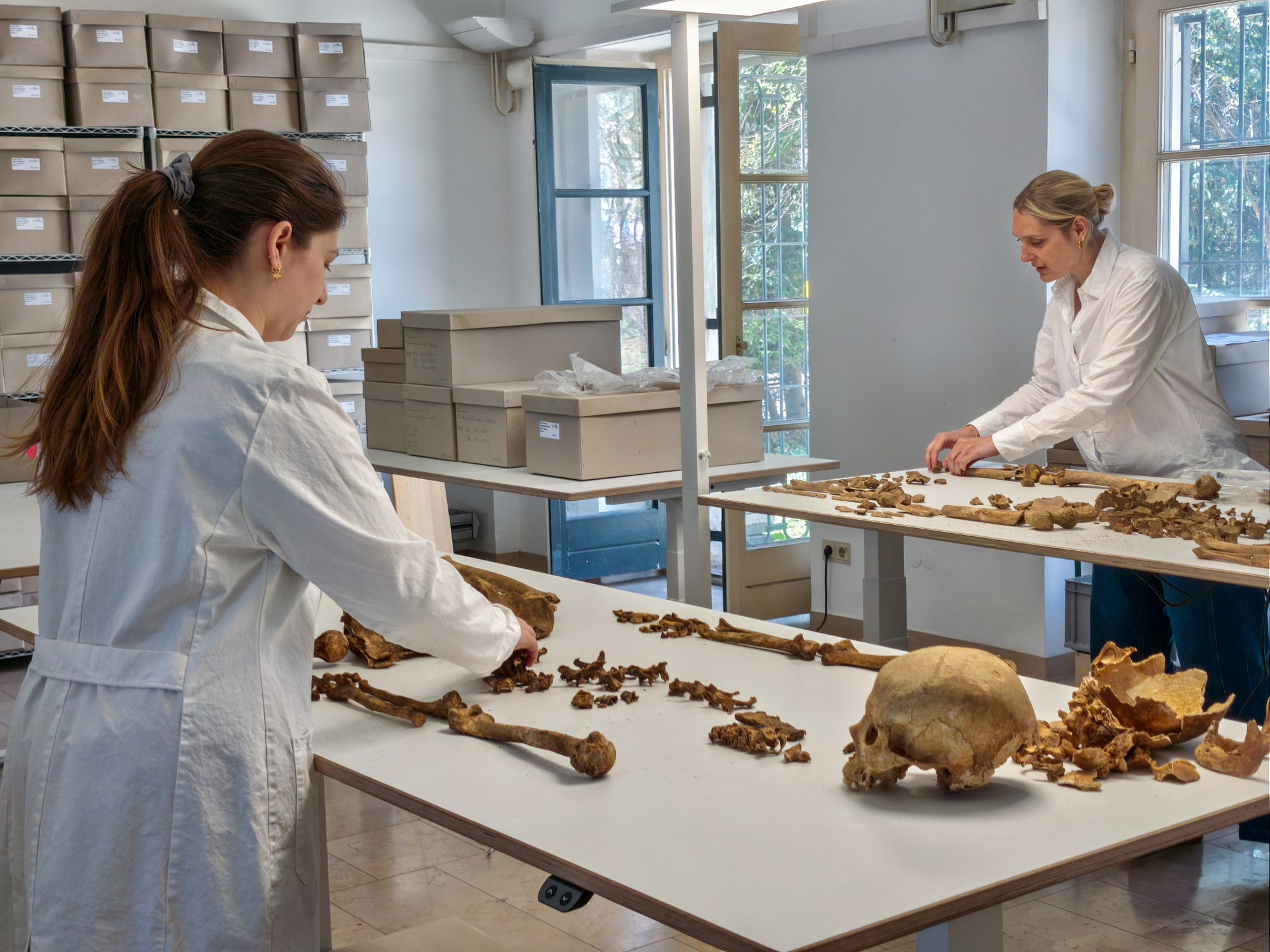
Anthropological examination of skeletons in the State Collection for Anthropology Munich (SAM).
© SAM/Harbeck
These later burials are called row-grave cemeteries because the graves were perfectly parallel to one another. This practice started among communities with northern ancestry but became the norm after the two communities came together. The grave sites also include features that suggest a strong emphasis on monogamy and the nuclear family. And the researchers say these practices, such as kin being entombed together, likely came from Roman culture.
“At the time, this is a quite unique and new pattern that was developed in late Roman society and even codified in laws,” Burger says. “But now we see it ... in an early medieval, presumably Germanic society. So late antiquity isn’t actually finished; it’s just transforming into a new, less urban and more agricultural society.”
“It was really a tight kin group,” says Toomas Kivisild, a professor of human evolutionary genetics at the Catholic University of Leuven (KU Leuven) in Belgium, who was not involved in the study. Other post-Roman communities in Europe, such as in England, do not show such closeness among families, he says. “The kinship intensity in those cemeteries is far less intense compared to [these new findings].”