New Issue: Science’s Impossible Questions. Read Now

What Is Green Exercise?

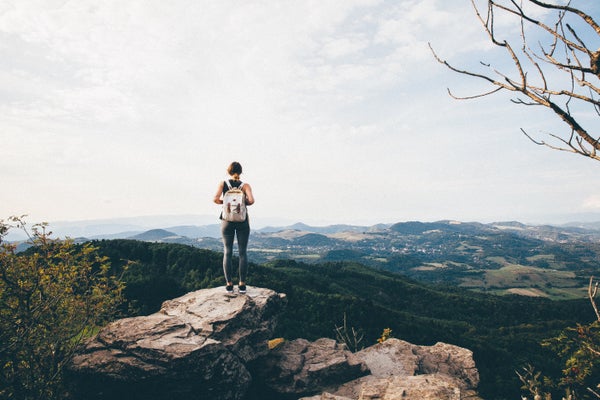
Being outdoors can lower our levels of stress, our pulse rate, and even our blood pressure. But what happens when we exercise in a green space?

Join Our Community of Science Lovers!

I was at the beach the other day with some friends and after a rousing game of “apprehend the frisbee before it nails an unsuspecting stranger,” we all settled on the sand to chat and observe our fellow beachgoers.

Being that I am a movement and fitness nerd, I started doing a mental tally of how many people were either frolicking (i.e. moving their bodies) or napping (i.e. recovering their bodies). It was basically a 70/30 split in favor of frolicking. And of the 70% of frolickers, easily 99% of them were smiling, laughing, and completely unaware of their current rating of perceived exertion (told you I am a nerd).


On supporting science journalism

If you're enjoying this article, consider supporting our award-winning journalism by subscribing. By purchasing a subscription you are helping to ensure the future of impactful stories about the discoveries and ideas shaping our world today.


Observing this got me wondering about the direct and indirect effect of simply being outdoors—in the sunshine, flanked by trees on one side and the ocean on the other, with mountains off in the distance—and how much happier these folks appeared compared to the determined and somewhat dour (in contrast) faces I had seen earlier at the gym. Not only did this setting make me grateful to live where I do but it also inspired me to dig into some research on how green spaces and exercise can have a synergistic effect on us humans.

»Continie reading “What Is Green Exercise?” on QuickAndDirtyTips.com

Subscribe to Support Independent Journalism

Great science journalism requires human expertise, time, effort and creativity. And it costs money. That’s why I and the journalists here at Scientific American hope you’ll join our community.

When you subscribe, you are supporting staff and freelance journalists who are passionate about telling science stories that are true, important and compelling. Our editors and reporters are often experts in their fields, which means they understand the nuances of big discoveries and can untangle the breakthroughs from the hype. With a subscription, you are also supporting rigorous fact-checking to ensure the words we publish are precise and accurate. And you’re supporting original illustrations, graphics and photos that bring you closer to an advanced laboratory, an ice sheet in Antarctica or a space mission in orbit. You’re helping us craft other types of high-quality journalism as well: Our newsletters are carefully written, edited and curated by staffers you have or will come to know and love. Our Science Quickly podcast is based on original reporting, collaboration with editors and scientists and exacting production.

Subscriptions keep this engine running so we can continue to deliver thoughtful, rigorous and independent science journalism to you. In an era of viral misinformation, this work is crucial. If you value what we do, I hope you’ll consider joining us as a subscriber

Thank you,

Jeanna Bryner, Editor in Chief, Scientific American

Subscribe