
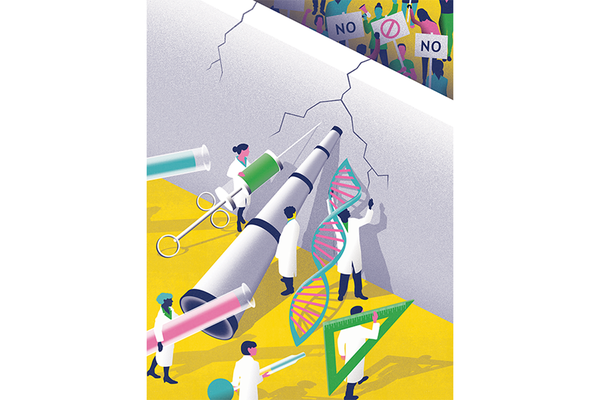
Whether or not there is an actual “war on science” under way, a million supporters of evidence-based thinking felt threatened enough to show up to the global 2017 March for Science. President Donald Trump has called global warming a “hoax,” and his administration has canceled, blocked and defunded scientific efforts to protect the environment and public health. Moreover, climate change denial is not restricted to the U.S., and dozens of countries have banned the cultivation of GMO crops, despite evidence that genetically modified foods are just as safe as traditionally bred varieties.
There are many ways to fight back, including improving education, outreach and political reform. But science must also tackle its own problems, from how we fund it to how we treat young scientists, ensure reproducible results, curb sexual harassment and encourage interdisciplinarity. Some creative solutions are already showing promise on these fronts, but science must fortify itself to withstand the current assault.
1. Science Funding Is Broken
by John P. A. Ioannidis
On supporting science journalism
If you're enjoying this article, consider supporting our award-winning journalism by subscribing. By purchasing a subscription you are helping to ensure the future of impactful stories about the discoveries and ideas shaping our world today.
2. Science under Scrutiny: The Problem of Reproducibility
by Shannon Palus
3. Halting Sexual Harassment
by Clara Moskowitz
4. Young and Struggling in Science
by Rebecca Boyle
5. To Solve Real-World Problems, We Need Interdisciplinary Science
by Graham A. J. Worthy and Cherie L. Yestrebsky