
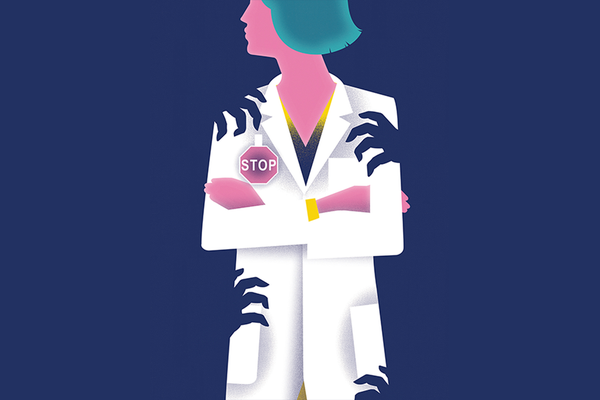
Sexual harassment is more prevalent in academia than in any sector of society except the military. According to a groundbreaking June 2018 report by the National Academies of Sciences, Engineering, and Medicine, harassment hurts individuals, diminishes the pool of scientific talent and ultimately damages the integrity of science itself. To understand the problem and how best to tackle it, a committee of 21 experts spent two years surveying existing data and commissioning new research. Paula Johnson, president of Wellesley College and co-chair of the committee behind the report, hopes its recommendations will fall on ears ready and willing to heed its advice. Scientific American spoke to Johnson about how to move forward. An edited transcript of the conversation follows.
What do we need to do to change the situation?
We found the policies and procedures that are in place are not preventing sexual harassment. We know that you have to go on a path of culture change. We’ve identified some major areas that have to be addressed. One is creating a diverse, inclusive and respectful environment. Another is really changing the power dynamics in adviser-trainee relationships. We need to make them less singular, to consider group mentoring, and to think about ways you might uncouple the mentoring relationship from financial dependence on the mentor. The third is supporting the targets of harassment, providing alternative ways to access services, whether or not they decide to report.
On supporting science journalism
If you're enjoying this article, consider supporting our award-winning journalism by subscribing. By purchasing a subscription you are helping to ensure the future of impactful stories about the discoveries and ideas shaping our world today.
There are also certain structural aspects of the way we handle cases now that really work against what we’re trying to achieve. For example, we made a recommendation that confidentiality agreements with perpetrators be prohibited. They prevent institutions from being transparent and inhibit them from being able to provide information that could be important to other institutions.
You also found that only a minority of people who experience harassment report it. How can we change that?
There are some novel approaches for reporting experiences of harassment that provide more control to the target. One is a program called Callisto that's now being adopted by a growing number of colleges and universities. It allows people to go in and record if an experience of harassment occurred and time-stamp it, without actually formally reporting it. People can see if others have recorded experiences with the same accused harasser. It allows people to share data in an anonymous way. It's a very hopeful, interesting tool.
Did the report address how harassment affects women of color and other minority groups differently?
We found women of color experience more harassment than do white women, white men and men of color. And that women of color also experience racial and ethnic harassment.
We crafted our recommendations with this finding in mind. Creating a more diverse, inclusive, respectful environment—that will help address this issue.
Your background is in medicine, which is the field within science where harassment is most prevalent. Why do you think that is?
The qualitative interview research commissioned by the committee provided some insight. It showed that with some of the expectations of grueling conditions in [medical] training, several respondents viewed sexual harassment as just part of the continuum of what they were expected to endure. Targets might say, “This is a really tough experience, and the conditions are pretty difficult, and [harassment] is part of that.”
Are you optimistic that the changes you call for will take place?
I am. We all know that culture change is not easy and that it doesn’t happen overnight. But neither did this problem arise overnight. We’ve seen leaders, myself included and many others, who are already taking the initiative to pursue some of the changes that we’ve suggested. Obviously, the fact that harassment is so prevalent is alarming. But we are providing a road map for a way forward, and I find that hopeful. And we’re in a particular moment where I think we’ve got the will.