
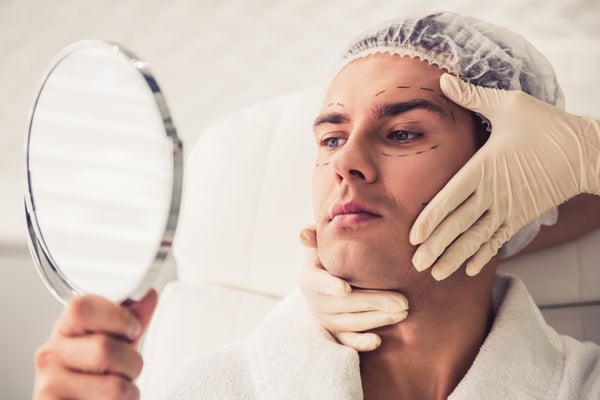

Joan Rivers once quipped, “I’ve had so much plastic surgery, when I die they’ll donate my body to Tupperware.” And if your breasts hang so low you can tuck them into your bikini bottom, or your nose rivals the neighborhood snowman’s, you may have considered cosmetic surgery, too.
Cosmetic surgery is by definition not medically necessary and is done simply to enhance your appearance. It’s different than reconstructive plastic surgery for, say, burn survivors, kids with a cleft lip or palate, or women who have undergone a mastectomy.
On supporting science journalism
If you're enjoying this article, consider supporting our award-winning journalism by subscribing. By purchasing a subscription you are helping to ensure the future of impactful stories about the discoveries and ideas shaping our world today.
Many folks argue that cosmetic surgery is oppressive, homogenizing the normal range of human appearance across age and race and pathologizing those of us who weren’t born looking like Halle Berry or George Clooney.
But many others argue that cosmetic surgery is empowering. In a world where beautiful people are rewarded professionally and socially for their looks, cosmetic surgery levels the playing field. More than that, many people argue that it has psychological benefits—that cosmetic surgery enhances confidence and satisfaction.
But does it? Regardless of your point of view—whether you think peels are just for bananas or you’ve been under the knife more than a chopped salad—this week, by request from an anonymous listener, we’ll tackle the question, “Will cosmetic surgery make me happier?”
The answer, as you might expect, is more complicated than a straightforward yes or no. When I dove into the literature for this one, I found studies with completely opposing conclusions. Apparently this is one of those topics where arguments among researchers get as hairy as a follicular transplant. Therefore, here are four points of view:
»Continue reading “Will Cosmetic Surgery Make Me Happier?” on QuickAndDirtyTips.com