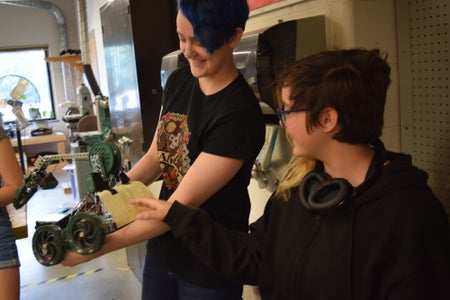
ElectronicsSeptember 25, 2017
Exploring a Different Kind of Team Sport
Learning how to balance strategy, practice, programming and teamwork at robotics camp
Amanda Baker is a science communicator and outreach advocate. She has a geoscience PhD from Cornell University and has managed open-access, academic journals as well as the outreach journal Frontiers for Young Minds. She is currently writing and editing science content for kids, from curriculum materials to magazines like Smore. She has served as a Science Olympiad national event supervisor and taught a first-year writing seminar on sustainable earth systems while at Cornell.
Exploring a Different Kind of Team Sport
Learning how to balance strategy, practice, programming and teamwork at robotics camp
The GLOBE Program: Making the Case for K–12 Citizen Scientists
Young participants in the GLOBE Program have collected more than 140 million data points in the last 20 years
Why Just Play Video Games When You Can Design Your Own?
Spending a week at animation academy got kids looking at one of their favorite hobbies from a brand new perspective
Art, Data and Environmental Stewardship
An unexpected marriage between socially engaged art and citizen science for youth outreach

Storming Castles and Forming Friendships with Catapults, Robotics and Code
Five days, 18 kids, nine robots and a whole lot of plastic bricks
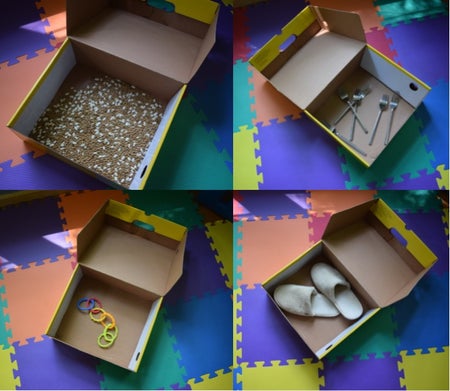
STEMtastic Party Games for Your Backyard Bash
Some ideas on how to add fun problem-solving and STEM challenges to an end-of-summer gathering
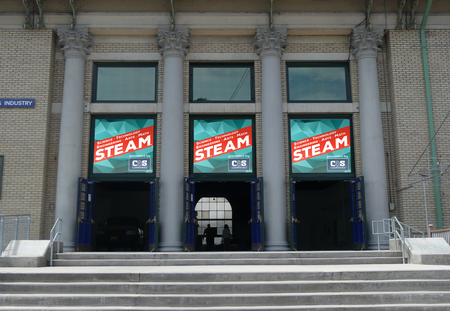
Drones, Data, and Deep-Fried Doughnuts: STEAM at the Great New York State Fair
Fairgoers will find an all-new STEAM exhibit at this year's state fair.
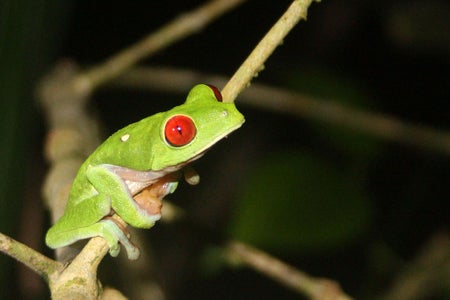
Bring Some Citizen Science to Your Summer
Do you want to track local frog populations or photograph clouds for science? The young and curious kids you know can finish out the summer as citizen scientists
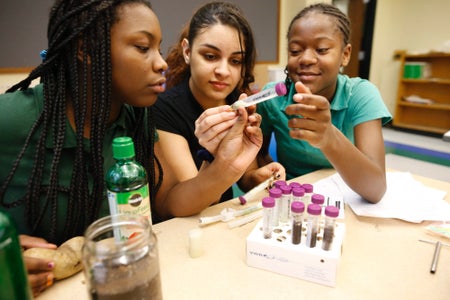
Spud Launchers: 3 Girls, Their Potatoes and the International Space Station
For three young women in Buffalo, a trip to the movies ultimately led to meeting an astronaut and sending an experiment into space

When I Grow Up: 5 Lessons Scientists Would Share with Their Younger Selves
What sparked their curiosity, and what experiences threatened to put out that flame? The answers might be somewhat unexpected
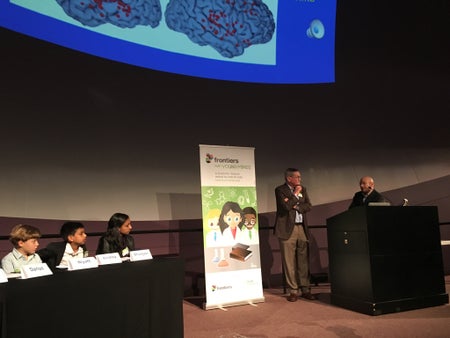
The Toughest Audience: Presenting Your Research to a Panel of Kids
Frontiers for Young Minds hosted its first live review event at the Chabot Space and Science Center as part of the Bay Area Science Festival. Researchers presented their work in 5-minute presentations, and then were questioned by a panel of Young Reviewers – ages 9-17 – in front of a live audience.

Students Get Creative When Competing to Study Genes in Space
Creativity may not be a term that the average person would associate with DNA research or space exploration, but the youth science competition Genes in Space is showing students and teachers that the concepts actually go hand-in-hand. The competition introduces students to cutting-edge technology, asks them to propose real-world questions about the effects of space travel on living organisms, teams students up with science experts, and then performs the winning experiment on the International Space Station.

No Wonder My Ears Hurt When Flying
A recent flight with an empty water bottle gave me a new appreciation for the pressures that my ear drums deal with each time I fly.
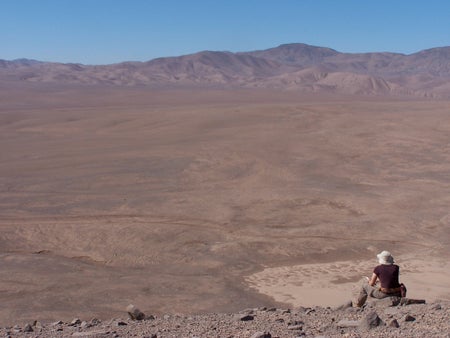
Never Perfect: Making Research Decisions about Close Enough for Now
Imagine you have been plopped in the middle of a desert and asked to make a geologic map of the surrounding square mile over the next seven hours. What would you do? How would you start? Making decisions in this kind of setting depends on interpreting your surroundings enough to create working hypotheses that will help you decide where to go, when and what to look for once you get there
Trying for Fun, and Ending Up with a Textbook Instead
In the process of trying to design an article that did not feel like a textbook, we created an article that reminded kids of just that. It is easy to fall into the trap of thinking that knowing about your audience is the same as knowing what they actually like

Being Lactose Intolerant in the Land of Cheese and Chocolate
Considering that ~65% of humans have trouble digesting lactose, one would think that the standard method for figuring out which products will or won't cause you days of pain would be more sophisticated than "give it a try."

Don't Explain So Much at Once, and Other Advice from Young Science Readers
Remembering the Human Component in Natural Hazards Research
When news hit about the catastrophic floods in Chile last month, I was immediately brought back to my field seasons in the Atacama studying earthquakes.
Boots or Heels: My Wardrobe Paradox as a Woman in STEM
A couple of weeks ago a wonderful hashtag was making its way around Twitter, with female scientists all over the world sharing photos of their feet to show a day #InMyShoes.
Even Scientists Play With Their Food
Have you ever been told not to play with your food? Perhaps been told that it isn’t polite or disrespects the other people at the table?
How Quickly Can (and Should) You Judge a Face?
The internet is filled with claims about how we form initial assessments of other people within the first ten minutes - or even the first ten seconds - of meeting them.
Seven Reasons Space Scientists Are Tougher Than You Think
Whether it is waiting to hear about draft picks or the next release by Apple, there are many things that make enthusiasts hold their breath.
Under What Circumstances Do We Find Robots Trustworthy?
Each year it seems a little less like science fiction to ask your phone for advice about local chinese food or trust your car to get you to a new location.
Not Your Grandma's Science Competition - Part 3
This post is the third in a three-part series highlighting youth science competitions that task young people with the real challenges and rewards of a life in research.