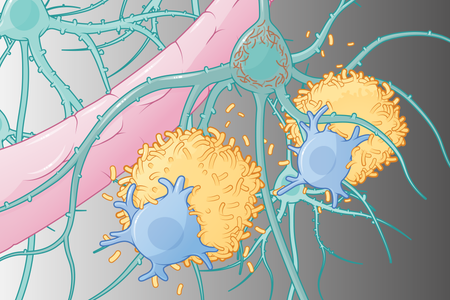
Alzheimer’s Drugs Are Finally Tackling the Disease Itself. Here’s How
While our understanding of Alzheimer’s disease is far from complete, the latest therapies, and others in more than 100 clinical trials, offer new hope
Esther Landhuis is a journalist in the San Francisco Bay Area. She holds a Ph.D. in immunology and covers biomedicine in all dimensions, from bench discoveries to biotech in health care.

Alzheimer’s Drugs Are Finally Tackling the Disease Itself. Here’s How
While our understanding of Alzheimer’s disease is far from complete, the latest therapies, and others in more than 100 clinical trials, offer new hope

Could Blood Transfusions and Tissue Transplants Spread Certain Dementias?
Scattered evidence suggests that aberrant proteins act as “seeds” to transmit neurodegenerative disease, but the jury is still out

What Does ‘Protection’ against COVID Really Mean?
To answer that question, expanded testing is needed that can determine levels of T immune cells

Here’s Who Should Get a Second COVID Booster
An individual’s health risks, treatment access and local case levels come into play for those who are eligible

These Are the Latest COVID Treatments
But shortages mean that new antivirals and other drugs may be hard to come by

Investigating Antidepressants’ Surprising Effect on COVID Deaths
Researchers are still puzzling over what this drug does at the molecular level to help COVID patients

The Definition of Gene Therapy Has Changed
Over the past few years, the discipline has evolved in significant ways

Detecting Alzheimer’s Gets Easier with a Simple Blood Test
New assays could reduce the need for costlier, more invasive brain scans and spinal fluid measures

An Immune Protein Could Prevent Severe COVID-19—if It Is Given at the Right Time
The antiviral interferon might help early but exacerbate disease in later stages

COVID-19 Vaccine Developers Search for Antibodies That ‘First Do No Harm’
Biotechs and pharma want to protect patients without triggering immune system havoc

Gut Microbes May Be Key to Solving Food Allergies
New therapeutics are testing whether protective bacteria can dampen harmful immune responses to food

‘Spider-Man’ Immune Response May Promote Severe COVID-19
Clinical trials have begun to test drugs that counter toxic molecular webs linked to lung distress

Why Women May Be More Susceptible to Mood Disorders
New research in mice suggests that a pregnancy hormone contributes to brain and behavioral changes caused by childhood adversity

Could Newly Found “Peacekeeping” Cells Be a Weapon against COVID-19?
In mice, these white blood cells tamp down inflammation in the lungs

The Biology of Sugars Points to a Sweet Strategy for Treating Cancer
Long-ignored field attracts interest from companies trying to develop next-generation immune therapies

How Dad’s Stresses Get Passed Along to Offspring
Mouse studies show tiny intercellular pods convey to sperm a legacy of a father’s hard knocks in life

Could Brain Stimulation Slow Cancer?
Activating the reward system boosts anti-tumor immunity in mice

Experimental Huntington’s Therapy Shows Promise in a Small Trial
Drugs that disrupt production of toxic proteins in the brain could work for various degenerative disorders, including Alzheimer’s and Parkinson’s

Could the “Alzheimer’s Gene” Finally Become a Drug Target?
Shutting down the top risk gene holds potential for halting the disease process

Wanted: More Data, the Dirtier the Better
The computational immunologist Purvesh Khatri embraces messy data as a way to capture the messiness of disease. As a result, he’s making elusive genomic discoveries

Could Magnetic Brain Stimulation Help People with Alzheimer’s?
A technology that uses magnetism to regulate neural activity shows a small benefit in patients with mild forms of the disease

Brain Imaging Identifies Different Types of Depression
Biological markers could enable tailored therapies that target individual differences in symptoms

Neuroscience: Big Brain, Big Data
Neuroscientists are starting to share and integrate data — but shifting to a team approach isn't easy

Do D.I.Y. Brain-Booster Devices Work?
Zapping the cranium may juice up neuron circuits, and use is rising—but there might be a cognitive price