
The SciencesOctober 30, 2000
Artificial Intelligentsia
Proselytizers of a future in which smart machines reign have not lost the faith
Gary Stix, formerly senior editor of mind and brain topics at Scientific American, edited and reported on emerging advances that have propelled brain science to the forefront of the biological sciences. Stix has edited or written cover stories, feature articles and news on diverse topics, ranging from what happens in the brain when a person is immersed in thought to the impact of brain implant technology that alleviates mood disorders such as depression. Before taking over the neuroscience beat, Stix, as Scientific American's special projects editor, was responsible for the magazine's annual single-topic special issues, conceiving of and producing issues on Albert Einstein, Charles Darwin, climate change and nanotechnology. One special issue he oversaw on the topic of time in all of its manifestations won a National Magazine Award. With his wife Miriam Lacob, Stix is co-author of a technology primer called Who Gives a Gigabyte? A Survival Guide for the Technologically Perplexed.
Artificial Intelligentsia
Proselytizers of a future in which smart machines reign have not lost the faith
BAD CONNECTIONS
Deleading solder creates worries about electronics reliability
LITTLE BIG SCIENCE
High-energy polemics erupt over plans to replace an aging French synchrotron
Infamy and Honor at the Atomic Café
Father of the hydrogen bomb, "Star Wars" missile defense and Lawrence Livermore National Laboratory, Edward Teller has no regrets about his contentious career
THE BUTTERFLY EFFECT
New research findings and European jitters could cloud the future for genetically modified crops
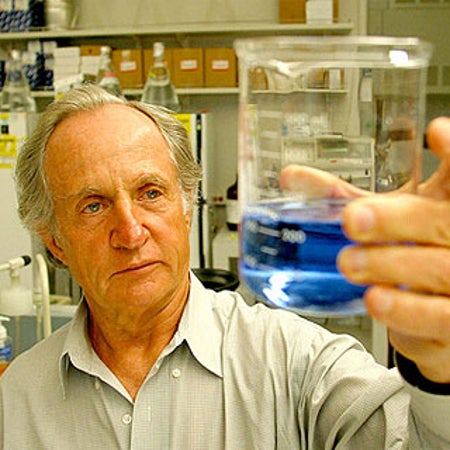
Of Survival and Science
From street waif in war-torn Italy to "knocking out" the genes of mice--Mario R. Capecchi shows how genius springs from the most unlikely beginnings.
TOO GOOD TO BE TRUE
Scams purported to treat sexual dysfunction prey on the unwary
SEEKING COMMON GROUND
Building a new generation of gargantuan telescopes gets mired in environmental and native cultural issues
PARSING CELLS
Proteomics is an attempt to devise industrial-scale techniques to map the identity and activities of all the proteins in a cell
JAPAN FIELDS A BIG LEAGUE LIGHT GATHERER
A New Eye Opens on the Cosmos
ON THE HIGHEST MOUNTAIN IN THE PACIFIC BASIN, A 10-YEAR ODYSSEY WILL CULMINATE IN THE CAPTURE OF FIRST LIGHT FOR A TELESCOPE THAT MAY SURPASS SPACE-BASED OBSERVATORIES
Shading the Twinkle
Telescope that shuts out starlight could spy new planets
Nothing But Light
Hunger for bandwidth drives all-optical technology to market
Shutting Down a Gene
Antisense drug wins approval
The E. Coli Are Coming
Do toys and toothpaste breed resistant bacteria?
Little Bangs
Making thrusters for micromachines
Personal Pills
Genetic differences may dictate how drugs are prescribed
Phantom Touch
Imbuing a prosthesis with manual dexterity
Riding the Back of Electrons
Theoretician Rolf Landauer remains a defining figure in the physics of information
Herb Remedy
Exploring ways to administer marijuana as a medicine
Where the Bodies Lie
To industry's chagrin, epidemiologist Joel Schwartz has argued that particulates in the air shorten human life--his research has helped set tougher air-quality standards
A Calculus of Risk
Financial engineering can lessen exposure to the perils of running a multibillion-dollar business or a small household. But mathematical models used by this discipline may present a new set of hazards
Resistance Fighting
Will natural selection outwit the king of biopesticides?
Fake it before you Make It
Virtual machine tools may transform manufacturing