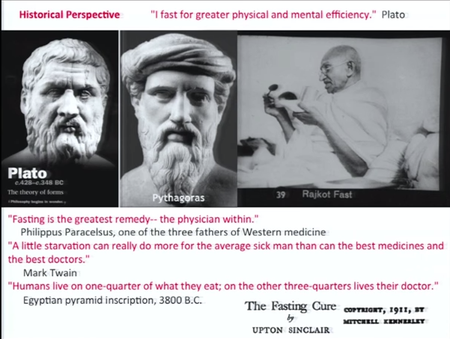
Mind & BrainJuly 1, 2015
Stress Makes Your Brain Stronger: Try Fasting
A scientist who studies aging describes how going without food for a time can make your brain cells healthier
Gary Stix, formerly senior editor of mind and brain topics at Scientific American, edited and reported on emerging advances that have propelled brain science to the forefront of the biological sciences. Stix has edited or written cover stories, feature articles and news on diverse topics, ranging from what happens in the brain when a person is immersed in thought to the impact of brain implant technology that alleviates mood disorders such as depression. Before taking over the neuroscience beat, Stix, as Scientific American's special projects editor, was responsible for the magazine's annual single-topic special issues, conceiving of and producing issues on Albert Einstein, Charles Darwin, climate change and nanotechnology. One special issue he oversaw on the topic of time in all of its manifestations won a National Magazine Award. With his wife Miriam Lacob, Stix is co-author of a technology primer called Who Gives a Gigabyte? A Survival Guide for the Technologically Perplexed.
Stress Makes Your Brain Stronger: Try Fasting
A scientist who studies aging describes how going without food for a time can make your brain cells healthier

Forensic Scientists Identify Migrant Remains in Texas
Mass graves of border-crossers who died of dehydration or exhaustion are being exhumed to put names on anonymous case numbers

Home-Brew Opiates Demonstrate the Wild and Woolies of Synthetic Biology
The ability to produce morphine—no poppies necessary—in a process akin to beer-making brings to the fore regulatory issues for a new biotechnology

Latin America Spearheads a Global Effort to Find an Effective Alzheimer's Drug
A cluster of families in Colombia who carry a rare genetic mutation that causes the disease have become a focus of the search for a treatment
Could a Non-Prescription Antifungal Become a Major Advance for Multiple Sclerosis?
In 2011, Paul Tesar, a professor at Case Western Reserve School of Medicine, worked with collaborators to come up with a method of producing massive numbers of mouse stem cells that are capable of turning into oligodendrocytes, the cells that produce myelin, the protective coating on nerve cells.
Learning to Make a Stone Age Axe Gives Clues to How the Brain Evolved
For many decades, scientists have tried to understand the past by doing as our forebears did. One important endeavor in what is called experimental archaeology involves moderns crafting Stone Age tools by chipping away at rocks.
Investigators Seek Ways to Detect and Delay Early Alzheimer’s
Drugs administered before symptoms appear could be key to combating the leading cause of dementia
In Brief: Drug Approaches Under Study for Alzheimer's
New drugs for Alzheimer's lag, but not for lack of trying
Willpower as the Key to Life’s Successes [Video]
The decades-long study of self-control has yielded insights into how we can overcome hardships
Should We Take Steps to Prevent Alzheimer’s and Parkinson’s Contagion?
One of the most intriguing new areas of research in neuroscience has to do with the discovery that proteins involved with Alzheimer’s, Parkinson’s and other neurodegenerative illnesses can contort into the wrong shape.
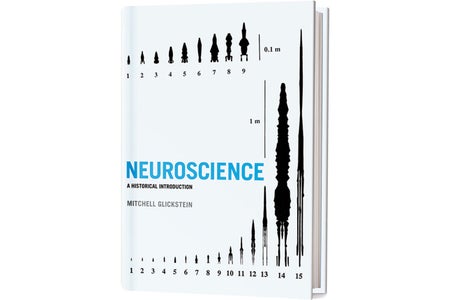
Book Review: Neuroscience
Books and recommendations from Scientific American
An Electrical Off-Switch for Disease [Video]
Stimulator devices can tweak nervous system activity to turn down inflammation or treat other effects of disease
Does Drinking Alcohol Protect Against ALS?
Everyone knows that ALS is a very bad disease, an awareness underscored by the recent Ice Bucket Challenge. The death of neurons that results in paralysis can be caused by specific genetic mutations. But in most cases, single genes are not the culprit.
New Promise of Relief for Major Depression
Deep-brain stimulation has shown potential to help the up to 20 percent of patients with major depression who don’t get relief from medication, psychotherapy or other means
240 Head Hits: The Average a 10-Year Old Can Get in a Football Season
Coinciding with Super Bowl week, the journal Neurology just came out with a study by Boston University researchers that looked at retired professional football players, comparing the cognitive functioning of players who had started tackle football before age 12 with others who hadn’t.
Site Survey Shows 60 Percent Think Free Will Exists. Read Why
We are responsible for our own actions. Of course we are. Sure about that? “I think I can?” “I think I can’t?” All philosophizing aside, the assumption that we have free will has been called into question by research that suggests our brains are deciding for us before we become conscious of the decisions streamed [...]
Free Community College: Obama Heeds Scientific American’s Advice—Kind Of
It took awhile. But President Obama finally decided to take us up on the editorial we published last summer on making community college free.
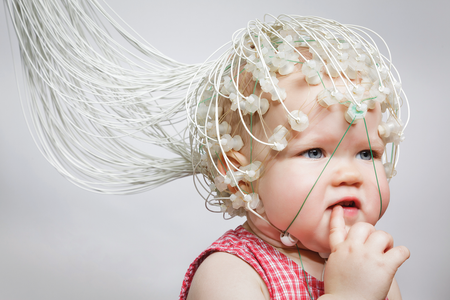
How to Build a Better Learner
Brain studies suggest new ways to improve reading, writing and arithmetic—and even social skills
Online Survey: Do You Believe That Free Will Exists?
Vote ‘yes’ or ‘no’ on this seminal question that has perplexed philosophers for millenia
Turbocharging the Brain
Will a pill at breakfast improve concentration and memory—and will it do so without long-term detriment to your health?
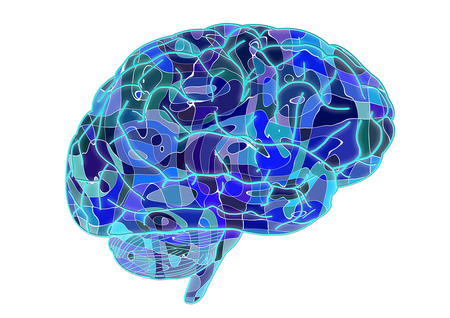
Bio Bigwigs Go after Drugs for Parkinson's, Alzheimer's and ALS
Lists of the biggest challenges in brain science often start—or end—with consciousness. “End” because consciousness is considered so overwhelming a hack that it merits coming last on the list—the ultimate challenge.
Brain Training Doesn’t Give You Smarts...Except When It Does
Our site recently ran a great story about how brain training really doesn't endow you instantly with genius IQ. The games you play just make you better at playing those same games.
Bhopal at 30: Lessons Still Being Learned
In 1989, I was working as an at editor at IEEE Spectrum when I was assigned to write a feature on Bhopal. The thirtieth anniversary of that industrial disaster that killed thousands is tonight.
Mouse Experiment Suggests We Might Sleep Off Toxic Memories
One area of brain science that has drawn intense interest in recent years is the study of what psychologists call reconsolidation—a ponderous technical term that, once translated, means giving yourself a second chance.