
Forget Kaiju. Japan’s Real Invaders Are Much Furrier.
Tales of monsters invading Japan are a longstanding tradition, usually involving menacing kaiju—literally “strange creatures”—rising from the sea to wreak havoc on a Japanese city.
Jason G. Goldman is a science journalist based in Los Angeles. He has written about animal behavior, wildlife biology, conservation, and ecology for Scientific American, Los Angeles magazine, the Washington Post, the Guardian, the BBC, Conservation magazine, and elsewhere. He contributes to Scientific American's "60-Second Science" podcast, and is co-editor of Science Blogging: The Essential Guide (Yale University Press). He enjoys sharing his wildlife knowledge on television and on the radio, and often speaks to the public about wildlife and science communication.

Forget Kaiju. Japan’s Real Invaders Are Much Furrier.
Tales of monsters invading Japan are a longstanding tradition, usually involving menacing kaiju—literally “strange creatures”—rising from the sea to wreak havoc on a Japanese city.

Golden Eagle Versus Deer: Eagle Wins
After setting camera traps to study tigers, researchers received a surprise when they found the world's first recorded evidence of a golden eagle attacking a sika deer.

Photoblogging: Blue-Footed Booby
Blue-footed boobies – those birds made famous by their mating dance – are being spotted all over the Los Angeles area and as far north as Marin County.

If You Need To Test Your New Robot, Ask A Dog
The 1962 cartoon series The Jetsons featured a futuristic nuclear family: father George, mother Jane, and their offspring, Elroy and Judy. In the very first episode, we learn about the Jetson family’s purchase of a housecleaning robot named Rosey.

High-Flying Frog Was Not The First Amphibian To Reach For Outer Space
The internet loves animals, and loves animals in surprising places even more. So when a photo emerged showing a frog flying alongside NASA’s Minotaur V rocket as it lifted off from it’s launchpad in Virginia earlier this month carrying the LADEE spacecraft towards the moon it was an immediate hit.

Photoblogging: King of the Jungle
I’m not sure why lions are called “king of the jungle,” when they live on the savannah. Still, this male lion, photographed in September of 2012 at the San Francisco Zoo does look quite kingly.

Even Lions Like To Cuddle
Lion snuggles look adorable, but they betray evidence of the often violent life that lions lead. Cuddling may help to reinforce friendships that become necessary to protect a lion's territory from intruders.

Photoblogging: Colorful Mandrill
The mandrill has one of my favorite binominal classifications: Mandrillus sphinx. The species was once a member of the genus Papio, home to the baboons.

#SciAmBlogs Thursday – glass sponges, dog sounds, sharks friends, med school interviews, and more.
It was thought that animal communication can be explained by lower-level physiological states, but new research shows that wolf howls reflect social dynamics.

Photoblogging: Dinosaurs and LA Freeways
I snapped this photo last week while visiting the Getty Museum. It shows the 405 freeway snaking northbound through the Sepulveda pass in West Los Angeles.

#SciAmBlogs Thursday – DNA in amber, social cheetahs, helicopter halos, robot octopus, couple-profile on Facebook, and more.
Are birds' migration routes mainly the result of instinct or do they need practice, learning, and experience? New research on endangered whooping cranes suggests that social learning plays a critical role.

The Real Neuroscience of Creativity
The changing colors and textures of its enclosure at the San Diego Zoo provided the perfect framing for this yellow-footed rock wallaby. Photo taken in July 2013.

Photoblogging: More Koalas!
Check out the claws on this male (I think?) koala as he rests in the shade during the afternoon heat at the San Diego Zoo’s “Koalafornia” exhibit.

When A Komodo Dragon Caused A Salmonella Outbreak in a Bunch of Kids
When we get infected by salmonella, it usually comes from things like undercooked meat or contaminated eggs. Sometimes, it comes from sharing germs with Komodo dragons, as some Colorado children found out in 1996.

Photoblogging: Snoozing Koala
A female (I think?) koala sleeps during the afternoon heat at the San Diego Zoo’s fantastic new “Koalafornia” exhibit. Photo taken in July 2013.

Cooler Than #SharkWeek: What Can We Learn From the Brains of the Largest Sharks?
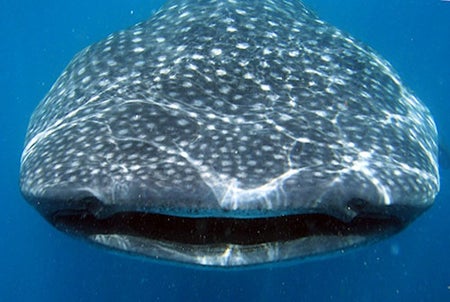
Shark Week is upon us, and rather than be fooled by sharky fakery or outright lies, how about some real, true, scientifically-accurate shark science?

Jane Austen is replacing Charles Darwin–and that’s a very good thing
Our ability to perceive all three dimensions, due in part to having two eyes on the front of our heads with overlapping visual fields, allows us to enjoy 3D summer blockbusters, but may have originally evolved for a simpler purpose: avoiding falling to our deaths.

Depth Perception Didn't Evolve for Watching The Avengers in 3D

Photoblogging: Flamingo Family
In this photo taken in July 2013 at the San Diego Zoo, a juvenile flamingo attempts to feed.

By Understanding Cheetah Social Networks, Researchers Could Improve Odds of Breeding
Nine lives won’t help to perpetuate a cat species unless the cats manage to reproduce. The decline of wild cheetahs (Acinonyx jubatus), classified as “vulnerable” by the IUCN, led to the coordination of captive breeding programs in zoos and other breeding facilities.

By Understanding Cheetah Social Networks, Researchers Could Improve Big Cats' Breeding Odds

George Alexander Louis: What’s In A Name?
My latest at The Guardian is on the psychology of first name choices – a timely topic, as the royal family has just announced the name of the latest heir to the throne: George Alexander Louis.

George Alexander Louis: What's In A Name?

Photoblogging: Crested Coua