Scott Aaronson Answers Every Ridiculously Big Question I Throw at Him
Quantum-computer whiz riffs on simulated universes, the Singularity, unified theories, P/NP, the mind-body problem, free will, why there’s something rather than nothing, and more.

John Horgan, who has written for Scientific American since 1986, comments on science on his free online journal Cross-Check. He has also posted his books Mind-Body Problems and My Quantum Experiment online. Horgan teaches at Stevens Institute of Technology.

Scott Aaronson Answers Every Ridiculously Big Question I Throw at Him
Quantum-computer whiz riffs on simulated universes, the Singularity, unified theories, P/NP, the mind-body problem, free will, why there’s something rather than nothing, and more.

Meta-Post: Horgan Posts on Psychedelics
“Cross-check” columns on psychedelic drugs, mystical experiences and related topics.

What's So Great about Innovation?
Technological innovation, which is worshipped in modern culture, can do more harm than good.

Japanese Study Deals Another Blow to Deep-Roots Theory of War
An analysis of skeletons reveals that violence was rare among hunter–gatherers in prehistoric Japan

Obama and Putin to Seek End of War
Book by science blogger inspires U.S. president to pursue peace plan with Russian leader

The Singularity and the Neural Code
Bionic convergence and psychic uploading won’t be possible unless we crack the neural code, science’s hardest problem.

Are Drone Strikes Really Making Us Safer?
Former CIA chief Michael Hayden defends drone attacks, but critics fear they may do more harm than good.

Psychology's Ongoing Credibility Crisis
New studies have intensified the debate over psychology’s “reproducibility" problems.

AI Visionary Eliezer Yudkowsky on the Singularity, Bayesian Brains and Closet Goblins
“Decision theorist” Eliezer Yudkowsky spells out his idiosyncratic vision of the Singularity.

Meta-Post: Horgan Posts on Climate Change, Nuclear Energy and Other Green Topics
Cross-Check columns on global warming, “water wars,” nuclear energy, fracking and related issues

Meta-Post: Horgan Posts on Antidepressants, Brain Implants, Psychedelics, Meditation and Other Therapies for Mental Illness
Cross-Check columns on efforts to understand and treat depression, schizophrenia, alcoholism and other mental disorders

Meta-post: Horgan Posts on Brain and Mind Science
Cross-Check columns on the brain, mind, free will and other mysteries

Meta-Post: Horgan Posts on War and Peace
Cross-Check columns on war and related topics

Meta-Post: Horgan Posts on Physics, Cosmology, Etcetera
Cross-Check columns on physics, cosmology and related topics

Meta-Post: John Horgan Posts on Cancer, Etcetera
Cross-Check columns on cancer and related topics

Is the Gravitational-Wave Claim True? And Was It Worth the Cost?
Was the gravitational-wave experiment worth its $1.1-billion cost if it merely confirms that Einstein was right?

I am Innately Aggressive, Not Innately Warlike
War and hockey, although they tap into innate human aggression, are both learned, culturally-driven behaviors.

Physicist Sabine Hossenfelder Fears Theorists, Lacking Data, May Succumb to "Wishful Thinking"
Blogger “Bee” Hossenfelder is not afraid to sting her fellow physicists.

The Many Minds of Marvin Minsky (R.I.P.)
The late Marvin Minsky, a pioneer of artificial intelligence, was a paradoxical figure, who once said Freud was his favorite theorist of mind.

10,000-Year-Old Massacre Does Not Bolster Claim That War Is Innate
A new report on a massacre of hunter–gatherers in Africa is consistent with the claim that war, far from being an inborn trait that evolved millions of years ago, is a recent cultural invention

How Physics Lost Its Fizz
Physics, which decades ago seemed capable of answering the deepest mysteries of existence, is now just recycling once-exciting ideas

The Beginning of The Ends of Science
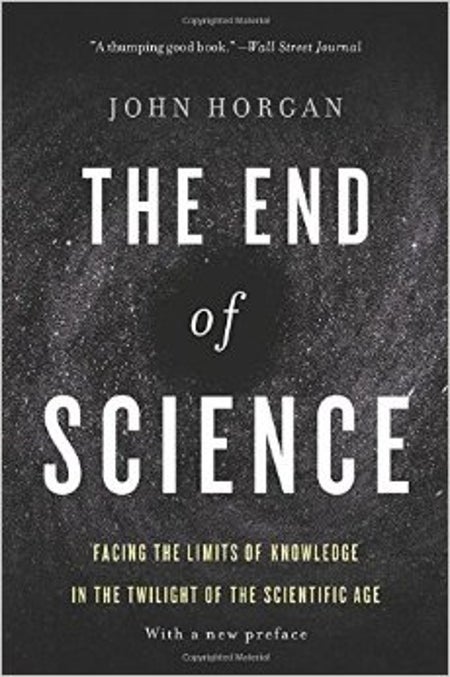
A misprint played a crucial role in the origin of the controversial 1996 book The End of Science.

Are Brains Bayesian?
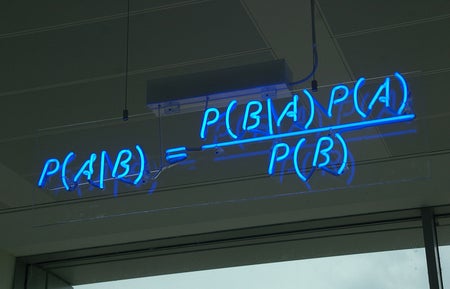
Just because algorithms inspired by Bayes’ theorem can mimic human cognition doesn’t mean our brains employ similar algorithms.

Bayes's Theorem: What's the Big Deal?
Bayes’s theorem, touted as a powerful method for generating knowledge, can also be used to promote superstition and pseudoscience