OpinionDecember 24, 2019
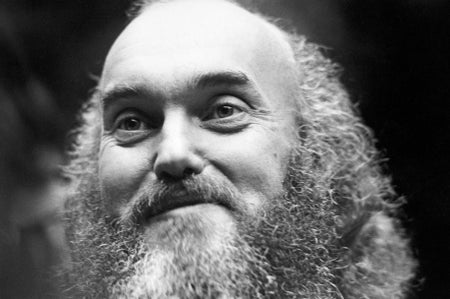
Baba Ram Dass and the Tale of the Acid-Gobbling Guru
Skeptics have questioned a story told by the late counterculture icon in his classic best seller Be Here Now
John Horgan is a freelance journalist and a former Scientific American staff writer. He comments on science in his free online journal, Cross-Check, and he has also posted his self-published books Mind-Body Problems (2018) and My Quantum Experiment (2023) online. Horgan teaches science writing at the Stevens Institute of Technology.
Baba Ram Dass and the Tale of the Acid-Gobbling Guru
Skeptics have questioned a story told by the late counterculture icon in his classic best seller Be Here Now
Can Philosophy Make You Happy?
Philosopher Catherine Wilson thinks the ancient sage Epicurus can provide guidance for our modern scientific age

Can Mysticism Help Us Solve the Mind-Body Problem?
A freewheeling symposium explores experiences, theories and philosophies that challenge conventional materialist science

Beyond Physicalism
Philosopher Hedda Hassel Mørch defends the idea that consciousness pervades the cosmos
Multiverse Theories Are Bad for Science
New books by a physicist and science journalist mount aggressive but ultimately unpersuasive defenses of multiverses
Jeffrey Epstein and the Decadence of Science
The Epstein scandal, which embroiled many prominent scientists, is just one of many signs that a gloomy prophecy is being fulfilled
Can the Shape of Your Face Predict Your Propensity for Violence?
Modern scientists revive a crude form of biological determinism
Can Lifelong, Invasive Screening Eradicate Cancer?
A prominent oncologist urges continuous testing of everyone from birth onward with implanted devices that detect cancerous cells before they spread
Meta-Post: Posts on Physics
Cross-check columns on physics, cosmology and related topics

How Can We Curb the Spread of Scientific Racism?
A new book examines the insidious effects of scientific investigations into race
How Harold Bloom, the Late Literary Critic, Helped Me Write The End of Science
Bloom’s book The Anxiety of Influence helped a science writer understand the plight of modern scientists trying to surpass their predecessors
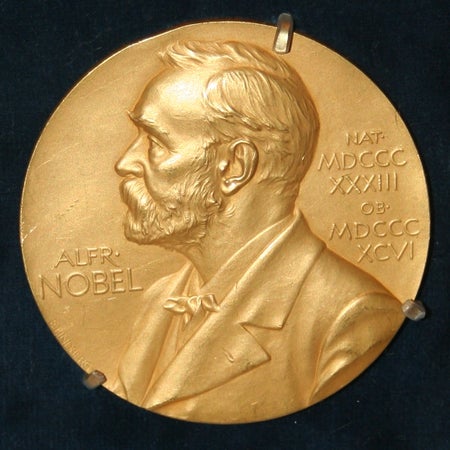
String Theory Does Not Win a Nobel, and I Win a Bet
Science writer John Horgan wins a 2002 bet with physicist Michio Kaku that by 2020 no unified theory of physics will win a Nobel Prize

On Philosophy, Death and the Sea
A young philosopher finds philosophy consoling because it is impossible.

My Regrets about Controversial Anthropologist Napoleon Chagnon (RIP)
Chagnon’s views of the “fierce” Yanomamö and of the roots of war were more subtle than his critics or admirers suggested
How We Can Avert Climate Apocalypse
An alarming book provokes a vision of a world that has solved the problems of global warming and war
Is Mathematics, like Science, Pluralistic?
Mathematicians disagree over whether their fundamental assumptions, or axioms, are true

Pluralism: Beyond the One and Only Truth
Some big questions, such as how matter makes mind and what quantum mechanics means, may not have a single, definitive answer
The Delusion of Scientific Omniscience
As time passes, the claim that science can comprehend everything looks increasingly nutty

Genealogical Anxiety
Pondering the origins of your beliefs and yourself can be the first step toward making a better world

The Dawn of Self-Consciousness
A sudden moment of self-awareness in childhood propels people on a quest to explore life’s mysteries

We Should All Be Science Critics
A Harvard scholar says viewing science and technology with a critical eye can make the world a better place

Cancer Medicine Is Failing Us
Our aggressive, expensive approach to cancer is doing more harm than good

Can Psychiatry Heal Itself?
A Harvard historian urges psychiatrists to focus less on making money and more on helping patients

What Does a Medical Nihilist Do When He Gets Sick?
Philosopher Jacob Stegenga, author of a scathing critique of medicine, discusses vaccines and his own health