
Space & PhysicsJuly 4, 2016
Is Mars Missing a Moon?
A new theory suggests the Red Planet once had a spectacular lunar system. Lee Billings reports.
Lee Billings is a science journalist specializing in astronomy, physics, planetary science, and spaceflight and is senior desk editor for physical science at Scientific American. He is author of a critically acclaimed book, Five Billion Years of Solitude: The Search for Life Among the Stars, which in 2014 won a Science Communication Award from the American Institute of Physics. In addition to his work for Scientific American, Billings’s writing has appeared in the New York Times, the Wall Street Journal, the Boston Globe, Wired, New Scientist, Popular Science and many other publications. Billings joined Scientific American in 2014 and previously worked as a staff editor at SEED magazine. He holds a B.A. in journalism from the University of Minnesota.
Is Mars Missing a Moon?
A new theory suggests the Red Planet once had a spectacular lunar system. Lee Billings reports.
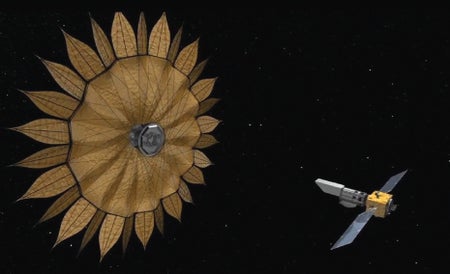
A “Starshade” Could Help NASA Find Other Earths Decades Ahead of Schedule
A next-generation space telescope is in the works—but if it is to see potentially habitable planets, it will need to block out their suns
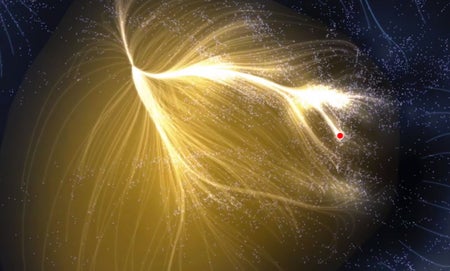
Mapping Laniakea, the Milky Way's Cosmic Home [Video]
The Milky Way’s home supercluster of galaxies is far bigger than previously known
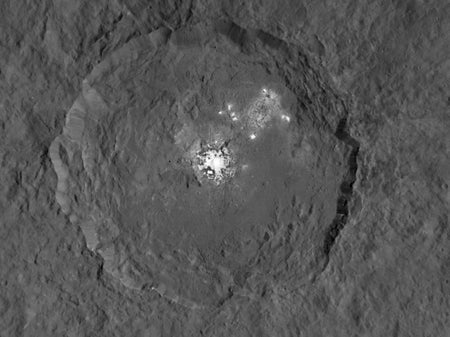
Scientists Get to the Bottom of the Bright Spots on Ceres
New results from Dawn spacecraft fuel debate on whether the dwarf planet is a habitable oasis between Mars and Jupiter
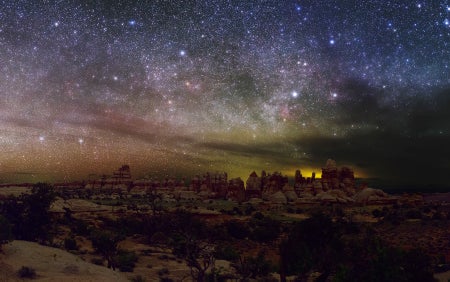
New Map Shows the Dark Side of Artificial Light at Night
More than a third of humanity cannot see the Milky Way due to light pollution, and a new wave of energy-efficient lighting could make the problem much worse

LISA Pathfinder Reports Record-Breaking Gravitational Wave Results
The successful technology demonstration paves the way for detecting mergers of supermassive black holes with future space-based observatories
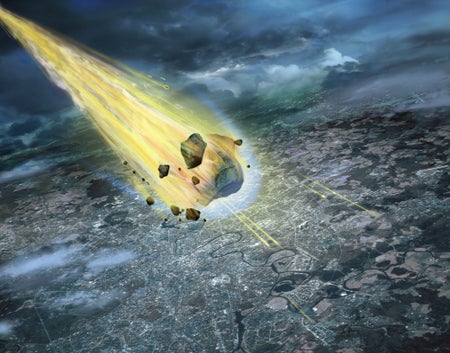
For Asteroid-Hunting Astronomers, Nathan Myhrvold Says the Sky Is Falling
The wealthy technologist claims some of the world’s top experts on Earth-threatening asteroids are guilty of bad science
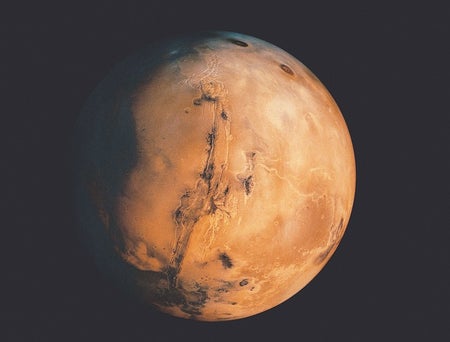
Giant Tsunami Remnants Spotted on Mars
Evidence indicates that waves as tall as skyscrapers and thousands of kilometers wide once washed over the Red Planet.
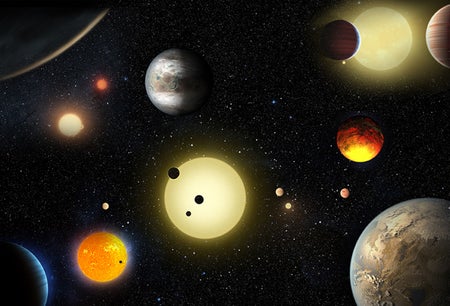
Astronomers Find More Than 1,000 New Planets
The Kepler mission’s announcement of 1,284 worlds previews the overwhelming number of planetary discoveries to come
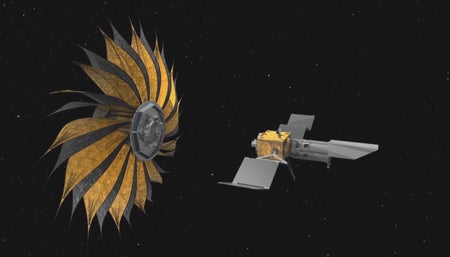
How NASA's Next Big Telescope Could Take Pictures of Another Earth
A “starshade” flying alongside the WFIRST observatory could deliver images of potentially habitable worlds decades ahead of schedule
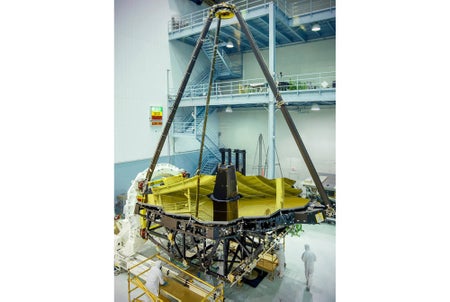
Golden Eye: Webb Telescope's Giant Mirror Unveiled
Witness the glimmering heart of NASA’s largest-ever space telescope
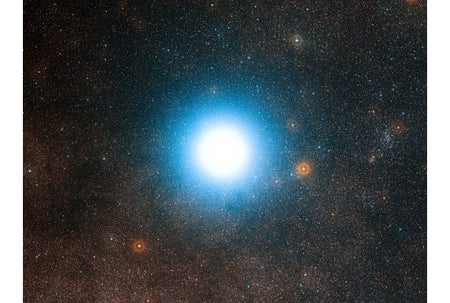
$100-Million Plan Will Send Probes to the Nearest Star
Funded by Russian entrepreneur Yuri Milner and with the blessing of Stephen Hawking, Breakthrough Starshot aims to send probes to Alpha Centauri in a generation
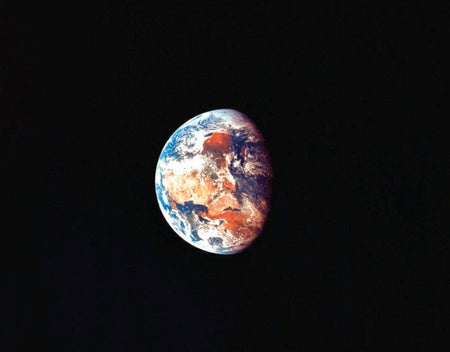
Lasers Could Hide Earth from Prying Aliens
We could use laser light to mask our transits across the sun and thus hide Earth from any intelligent aliens looking for planets to invade
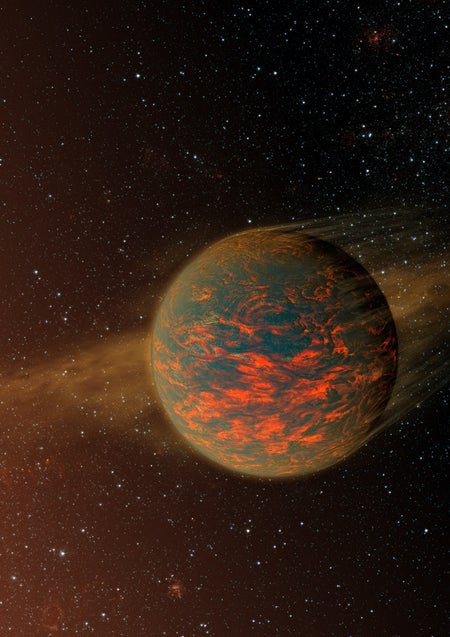
Astronomers Create the First Heat Map of a Super-Earth
The super-Earth 55 Cancri e may have a magma ocean or windblown clouds of vaporized rock
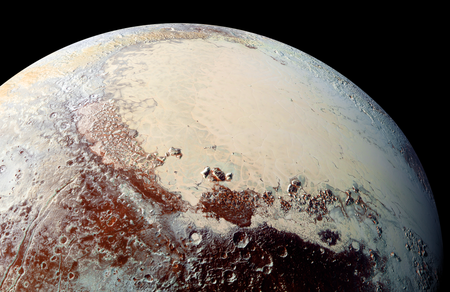
Pluto's Wonders Come into Focus
NASA’s New Horizons mission has delivered a treasure trove of data from the dwarf planet
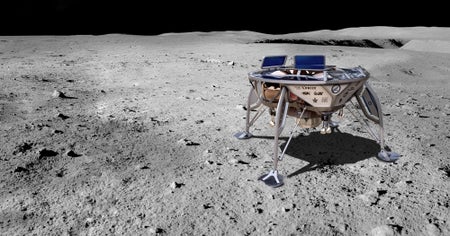
An Israeli Moonshot [Q&A]
The co-founder of SpaceIL, a contender for the Google Lunar XPRIZE, discusses his plans to reach the moon
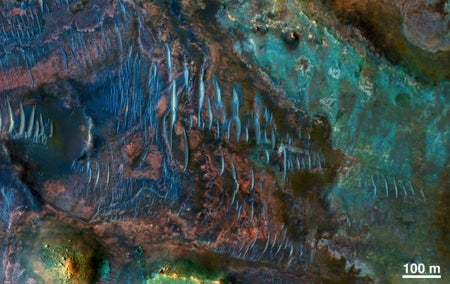
10 Years at Mars: Mars Reconnaissance Orbiter's Best Images [Slide Show]
NASA’s most prolific interplanetary mission reaches a new milestone in Martian exploration
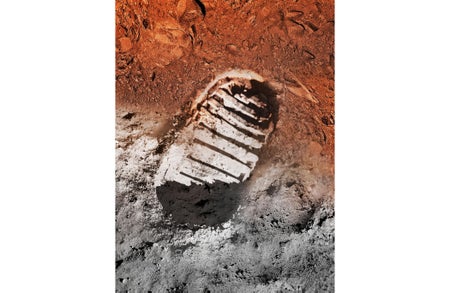
No Man's Land: Where on Mars Should Astronauts Go?
Inside the first meeting of the committee to colonize the Red Planet
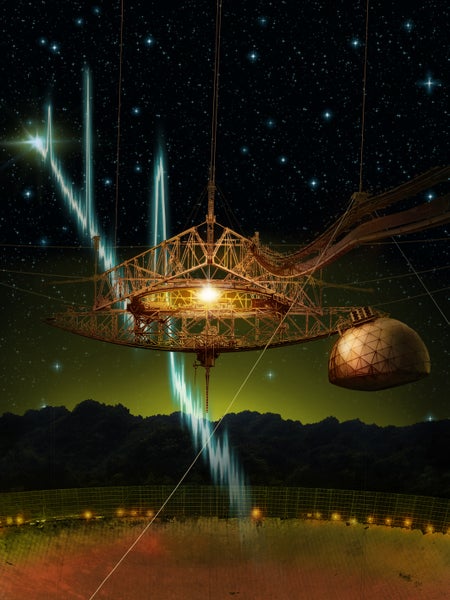
The Recurring Question: Where Do Fast Radio Bursts Come from?
Astronomers have discovered a repeating source for an enigmatic cosmic phenomenon
Billion Sun–Bright Events Leave Radio Wave Clues
“Fast radio bursts” detected here on Earth last only a thousandth of a second, but are the result of a faraway source briefly shining a billion or more times brighter than our sun.
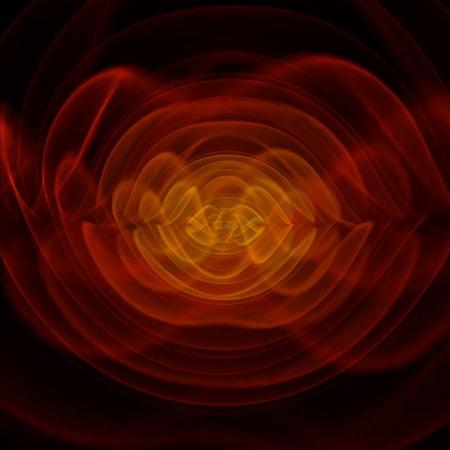
The Future of Gravitational Wave Astronomy
Fully opening this new window on the universe will take decades—even centuries
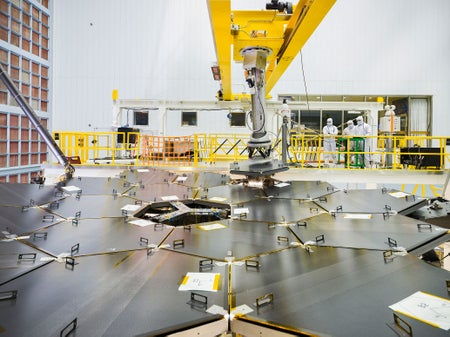
Mirror on the Cosmos: NASA's Next Big Telescope Takes Shape
After more than 20 years the giant mirror of the James Webb Space Telescope is finally complete
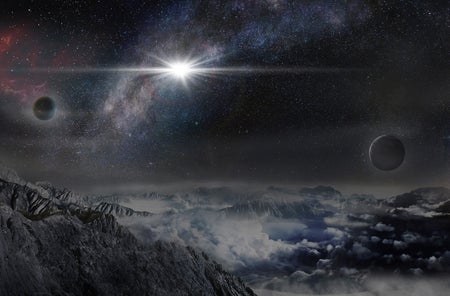
Found: The Most Powerful Supernova Ever Seen
A stellar explosion almost 600 billion times brighter than the sun pushes the limits of physics

Richard Garriott's Cabinet of the Universe, Part 2: Earth Forms
In this episode of Richard Garriott's miniseries, he shows us how Earth formed, how remnants of that formation still wander the solar system and how our planet came to be covered by oceans.
Next week: Life on Earth Begins