InequalitySeptember 1, 2016
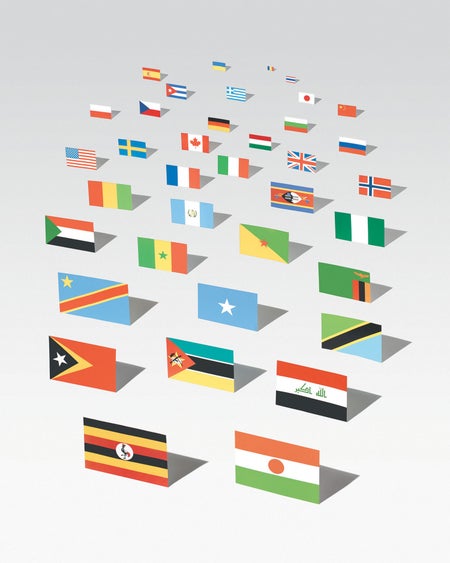
1 World, 10 Billion People: Who Thrives, and Who Falls Behind?
Quality of life on an increasingly crowded planet depends on decisions made today
Mara Hvistendahl is an investigative reporter at the New York Times and author of Unnatural Selection: Choosing Boys over Girls, and the Consequences of a World Full of Men (PublicAffairs, 2011). Her newest book is The Scientist and the Spy: A True Story of China, the FBI, and Industrial Espionage (Riverhead, 2020).
1 World, 10 Billion People: Who Thrives, and Who Falls Behind?
Quality of life on an increasingly crowded planet depends on decisions made today

China's New Birth Rule Can't Restore Missing Women and Fix a Population
The government ended a one-child limit, but the policy already encouraged millions of abortions of females, causing lasting damage

How Ultrasound Changed the Human Sex Ratio
A technology originally developed for maritime navigation and detection has become the dominant method for sex selection
Paper Money
A substitute for coins turned into a passport for globalization

Origins: The Start of Everything
Where do rainbows come from? What about flying cars, love and LSD?
The Vibrator
One of the first electrical appliances made its way into the home as a purported medical device
Future of Popular Chinese Herbal Medicine Up in the Air
Demand soars, populations dwindle of caterpillar fungus used to treat everything from cancer to erectile dysfunction

China's Three Gorges Dam: An Environmental Catastrophe?
Even the Chinese government suspects the massive dam may cause significant environmental damage
Is China's Great Wall Visible from Space?
Though it stretches for some 4,500 miles, the ancient Chinese fortification is not as visible from orbit as modern desert roads

Coal Ash Is More Radioactive Than Nuclear Waste
By burning away all the pesky carbon and other impurities, coal power plants produce heaps of radiation