
TechnologyMay 2, 2012
Solar-Powered Catamaran Circumnavigates Earth
Mark Fischetti was a senior editor at Scientific American for nearly 20 years and covered sustainability issues, including climate, environment, energy, and more. He assigned and edited feature articles and news by journalists and scientists and also wrote in those formats. He was founding managing editor of two spin-off magazines: Scientific American Mind and Scientific American Earth 3.0. His 2001 article “Drowning New Orleans” predicted the widespread disaster that a storm like Hurricane Katrina would impose on the city. Fischetti has written as a freelancer for the New York Times, Sports Illustrated, Smithsonian and many other outlets. He co-authored the book Weaving the Web with Tim Berners-Lee, inventor of the World Wide Web, which tells the real story of how the Web was created. He also co-authored The New Killer Diseases with microbiologist Elinor Levy. Fischetti has a physics degree and has twice served as Attaway Fellow in Civic Culture at Centenary College of Louisiana, which awarded him an honorary doctorate. In 2021 he received the American Geophysical Union’s Robert C. Cowen Award for Sustained Achievement in Science Journalism. He has appeared on NBC’s Meet the Press, CNN, the History Channel, NPR News and many radio stations.
Solar-Powered Catamaran Circumnavigates Earth
Views from Space Show a Fragile Earth
The Evolving Truth about Fracking for Natural Gas [Updated]
Scientists speak out about risks, studies and testing
Earth Day 2012: The Best and Worst Pronouncements
The Funny Side of Climate Change
In her latest comic book, graphic novelist Kate Evans helps readers understand carbon trading schemes and their shortcomings
The Cool City Challenge: Getting a Low-Carbon Lifestyle to Catch On
The Peter Gleick Incident: All Heat and No Light
Will the unethical release of documents from the controversial Heartland Institute undermine climate science? We ask climate scientist Gavin Schmidt
Being Happy: Social and Natural Factors Are More Important Than Money (Especially in Costa Rica)
Fracking Could Work If Industry Would Come Clean
Thanks to Plants, We Will Never Find a Planet Like Earth
Earth's flora is responsible for the glaciers and rivers that have created this planet's distinctive landscape
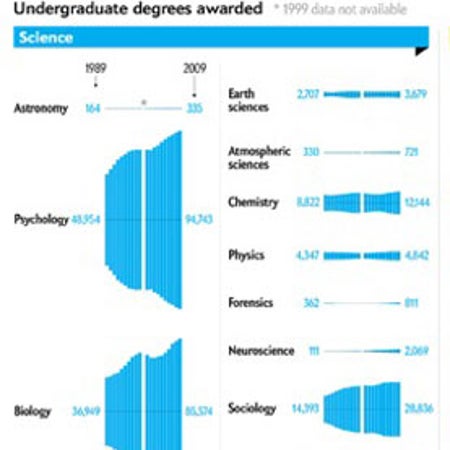
U.S. Science Degrees Are Up
Female students, and management dreams, are changing the mix
New Orleans Protection Plan Will Rely on Wetlands to Hold Back Hurricanes
How to Make Science and Tech Jobs More Enticing to Undergrads
Despite studying science, technology, engineering or math, many students avoid STEM careers. Higher salaries, improved status and apprenticeships would change that. A special online-only addition to February 2012's Graphic Science
Fracking Would Emit Large Quantities of Greenhouse Gases
"Fugitive methane" released during shale gas drilling could accelerate climate change
New Orleans Finally Gets a Hurricane Protection Plan
Jet Lag: What's Causing One of the Driest, Warmest Winters in History?
The jet stream controls winter weather, but strange forces are controlling the jet stream this season
Fracking's Future in the U.S. Comes Down to Upcoming New York State Decisions
Ohio Earthquake Likely Caused by Fracking Wastewater
Injecting wastewater deep underground is the prime suspect, potentially widening earthquake worries linked to hydraulic fracturing
Tornadoes in 2011 Set Deadly Records
Is North Korea the 9th Nation in the World with Nuclear Weapons?
Russian and U.S. nuclear arsenals dwarf the rest
A Himalayan Glacier Deflates
Interior lakes drain and refill with melting ice in mere days
Federal Agency Encourages Its Scientists to Speak Out
2-Degree Global Warming Limit Is Called a "Prescription for Disaster"
Fukushima Earthquake Moved Seafloor Half a Football Field
The massive shift, laterally and upward, caused the epic March 2011 tsunami