The SciencesDecember 1, 2011
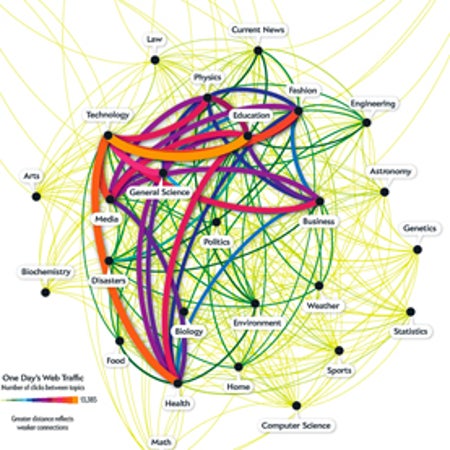
Physics or Fashion? What Science Lovers Link to Most
Science aficionados have odd and surprising interests
Mark Fischetti was a senior editor at Scientific American for nearly 20 years and covered sustainability issues, including climate, environment, energy, and more. He assigned and edited feature articles and news by journalists and scientists and also wrote in those formats. He was founding managing editor of two spin-off magazines: Scientific American Mind and Scientific American Earth 3.0. His 2001 article “Drowning New Orleans” predicted the widespread disaster that a storm like Hurricane Katrina would impose on the city. Fischetti has written as a freelancer for the New York Times, Sports Illustrated, Smithsonian and many other outlets. He co-authored the book Weaving the Web with Tim Berners-Lee, inventor of the World Wide Web, which tells the real story of how the Web was created. He also co-authored The New Killer Diseases with microbiologist Elinor Levy. Fischetti has a physics degree and has twice served as Attaway Fellow in Civic Culture at Centenary College of Louisiana, which awarded him an honorary doctorate. In 2021 he received the American Geophysical Union’s Robert C. Cowen Award for Sustained Achievement in Science Journalism. He has appeared on NBC’s Meet the Press, CNN, the History Channel, NPR News and many radio stations.
Physics or Fashion? What Science Lovers Link to Most
Science aficionados have odd and surprising interests

Can U.S. Cars Meet the New 54 mpg CAFE Standards? Yes They Can
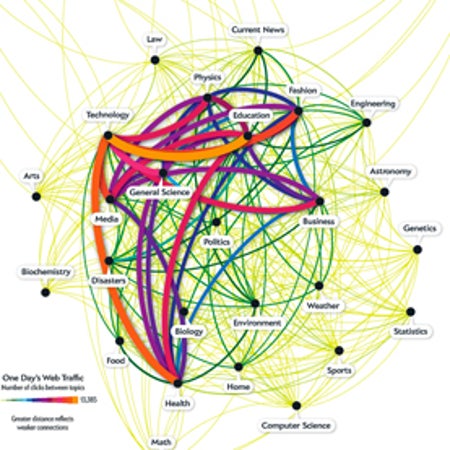
Physics or Fashion? What Science Lovers Link to Most [Interactive]
Science aficionados have odd and surprising interests
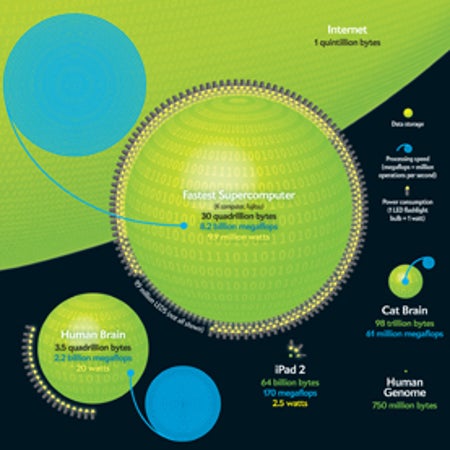
Computers versus Brains
Computers are good at storage and speed, but brains maintain the efficiency lead
World Population Set to Hit 9.1 Billion in 2050
Forecasters expect to see a total of 9.1 billion humans on Earth by 2050
IBM Simulates 4.5 percent of the Human Brain, and All of the Cat Brain
A special online-only addition to November 2011's Graphic Science
Feed the World, Save the Planet
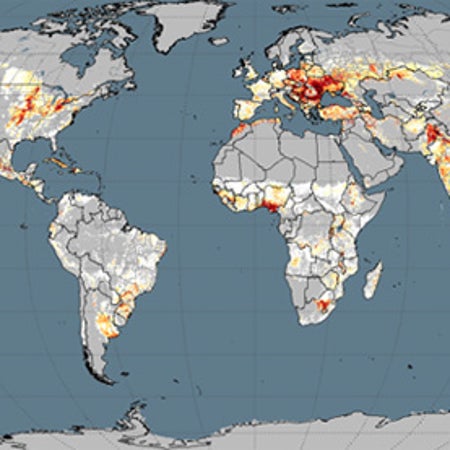
How to Double Global Food Production by 2050 and Reduce Environmental Damage
Five steps, reflected in the maps below, could be taken to help feed the large population predicted for 2050 as well as reduce the sizeable harm agriculture imposes
A Video Moment of Silence for Steve Jobs
Starring a 23-year-old Macintosh SE
Stolen Data: How Thieves Get Your Identity and Other Information
A special online-only addition to October 2011's Graphic Science
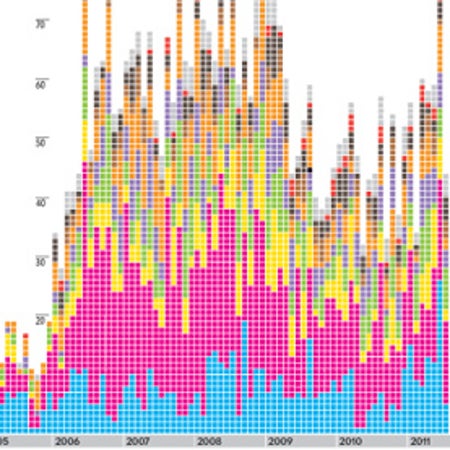
Data Theft: Hackers Attack
Crooks may seek your identity, but "hacktivists" cause the blockbuster breaches

The Efficient City
Municipalities worldwide are exploiting a host of creative solutions to reduce energy consumption, water use, waste and emissions, while also making it easier for people to get around
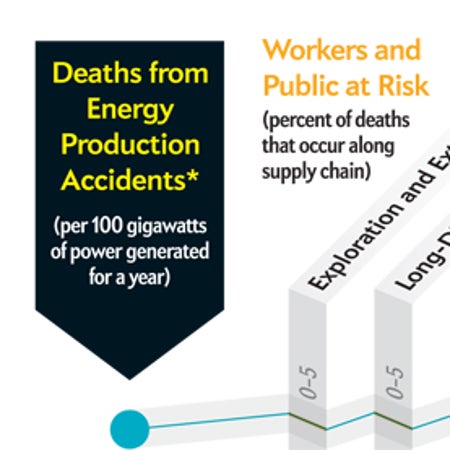
The Human Cost of Energy
Fossil fuels exact the biggest toll in terms of lives lost
The Health Care Burden of Fossil Fuels
A special online-only addition to September 2011's Graphic Science

Bold Solutions Make Real Cities More Efficient [Interactive]
Municipalities worldwide are introducing a host of creative solutions to reduce energy consumption, water use, waste and emissions, while also making it easier for people to get around. Choose a feature to learn more, and to find an exemplary city and link about progress
The Smartest Cities Will Use People as Their Sensors [Video]
By networking individuals and their gadgets, urban apps will tell inhabitants what is happening all around them, in real time
Review: New Documentary Explains Engineering Failures That Drowned New Orleans during Katrina
Radiation from Cell Phones and Other Electronic Devices [Graphic]
A special online-only addition to August 2011's Graphic Science
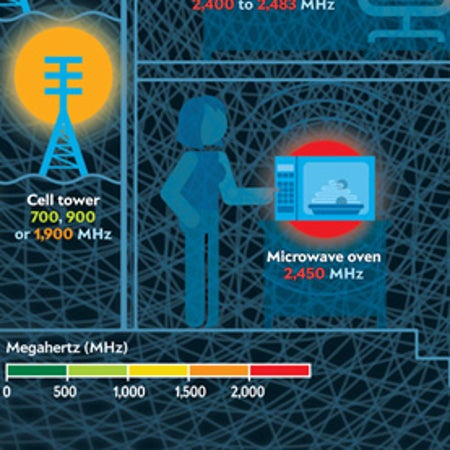
Bombarded: Electromagnetic Radiation of Our Own Making Fills the "Empty" Air
Female Education Reduces Infant and Childhood Deaths
Smarter maternal decisions prevent leading causes of mortality
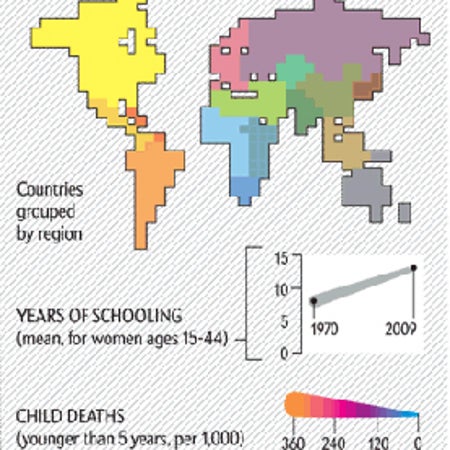
Baby's Life, Mother's Schooling: Child Mortality Rates Decline as Women Become Better Educated
Child mortality rates decline as women become better educated
The Nose Knows: How Malaria Mosquitoes Sniff Out Human Targets [Slide Show]
Researchers are learning much more about how Anopheles gambiae, the primary malaria mosquito, uses its smell organs to find human targets; the work involved stunning images from scanning electron microscopes

How Close Do You Live to a Nuclear Reactor? [Interactive map]
The U.S. has 104 operating nuclear reactors. Most are more than 30 years old; 23 have the same containment design as Japan's Fukushima Daiichi plants that were breached by the March earthquake and tsunami; and a handful are close to intense earthquake zones. Another 22 new reactors have been proposed. Click on a state to find the exact location of the existing (or possibly new) reactor nearest you. —Mark Fischetti

Climate Change Increases Threat of Fire to U.S. West
Warming could scorch the region