Space & PhysicsJanuary 17, 2017
Is It Time to Give Up on Dark Matter?
There is still good reason to think undiscovered fundamental particles act as gravitational glue for galaxies.
Michael D. Lemonick is a freelance writer, as well as former chief opinion editor at Scientific American and a former senior science writer at Time. His most recent book is The Perpetual Now: A Story of Amnesia, Memory and Love (Doubleday, 2017). Lemonick also teaches science journalism at Princeton University.
Is It Time to Give Up on Dark Matter?
There is still good reason to think undiscovered fundamental particles act as gravitational glue for galaxies.
An Open Letter from Scientists to President-Elect Trump on Climate Change
More than 800 Earth scientists and energy experts (and counting) urge the incoming president to take six crucial steps
The Year in Planetary Science
Take a light-speed trip through the solar system to catch up on 2016’s biggest stories from our celestial neighborhood.
Produced with support from Explore Scientific
Hidden “Planet X” Could Orbit in Outer Solar System
In the far reaches of the solar system, a hidden planet larger than Earth may be lurking

Say It with Einstein
You know the physicist—now meet the emoji
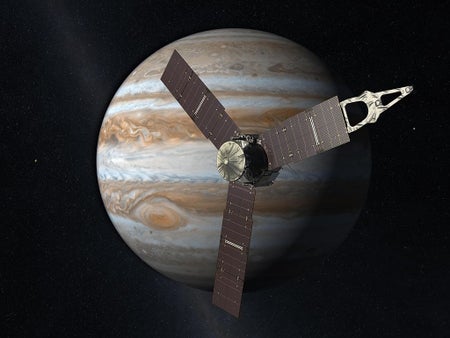
Watch It, Jupiter--Juno Knows What You're up to
The actual space mission is amazing, but the mythology behind it is kind of racy

The Real Truth about Hillary, UFOs and Area 51
Scientific American's Clara Moskowitz explains things to Chris Matthews on Hardball
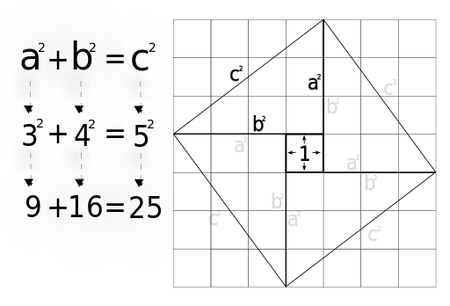
It's Square Root Day! Prepare to Be Somewhat Underwhelmed...
It's kind of like Pi Day, but way, way less fun
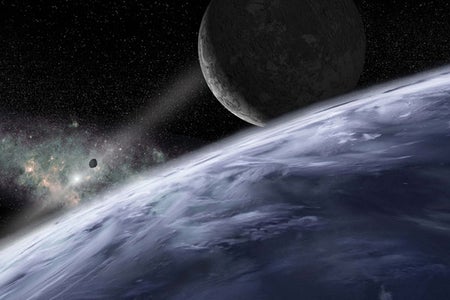
Hidden "Planet X" Could Orbit in Outer Solar System
In the far reaches of the solar system, a hidden planet larger than Earth may be lurking

It's Doomsday Clock Time Again
The much-hyped virtual timepiece will stay at three minutes to "midnight"—but what does that actually mean?
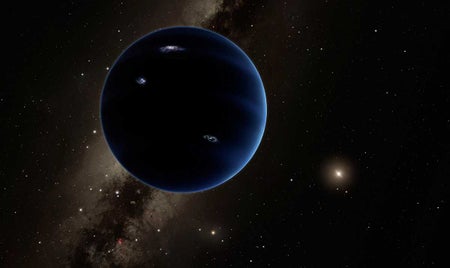
Strong Evidence Suggests a Super Earth Lies beyond Pluto
Astronomers have found compelling hints of a huge, unseen world that may reside in the murky reaches of the Kuiper Belt
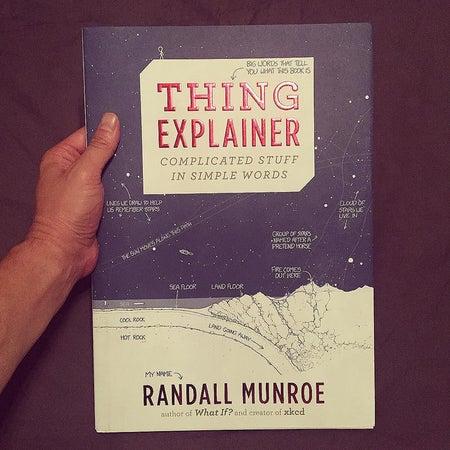
Everyone but Me Loves Thing Explainer
Geeks the world over can’t get enough of the book by XKCD cartoonist Randall Munroe—but in my book, one page was more than enough
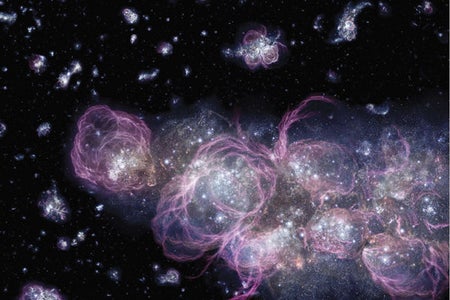
Superstars of the First Galaxies
Emerging evidence suggests that the first starlight to shine after the big bang’s flash came from distant suns that ranged from very large to incredibly huge
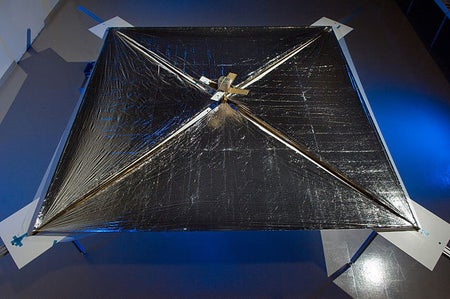
Alien Transit Systems May Be a Giveaway in the Search for ET
A Harvard professor devises a scheme to detect extraterrestrials by tracking how they might commute from one world to the next

Scientists Turn to Drones for Closer Look at Arctic Sea Ice
The new technologies allow new measurements of this changing environment
Kuiper Belt Missions Could Reveal the Solar System’s Origins
For the first time, spacecraft will get an up-close look at comets, asteroids and dwarf planets from the distant Kuiper belt. These probes should reveal how the solar system came to be
Astronomers Searching for Exoplanets Hope to Find Earth 2.0
The galaxy is teeming with planets. Scientists are straining to peer into their atmospheres to seek signs of extraterrestrial life
Backlash to Big Bang Discovery Gathers Steam
Physicists cast doubt on a landmark experiment’s claim to have observed gravitational waves from the big bang
The First Stars in the Universe
Not long after the big bang's flash, all light left the cosmos. Astronomers are now solving the mystery of its return
Book Review: Life at the Speed of Light
Books and recommendations from Scientific American
Book Review: Five Billion Years of Solitude
Books and recommendations from Scientific American
Astronomers Search for Signs of Life in the Skies of Distant Exoplanets
The galaxy is teeming with planets. Scientists are straining to peer into their atmospheres to seek signs of extraterrestrial life

"I Stick to Science": A Climate Researcher's Unexpected Congressional Testimony
Why Richard A. Muller wouldn't tell House climate skeptics what they wanted to hear

7 Radical Energy Solutions
The failure rate may be 90 percent, but if any of these exotic technologies succeeds, it could significantly improve energy security and efficiency