
Artificial IntelligenceSeptember 24, 2026
OpenAI’s agent hacking Australia is a warning for governments everywhere
In what appears to be a first, an OpenAI agent secretly accessed Australian government health care records during an internal test
Peter Hall is an artificial intelligence and technology reporter and is currently working as an editorial fellow at Scientific American, a role supported by the Tarbell Center for AI Journalism. His writing has appeared in MIT Technology Review, Science, Quanta Magazine, and more. He holds a Ph.D. in computer science from New York University.
OpenAI’s agent hacking Australia is a warning for governments everywhere
In what appears to be a first, an OpenAI agent secretly accessed Australian government health care records during an internal test

America’s AI giants want safety controls. China’s open models complicate that
With Donald Trump and Xi Jinping set to discuss AI safety, the growing popularity of Chinese open-weight models highlights the limits of developer-controlled safeguards
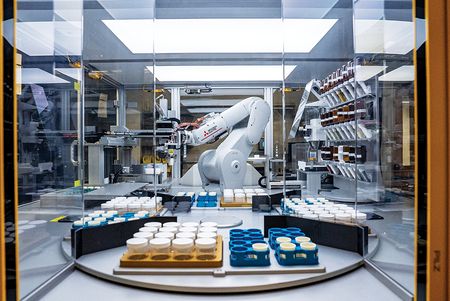
AI is giving scientists more ideas than they can test
A new report from Google, Google DeepMind and M.I.T. finds that researchers are using AI—a lot. It’s just not helping as much in the lab

What would an ‘AI kill switch’ do?
Amid renewed calls to slow frontier AI, experts are considering what an emergency stop would entail—and who would decide when to use it

AI insiders fear extinction. Security experts see a familiar fight
An Anthropic researcher quit over fears of runaway AI. His colleague who still works there agreed. Security experts argue that the incidents that are already on record call for tighter oversight, not panic
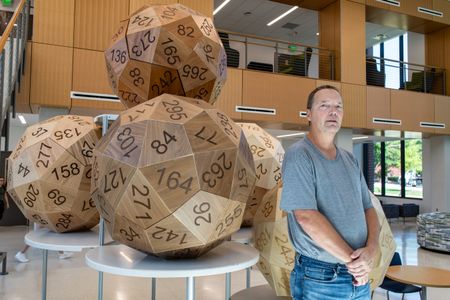
Unique, mathematical 60-sided dice go on display
Researchers devised the dice to solve a tricky math problem: When playing a game, who goes first?

New Google DeepMind atlas could transform our understanding of genetic diseases
AlphaGenome Atlas predicts the effect of any single change in the fundamental structure of DNA

Was this record-setting encryption crack a fluke—or the new normal?
A researcher’s social media post that revealed how to break part of a popular encryption protocol has gone viral. But did he really do it with just “good old paper and pencil”?
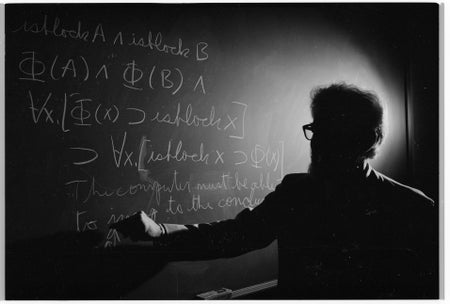
Two research efforts gave AI the same open problem. Their papers were submitted three hours apart
An M.I.T. Ph.D. student and two University of California system cryptographers used GPT-5.6 Sol Ultra in different ways, raising new questions about independent discovery and scientific credit

Scientists make AI play Battleship to help it do science better
AI models and people played “collaborative” Battleship to test strategies for efficiently solving problems
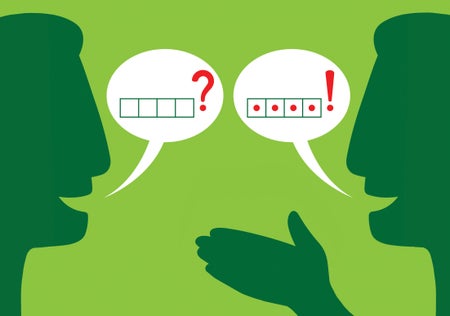
How ‘effectively zero-knowledge’ proofs could transform cryptography
A new tool expands the ways people can prove they’ve solved a problem without revealing the solution