Mind & BrainJuly 1, 2011
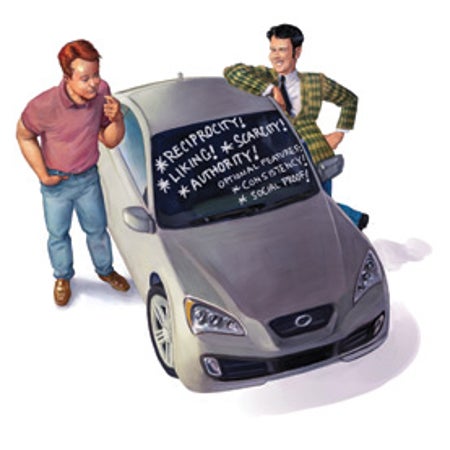
Rules of the Road: Using the Science of Persuasion When Buying a Car
Knowing the laws of persuasion is especially handy with car dealers
Steve Mirsky was the winner of a Twist contest in 1962, for which he received three crayons and three pieces of construction paper. It remains his most prestigious award.
Rules of the Road: Using the Science of Persuasion When Buying a Car
Knowing the laws of persuasion is especially handy with car dealers

Let's Make a Probabilistic Deal: A Fresh Look at the Monty Hall Problem
Scientific American math and physics editor Davide Castelvecchi revisits the Monty Hall problem, so you can know whether you're better off holding on to your original pick or switching when new information presents itself
How Physics Limits Intelligence
Award-winning author Douglas Fox talks about his cover story in the July issue of Scientific American on The Limits of Intelligence, placed there by the laws of physics
Dining and Dancing
A few easy fixes for long-standing culinary and terpsichorean problems
Dying for Science: The 100th Anniversary of the Doomed Scott Antarctic Expedition
Pulitzer Prize-winning author Edward Larson talks about his article "Greater Glory" in the June issue of Scientific American on the forgotten science of the doomed Scott expedition a hundred years ago
Skirting Steak: The Case for Artificial Meat
Journalist Jeffrey Bartholet talks about his June Scientific American magazine article on the attempts to grow meat in the lab, and Editor in Chief Mariette DiChristina talks about the cover piece in the May issue on radical energy solutions
All's Well That Ends Smells
Some smells always belong, but do not always remain, outside
Astronaut Love: An Interview with Spacewalker Stanley Love
On the eve of the launch of the penultimate space shuttle mission, STS-134, Scientific American astronomy editor George Musser talks to veteran astronaut Stanley Love about being in space and the future of spaceflight
Death of the birthers?
Editors' Roundtable: Science Conference Reports
Scientific American editors Christine Gorman, Robin Lloyd, Michael Moyer and Kate Wong talk about their recent trips to different science conferences: the meetings of the Association for Health Care Journalists, the Paleoanthropology Society, the American Association of Physical Anthropologists and an M.I.T. 150th-anniversary conference called Computation and the Transformation of Practically Everything
Can It Be Bad to Be Too Clean?: The Hygiene Hypothesis
Johns Hopkins School of Medicine researcher Kathleen Barnes talks about the hygiene hypothesis, which raises the possibility that our modern sterile environment may contribute to conditions such as asthma and eczema
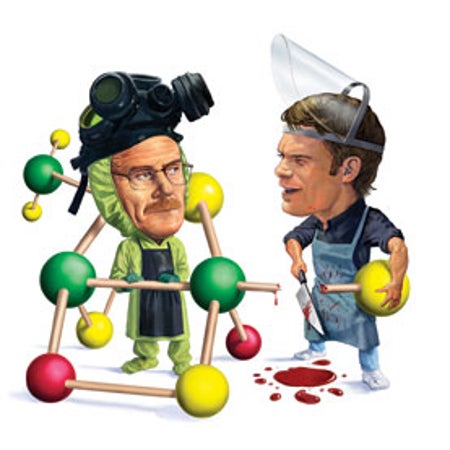
Killer Science Portrayed on Dexter and Breaking Bad
This may be the golden age of small-screen science
Nuclear Experts Explain Worst-Case Scenario at Fukushima Power Plant
The type of accident occurring now in Japan derives from a loss of off-site AC power and then a subsequent failure of emergency power on-site. Engineers there are racing to restore AC power to prevent a core meltdown
Self-Aware Robots?
Journalist Charles Choi talks about work being done to make robots self-aware. Plus, we test your knowledge about some recent science in the news
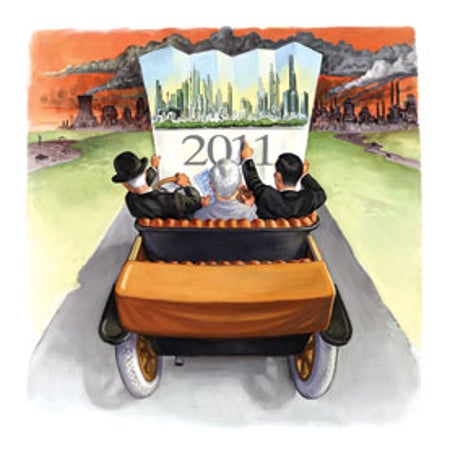
The Future Is Now
Herbert Hoover was president when some big thinkers thought about today
The Cornucopia Conference: Roundtable on the AAAS Meeting
Podcast host Steve Mirsky talks with Scientific American magazine Editor in Chief Mariette DiChristina, news editor Anna Kuchment, feature editor Mark Fischetti and online news editor Robin Lloyd about various sessions at the recently completed annual conference of the American Association for the Advancement of Science in Washington, DC.
The Spirit of Innovation: From High School to the Moon
Nancy Conrad, chair of the Conrad Foundation, talks about the Spirit of Innovation competition for high school students, and about her late husband, Pete Conrad, the third man to walk on the moon
Tall order: How to train a giraffe
What's New with Science News
Former Scientific American editor in chief and current Gleaming Retort blogger John Rennie, blogger and Scientific American blogs network director Bora Zivkovic, and Scientific American online news editor Robin Lloyd talk about the future of science news
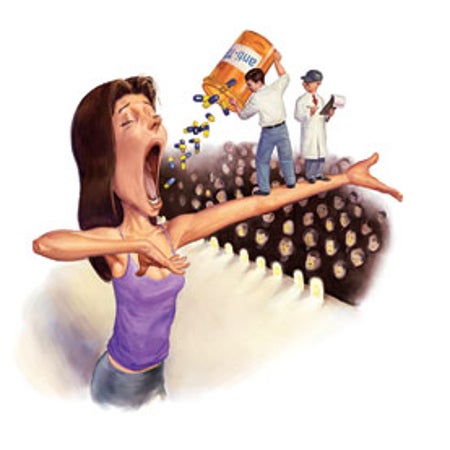
La Bummer: Why La Bohème Is Better without Techy Hipsters and Health Care
In some cases, science and art really can't get along
Jefferson's Moose: Thomas's Fauna Fight against European Naturalists
Biologist and author Lee Dugatkin talks about his article "Jefferson's Moose" in the February issue of Scientific American, the story of Jefferson's battle against the European theory of American biological degeneracy. Plus, we'll test your knowledge of some recent science in the news
What Is the Watson Jeopardy-Playing Supercomputer, Alex?
Scientific American editor Michael Moyer talks about the sneak preview he caught of IBM's Watson Jeopardy!-playing computer. And ScientificAmerican.com's Larry Greenemeier spoke with Ford's Brad Probert about the new all-electric Focus at the Consumer Electronics Show last week in Las Vegas
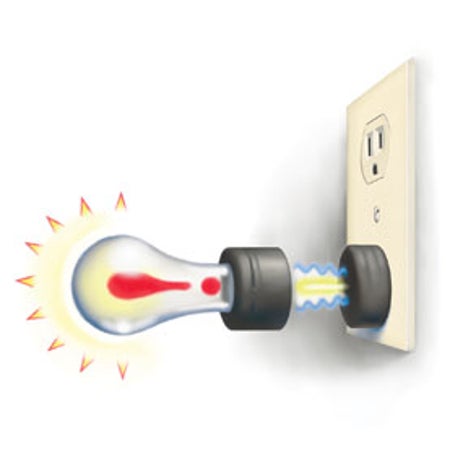
They're Young, and They're Restless: Collegiate Inventors Face Off
While we fret, some college students are busy creating the future
Vinod Khosla: Searching for the Radical Solution
Clean technology investor Vinod Khosla, co-founder of Sun Microsystems, talks with Scientific American editor Mark Fischetti about the energy payoffs to be had by reinventing mainstream technologies