
The SciencesOctober 1, 2007
Carrots, Sticks and Robot Picks
Some strange science stories of recent vintage
Steve Mirsky was the winner of a Twist contest in 1962, for which he received three crayons and three pieces of construction paper. It remains his most prestigious award.
Carrots, Sticks and Robot Picks
Some strange science stories of recent vintage
Who Do You Think You Are: Chatting With Bots, and the Sexuality Spectrum
In this episode, pyschologist Robert Epstein talks about his articles in the upcoming issue of Scientific American Mind, on being fooled by a chatterbot--a computer program designed to make you think you're communicating with a human--and on the spectrum of human sexuality. And he has some comments about the CBS TV program "Kid Nation." Plus we'll test your knowledge of some recent science in the news. Websites related to this episode include www.audible.com/sciencetalk; www.drepstein.com; www.sciammind.com; blog.sciam.com; www.news.wisc.edu/14162
What's In A Rose: Ethnobotany and the Search for Useful Plants
In this episode, ethnobotanist Nat Bletter talks about his field and his recent article about the new plant family Simulacraceae--the phony plants. Plus we'll test your knowledge of some recent science in the news. Websites related to this episode include www.audible.com/sciencetalk; www.simulacraceae.org; www.tinyurl.com/2gqgnb; www.tinyurl.com/2obv6k
Can Fat Be Fit?
In this episode, award-winning journalist Paul Raeburn talks about his article in the September issue of Scientific American, called "Can Fat Be Fit?" as well as another piece he wrote as a sidebar to a feature, about losing weight and keeping it off. Plus we'll test your knowledge of some recent science in the news. Websites related to this episode include www.audible.com/sciencetalk; www.paulraeburn.com
Putting Food on the Table: What to Eat
In this episode New York University's Marion Nestle talks about her article in the September issue of Scientific American, called "Eating Made Simple." Plus, we'll test your knowledge of some recent science in the news. Web sites related to this episode include www.sciam.com/issue.cfm; www.whattoeatbook.com; www.foodpolitics.com
What's the Big Idea?
When the lightbulb above your head is truly incendiary
Another Look at The World Without Us; and What's New At Scientific American
In this episode, journalist Alan Weisman continues his discussion (started on the June 27th podcast) about his bestselling book "The World Without Us," a massive thought experiment about the aftermath of humanity's sudden disappearance. And Scientific American editor-in-chief John Rennie discusses what's up at the magazine. Plus we'll test your knowledge of some recent science in the news.
The World Is Fat: Obesity Now Outweighs Hunger WorldWide
In this episode University of North Carolina Chapel Hill nutrition epidemiologist Barry Popkin discusses the growing problem of obesity, even in developing countries that only recently faced hunger as their primary diet challenge. Popkin is the author of the article The World Is Fat in the September Scientific American. Plus we'll test your knowledge of some recent science in the news. Websites mentioned on this episode include: www.nutrans.org; wwwtheskepticsguide.org
Is Your Food Contaminated; New Orleans Now; And the Science of Dogs
In this episode Scientific American editor Mark Fischetti talks about the challenges of keeping the food supply safe and about the state of New Orleans hurricane preparedness. And journalist Jackie Mow discusses her new TV show about the science of dogs. Plus we'll test your knowledge of some recent science in the news. Websites mentioned on this episode include: channel.nationalgeographic.com/channel/explorer; www.theskepticsguide.org
Better Brains: The Revolution in Brain Science
In this episode Scientific American correspondent Christie Nicholson talks to journalist Sharon Begley about the changing landscape of brain science. Begley is the author of the book "Train Your Mind, Change Your Brain." Plus we'll test your knowledge of some recent science in the news.
Is Privacy Dead? Technological Approaches to the Technological Threat
In this episode Carnegie Mellon University computer scientist Latanya Sweeney talks about the changes in privacy due to data collection and approaches to protect privacy in the future, with Scientific American contributor Chip Walter. Plus we'll test your knowledge of some recent science in the news. Websites mentioned in this episode include privacy.cs.cmu.edu; www.chipwalter.com
Floral Derangement
Some of these vegetables are minerals
Saddle Up That Stegosaurus--A Visit to the Creation Museum
In this episode Columbia College Chicago's Stephen Asma discusses the new antievolution Creation Museum in Petersburg, Ky., as well as his books on natural history museums and monsters, both mythological and teratological. Plus, we'll test your knowledge of some recent science in the news. Web sites mentioned in this episode include www.skeptic.com, www.stephenasma.com
Space For Both?--Human Vs. Robotic Space Missions
In this episode Cornell University astronomer Jim Bell talks about future space missions and why people need to be part of them. Bell is the leader of the team operating the color cameras on the Mars rovers, and the author of the book Postcards From Mars and of an opinion piece in the August issue of Scientific American on humans in space. Plus we'll test your knowledge of some recent science in the news. Websites mentioned in this episode include www.itswild.org; http://marsrovers.nasa.gov
Systems Biology: The Future of Biomedical Science?
In this episode eminent biologist Leroy Hood, founder of the Institute for Systems Biology, talks about systems biology, an approach to understanding complex biological systems in their entirety, with major implications for the future of medicine. Plus we'll test your knowledge of some recent science in the news. Websites mentioned in this episode include www.systemsbiology.org
Benjamin Franklin the Scientist
In this Fourth of July episode, historian Joyce Chaplin discusses Benjamin Franklin the scientist, and how his science paved the way for his future career as a diplomat and elder statesman of the Revolution. She is the author of the book "The First Scientific American: Benjamin Franklin and the Pursuit of Genius." Plus we'll test your knowledge of some recent science in the news.
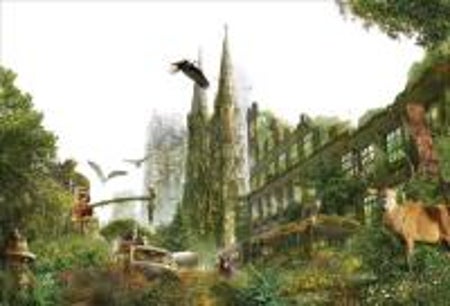
An Earth Without People
A new way to examine humanity's impact on the environment is to consider how the world would fare if all the people disappeared
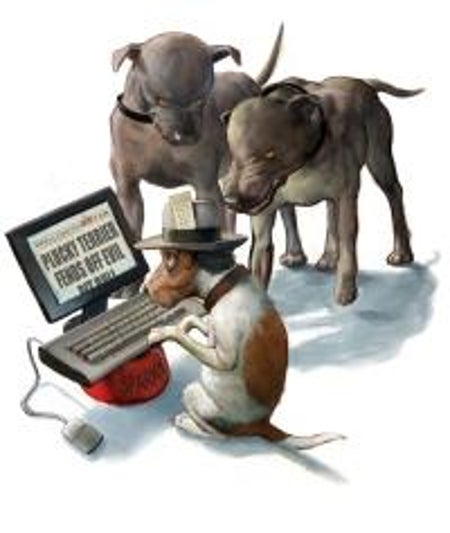
Dog Bites Dog Story
Interpreting a collection of observations is a science in itself
The World Without Us: Suppose Humans Just Vanished--Then What?
In this episode, journalist Alan Weisman, Laureate Associate Professor in Journalism and Latin American Studies at the University of Arizona, discusses his new book "The World Without Us," a massive thought experiment about the aftermath of humanity's sudden disappearance. Plus we'll test your knowledge of some recent science in the news. For info on and articles by Alan Weisman, go to www.homelands.org/producers/weisman.html
Why We Eat, Eat and Eat Some More; and Remembering Mr. Wizard
In this episode, Brian Wansink, eating behaviorist and director of the Cornell University Food and Brand Lab, talks about "Mindless Eating" habits; and Doug Lane, who was once a youngster on the Mr. Wizard TV series, remembers his time with the late Don Herbert. Plus we'll test your knowledge of some recent science in the news. Websites mentioned on this episode include www.mindlesseating.org; www.mrwizardstudios.com
Jared Diamond on the State of the World Environment
In this episode, biologist, ecologist and Pulitzer Prize-winning writer Jared Diamond discusses the environmental state of the world and the relationship between the environment and economics and politics in remarks at a recent benefit for the organization Conservation International. We'll also hear from CI's president, Russell Mittermeier. Plus we'll test your knowledge of some recent science in the news. Websites mentioned on this episode include www.conservation.org
Mark Twain: Fossil Hunter and Science Writer
In this episode, Mark Twain scholar Michael Pratt from Elmira College talks about Twain's paleontological activities and his general interest in science and technology. And host Steve Mirsky reads from a Twain essay rebutting some anthropocentric views of Alfred Russel Wallace and a Twain short article published in Scientific American in 1870. Plus we'll test your knowledge of some recent science in the news. Websites mentioned on this episode include www.elmira.edu; www.store.cornell.edu
Dumb Cup
Recipe for a steaming cup of something
How Cargo Containers Shrank the World and Transformed Trade; and Smart Skylights
In this episode, Maritime History Professor Arthur Donovan talks about cargo containerization and how it transformed world markets. And architect Paul Topogna discusses skylights that change shape for more effective heating, cooling and UV control. Plus we'll test your knowledge of some recent science in the news. Websites mentioned on this episode include www.joc.com; www.fxfowle.com