
This article was published in Scientific American’s former blog network and reflects the views of the author, not necessarily those of Scientific American
What is imagination? How do you teach it, nurture it, allow it to flourish—and are these goals worth having? The Imagination Institute is dedicated to these issues by making progress on the measurement, growth, and improvement of imagination across all sectors of society. Toward these aims, we are funding 16 research teams to develop better ways of assessing and promoting imagination and creativity. You can see our list of grant recipients and their projects at http://imagination-institute.org/grant-recipients.
The Imagination Institute is also hosting a series of "Imagination Retreats" to further our understanding of how imagination operates within specific domains—and ultimately, how to cultivate this critically important capacity in all people. We are having an ongoing series of conversations with some of the most imaginative thinkers in a wide range of fields, from psychology to comedy, physics, or spirituality, among others. Through these exciting conversations, we hope to learn more about how we can support young people to develop imagination within their domain, and cultivate imagination in society more broadly.
You can keep up to date on the latest retreats, watch select video footage of the retreats, and read our summary reports at http://imagination-institute.org/retreats.
On supporting science journalism
If you're enjoying this article, consider supporting our award-winning journalism by subscribing. By purchasing a subscription you are helping to ensure the future of impactful stories about the discoveries and ideas shaping our world today.
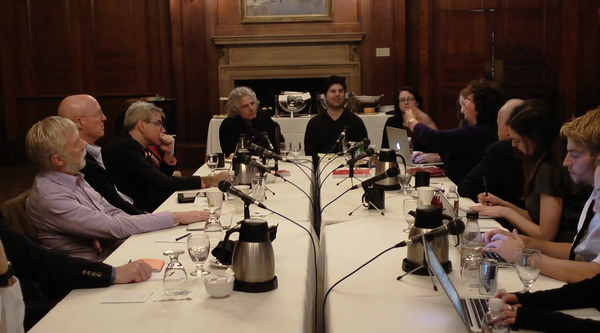
Our first imagination retreat was held at the Union League in Philadelphia on November 20-22, 2015, with psychologists Roy Baumeister, Leda Cosmides, Jonathan Haidt, Steven Pinker, and Martin Seligman, and businesswoman and human rights activist Thérèse Rein. At the heart of the discussion were issues that touch not only on the creative mind, both generally and within psychology in particular, but on the very essence of what academia means and what its function in society should be.
Here are some highlights of the event:
You can read the full report here, prepared by the author and journalist Maria Konnikova (lead author), Marie Forgeard, Elizabeth Hyde, and myself.
Thanks to the John Templeton Foundation for their generous support, and to Taylor Kreiss and Jordyn Feingold for their assistance.
You can find out more about the Imagination Institute at http://imagination-institute.org.