
This article was published in Scientific American’s former blog network and reflects the views of the author, not necessarily those of Scientific American
When kids decide to create something, a kind of magic happens – they just start creating it. They build and make and design all at once without hesitation or fear. The things break and fall down, and they just try again. Sometimes they “make” things just in the world of their imagination, creating elaborate landscapes or histories or machines or friends that never leave the world of pretend. They still throw themselves into that process without concern or shame.
But somewhere on the journey out of childhood, something happens: We start to care. We decide that, if we are going to bother to create something, it should be “good.” Or more extreme, we decide that it should be “important.” As our focus shifts from the process of creation to the final product being created, we find those eager new workmates like writer’s block and imposter syndrome waiting to welcome us. I was struck particularly early, being one of those kids who hesitated to use sticker books or color in coloring books. I became paralyzed by the risk of potential mistakes or lost hypothetical future opportunities. And as much as I love making – crocheting, drawing, building, writing – I often find myself bogged down by whether my final product will be good enough.
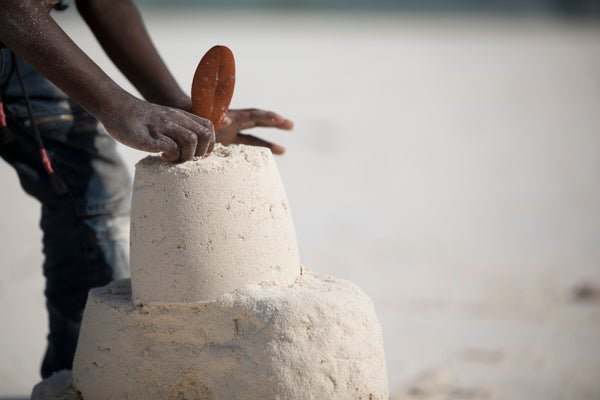
That is one of the reasons I love building sandcastles. It’s why I get so enthusiastic about carving pumpkins, building snowmen, coloring eggs, decorating cakes, and drawing with chalk. I am grateful for the vast landscape of creative pursuits that are, by their very nature, temporary. You know, from the moment you start, that the final product won’t last. The focus can be entirely on the creative process itself. I know there are people who have the opposite reaction – the folks who depend on that final product for motivation and look at the first spots of rot on a jack-o-lantern and think, “Why bother?” That’s fine. I don’t need to convince them to carve anything. I can still be thankful for the liberating nature of short-term projects for those of us who need that bit of freedom. I am happy to sing those praises myself.
On supporting science journalism
If you're enjoying this article, consider supporting our award-winning journalism by subscribing. By purchasing a subscription you are helping to ensure the future of impactful stories about the discoveries and ideas shaping our world today.
So, cheers to non-ideal media, like playdough, for letting us laugh through a series of terrible iterations and start over without concern. May they gently remind us how bad our mental images of sharks are and our toddlers’ willingness to celebrate anything vaguely fish-shaped – all in a matter of minutes.
Hooray for forts! Because, unless you plan to spend the rest of your days in a living room with a cushion wall and propped-up sheets, any fort will ultimately have to disappear. May the joy of designing the perfect board game den or movie nook be with you all.
Cheers to using rainy days at the beach to build extravagant castles, moats, and villages in range of the tide. May we all get the chance to create a massive sand dragon and watch it slowly get used into extinction, dozens of kids riding its back until there is nothing left to ride.
Hurrah for diaries, letting us write without the need to look back or *shudder* share what we create. May we remember that putting a pen to paper can be a pleasure in its own right.
And yay for extravagant meals, which will be eaten within hours of their creation. May we enjoy the process of rolling out dough and learning to weave a lattice as much as the eating experience itself.
Here’s to all of the small projects that let us hone our skills when the stakes don’t matter and allow us to use those skills for the grander undertakings we ultimately plan to keep. Here’s to all of our Cinderella creations and the freedom they can provide – made only to last until midnight.