
This article was published in Scientific American’s former blog network and reflects the views of the author, not necessarily those of Scientific American
On supporting science journalism
If you're enjoying this article, consider supporting our award-winning journalism by subscribing. By purchasing a subscription you are helping to ensure the future of impactful stories about the discoveries and ideas shaping our world today.
Being into science means never having to look at a boring desktop background, because NASA is always pumping out amazing images worth staring at every time you close a window and need a moment of respite. Today I thought I'd share the fruits of my occasional efforts at turning these into images sized for desktops. Check your monitor size and download the corresponding resolution. Want another resolution? Leave your request in the comments. All images are maximum quality jpegs. 1680x10501152x8641280x1024800x6001024x768 new: 1920x1200 new: 1440x900 new: 1280x800 Original image available here, courtesy of NASA, JPL, and the Space Science Institute. According to my colleague JR Minkel, writing in our weekly Gallery:


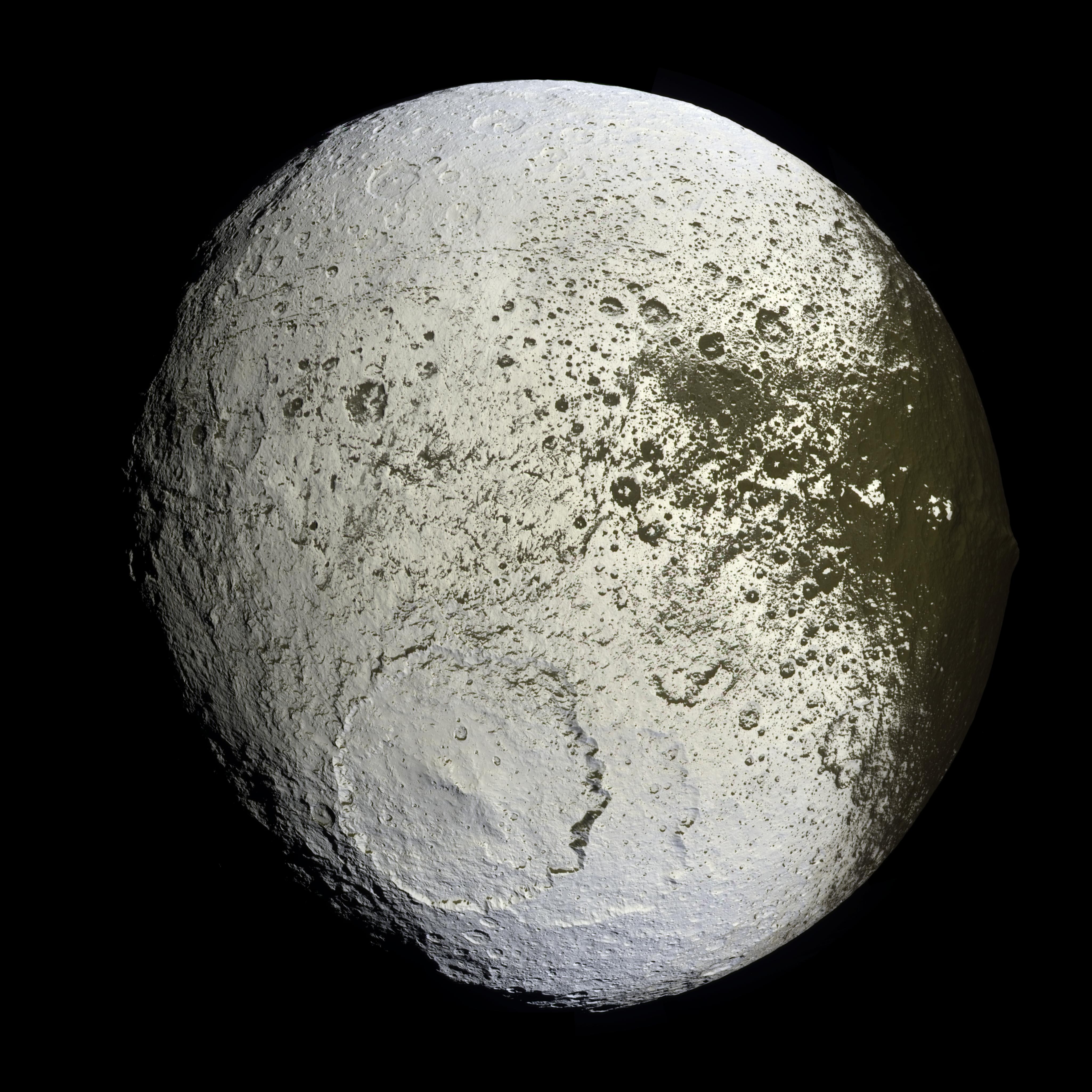
The first high-resolution images of the bright side of Saturn's two-toned moon Iapetus, shown here in a false-color mosaic, reveal a pair of overlapping impact craters and a dark fuzz of presumed hydrocarbons and other compounds (green) pooled on crater floors and equator-facing slopes. The Cassini spacecraft captured the images with its narrow-angle camera on a September 10, 2007, flyby from a distance of about 45,000 miles (73,000 kilometers). NASA said the images should help decipher the origin of the moon's twin tones.