A Visual Guide to Running Like an Olympian

Information graphic breaks down the physics of human speed

Join Our Community of Science Lovers!

This article was published in Scientific American’s former blog network and reflects the views of the author, not necessarily those of Scientific American


In the August issue of Scientific American, Dina Fine Maron writes about some exciting new research on the science of human speed.* It turns out that Olympic athletes like Mike Rodgers could use specialized biomechanical techniques to help perfect their strides. 

Rodgers has been working with Peter G. Weyand, a sports scientist at Southern Methodist University. Weyand’s hypothesis is that certain specific changes in how the foot hits the ground can result in faster run times, even for recreational runners.

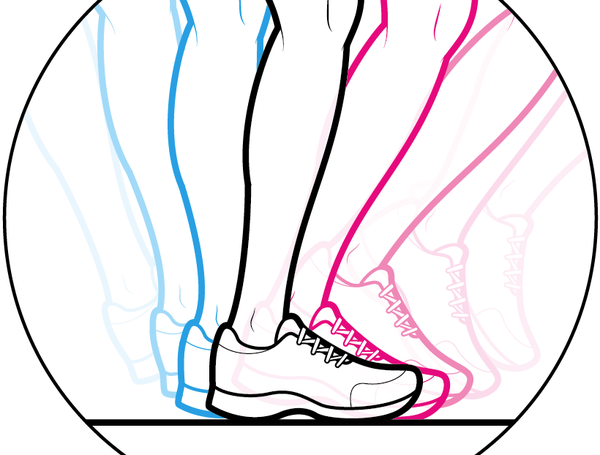
So, whether you’re an Olympic-level sprinter, or just someone who runs for exercise, or how do you improve your speed? The graphic below breaks down the physics of fast running, including the crucial foot-to-ground interaction.


On supporting science journalism

If you're enjoying this article, consider supporting our award-winning journalism by subscribing. By purchasing a subscription you are helping to ensure the future of impactful stories about the discoveries and ideas shaping our world today.


SOURCES: “ARE RUNNING SPEEDS MAXIMIZED WITH SIMPLE-SPRING STANCE MECHANICS?” BY KENNETH P. CLARK AND PETER G. WEYAND, IN JOURNAL OF APPLIED PHYSIOLOGY, VOL. 117, NO. 6; SEPTEMBER 15, 2014; “FASTER TOP RUNNING SPEEDS ARE ACHIEVED WITH GREATER GROUND FORCES NOT MORE RAPID LEG MOVEMENTS,” BY PETER G. WEYAND ET AL., IN JOURNAL OF APPLIED PHYSIOLOGY, VOL. 89, NO. 5; NOVEMBER 1, 2000
Graphics by Jen Christiansen, Illustration by Brown Bird Design

For more on the secret to speed, check out a video of Mike Rodgers and his lightning-fast legs in the sports science lab.

*Editor's Note (7/29/16): This sentence was edited after posting to correct the issue date.

Amanda Montañez is senior graphics editor and been at Scientific American since 2015. She produces and art directs information graphics for the Scientific American website and print magazine. Montañez has a bachelor's degree in studio art from Smith College and a master's in biomedical communications from the University of Toronto. Before starting in journalism, she worked as a freelance medical illustrator. Follow her on Bluesky @unamandita.bsky.social

More by Amanda Montañez

It’s Time to Stand Up for Science

If you enjoyed this article, I’d like to ask for your support. Scientific American has served as an advocate for science and industry for 180 years, and right now may be the most critical moment in that two-century history.

I’ve been a Scientific American subscriber since I was 12 years old, and it helped shape the way I look at the world. SciAm always educates and delights me, and inspires a sense of awe for our vast, beautiful universe. I hope it does that for you, too.

If you subscribe to Scientific American, you help ensure that our coverage is centered on meaningful research and discovery; that we have the resources to report on the decisions that threaten labs across the U.S.; and that we support both budding and working scientists at a time when the value of science itself too often goes unrecognized.

In return, you get essential news, captivating podcasts, brilliant infographics, can't-miss newsletters, must-watch videos, challenging games, and the science world's best writing and reporting. You can even gift someone a subscription.

There has never been a more important time for us to stand up and show why science matters. I hope you’ll support us in that mission.

Thank you,

David M. Ewalt, Editor in Chief, Scientific American

Subscribe